
Hair Transplant Techniques: Hair loss can be a distressing experience, affecting not just your appearance but also your confidence and self-esteem. Fortunately, modern hair transplant techniques have revolutionized how we approach hair restoration, offering solutions tailored to each unique type of hair loss. In this blog post, we’ll explore the best hair transplant methods for different hair loss patterns, discuss how to match these techniques to individual needs, and highlight innovative advancements like stem cell integration that can further enhance your results.
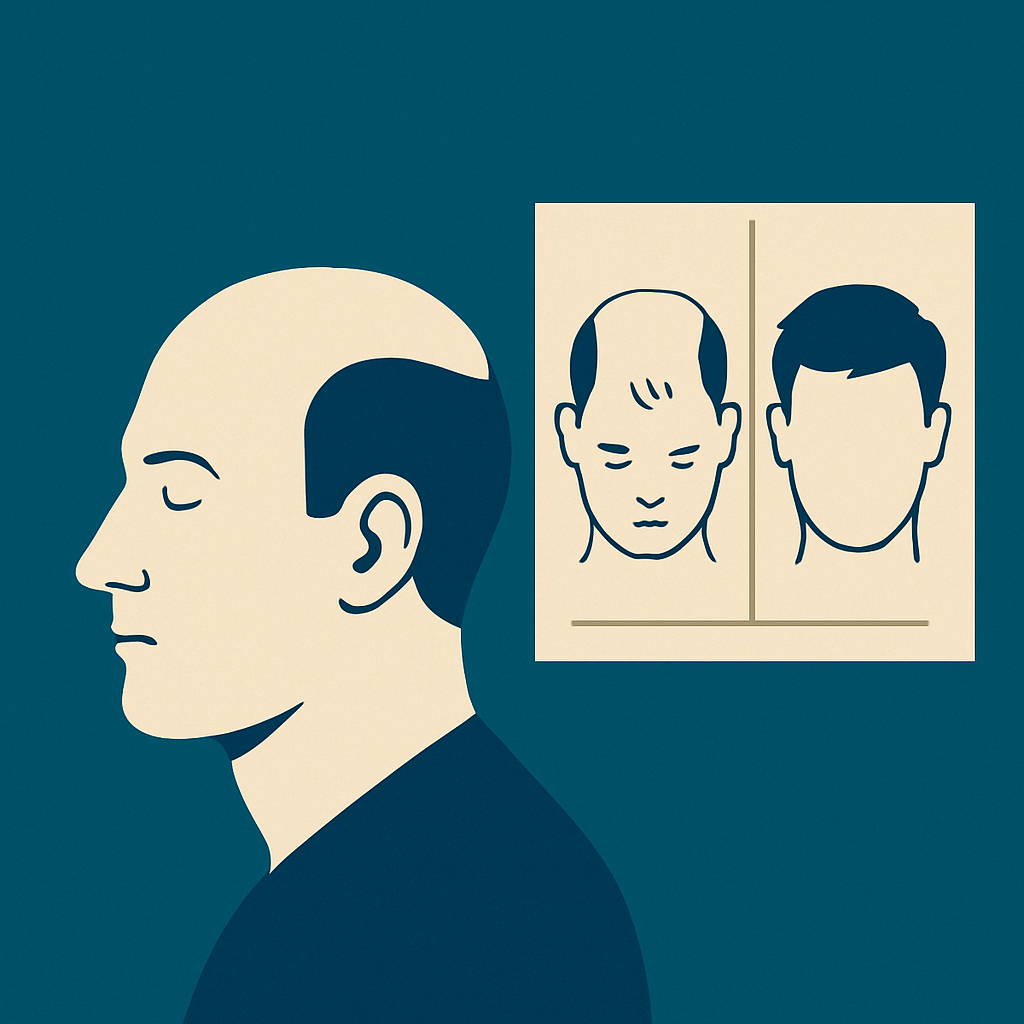
Identifying Common Patterns: From Receding Hairlines to Crown Thinning
Before diving into specific hair transplant techniques, it’s important to understand the most common patterns of hair loss. Each pattern has its own challenges and influences the choice of transplant method:
✅ Receding Hairlines:
Often the earliest sign of male pattern baldness, a receding hairline typically starts at the temples and progresses backward. It can make the forehead appear larger and impact overall facial aesthetics.
✅ Crown Thinning (Vertex Thinning):
Hair loss at the crown (or vertex) often develops later and can result in a bald spot at the top of the head. It’s a particularly challenging area because of the circular shape and natural swirl of hair growth.
✅ Diffuse Thinning:
Instead of distinct bald patches, some people experience general thinning across the top of the scalp. This can make it harder to pinpoint where to focus the hair transplant.
✅ Patchy Hair Loss (Alopecia Areata):
Though less common, patchy hair loss can result in bald spots scattered across the scalp.
Each of these patterns requires a different surgical approach to achieve the best possible outcome.
Best Hair Transplant Methods According to Hair Loss Types
Let’s take a closer look at the top hair transplant techniques and how they match to different hair loss patterns.
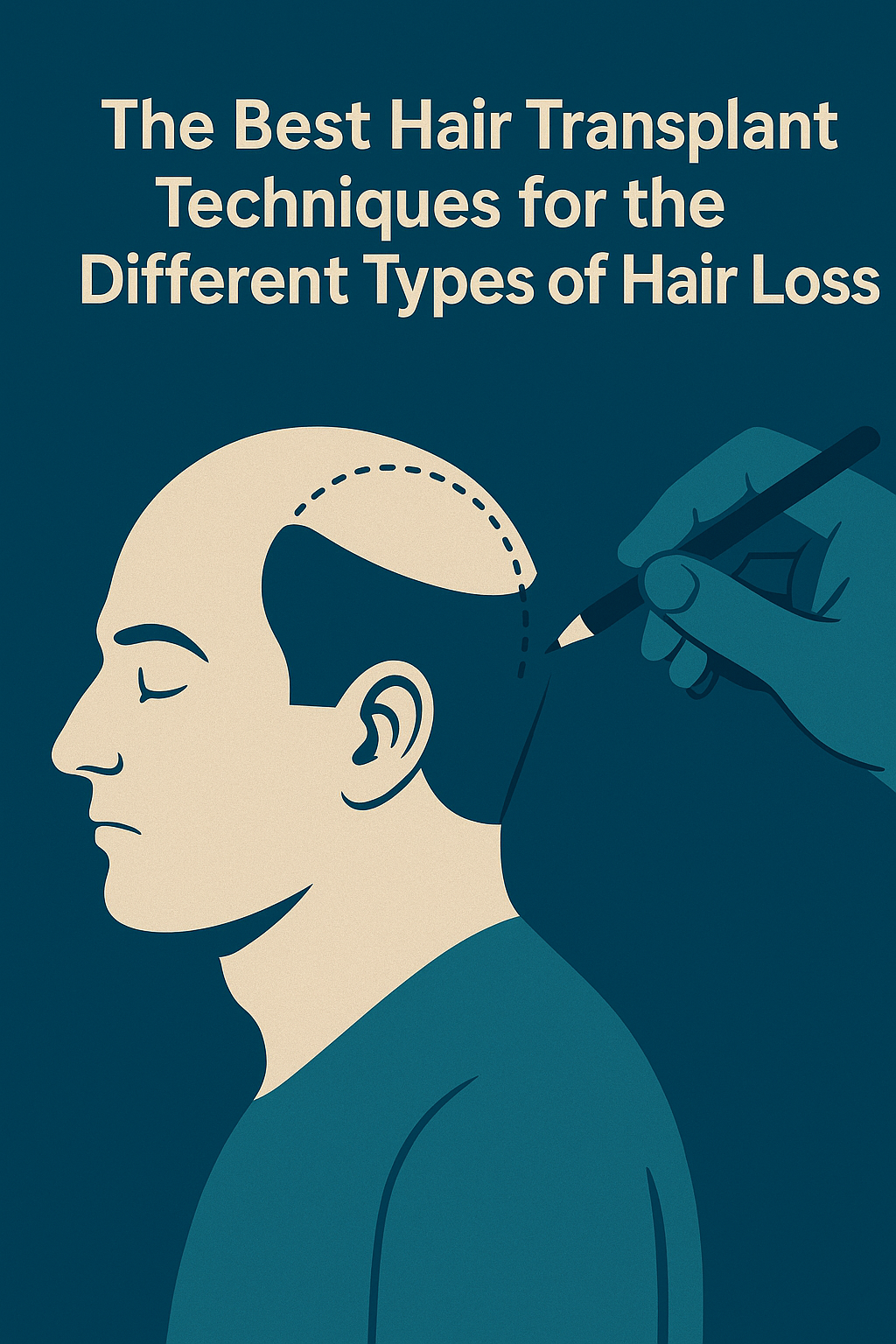
Follicular Unit Extraction (FUE)
FUE involves harvesting individual hair follicles from a donor area—usually the back or sides of the scalp—using a micro-punch tool. These grafts are then meticulously implanted into the thinning or bald areas.
- Best for: Receding hairlines, crown thinning, and diffuse thinning.
- Advantages: Minimal scarring, natural results, and faster recovery times.
Follicular Unit Transplantation (FUT)
In FUT, a thin strip of scalp is surgically removed from the donor area. The strip is then dissected into individual follicular units under a microscope before implantation.
- Best for: Severe hair loss with high graft count needs, like advanced receding hairlines or large bald spots.
- Advantages: Allows harvesting of a larger number of grafts in a single session.
Direct Hair Implantation (DHI)
DHI is an advanced version of FUE, using a special implantation pen (such as a Choi implanter) to directly insert grafts into the recipient area.
- Best for: Precision hairline design and small areas of thinning.
- Advantages: Reduced handling of grafts, potentially higher survival rate of transplanted follicles.
Stem Cell-Enhanced Hair Transplants
Some clinics now offer stem cell treatments alongside hair transplantation. Stem cells are harvested from the patient’s own body (often from fat tissue) and injected into the scalp to stimulate healing and promote hair regrowth.
- Best for: Any hair loss type, as an add-on to boost hair transplant results.
Matching Technique to Hair Loss Type: A Comparative Analysis
Here’s a side-by-side comparison to help match the best hair transplant technique to each hair loss type:
| Hair Loss Pattern | Recommended Techniques | Why? |
|---|---|---|
| Receding Hairline | FUE, DHI | Allows precision for natural-looking frontal hairlines. |
| Crown Thinning | FUE, FUT | Provides dense coverage for swirling crown areas. |
| Diffuse Thinning | FUE, DHI | Scattered implantation to match natural density. |
| Severe Baldness | FUT (for maximum grafts) | High graft yield in one session for large bald areas. |
| Patchy Hair Loss | FUE, DHI | Targeted transplants for spot treatments. |
By understanding your unique pattern, your surgeon can tailor the approach for the best long-term results.
Boosting Results: Stem Cell Integration for Enhanced Hair Restoration
While hair transplant surgery itself has come a long way, the integration of stem cell therapy is pushing the boundaries even further. Stem cells have the remarkable ability to regenerate and repair tissue, which can enhance the healing process after hair transplantation.
Benefits of Stem Cell Integration:
- 📈 Improved Graft Survival: Stem cell injections around the transplant area can boost the survival rate of newly transplanted hair follicles.
- 💪 Stronger Hair Growth: They stimulate the activity of dormant hair follicles, leading to thicker hair strands.
- ⚡ Faster Recovery: Patients often experience reduced swelling and faster healing times.
Though stem cell therapy in hair restoration is still considered an emerging technology, early studies show promising results when combined with traditional hair transplant techniques.
Visualizing Your Solution: Technique Suitability at a Glance
To make your decision easier, here’s a visual summary of which techniques work best for each type of hair loss:
- Receding Hairline: FUE and DHI for precision and natural hairline shaping.
- Crown Thinning: FUE and FUT to address the density needs of the crown.
- Diffuse Thinning: FUE and DHI for a scattered, natural look.
- Severe Baldness: FUT for maximum grafts in one session.
- Spot Hair Loss: FUE or DHI to target small areas precisely.
This simple breakdown can help you visualize how each technique aligns with your hair restoration needs.
Data-Driven Decisions: Expert Insights and Success Rates
Statistics and data from leading hair transplant clinics worldwide consistently support the effectiveness of modern hair transplant techniques:
🔬 FUE:
- Success rates of over 95% for natural-looking growth.
- Minimal scarring and fast healing.
🔬 FUT:
- Excellent for high-volume graft needs, with similar 95%+ success rates.
- Linear scar that can be hidden by longer hair.
🔬 DHI:
- Increased precision and graft survival—particularly effective for hairline work.
- Slightly higher costs due to advanced technology.
🔬 Stem Cell Integration:
- Early trials suggest 10-15% improvement in overall hair density when combined with FUE or DHI.
- Accelerates recovery time.
These numbers reinforce the importance of choosing an experienced clinic and skilled surgeon. Remember: even the best technique can only deliver optimal results when performed by trained professionals in a well-equipped facility.
Final Thoughts
Choosing the right hair transplant technique for your specific hair loss pattern can be a game changer. The days of one-size-fits-all solutions are gone; today’s advanced options mean you can get a customized plan that fits your needs and expectations.
By working closely with a trusted hair transplant surgeon, you can explore the options—FUE, FUT, DHI, and even stem cell-enhanced procedures—and feel confident that your treatment plan is data-backed and tailored just for you.
Hair restoration is more than just regrowing hair—it’s about restoring confidence and helping you feel your best every day. If you’re ready to take the next step in your hair restoration journey, book a consultation with an expert today and start visualizing your future with fuller, natural hair.