
In the world of professional sports, very few athletes manage to transcend their discipline and become global icons. Rafael Nadal is one of those rare figures. With his unmatched fighting spirit, relentless work ethic, and record-breaking Grand Slam victories, Nadal has been admired for over two decades not only as a tennis player but also as a symbol of resilience.
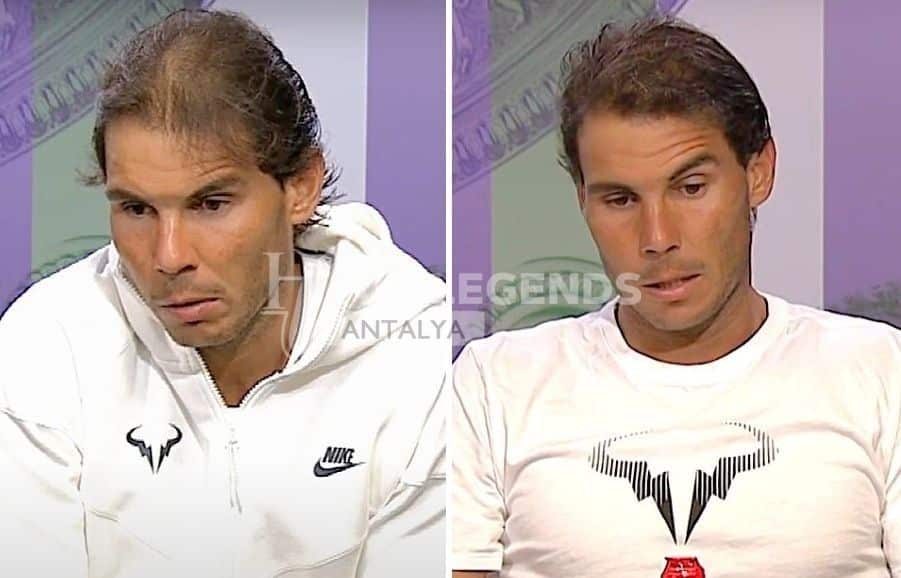
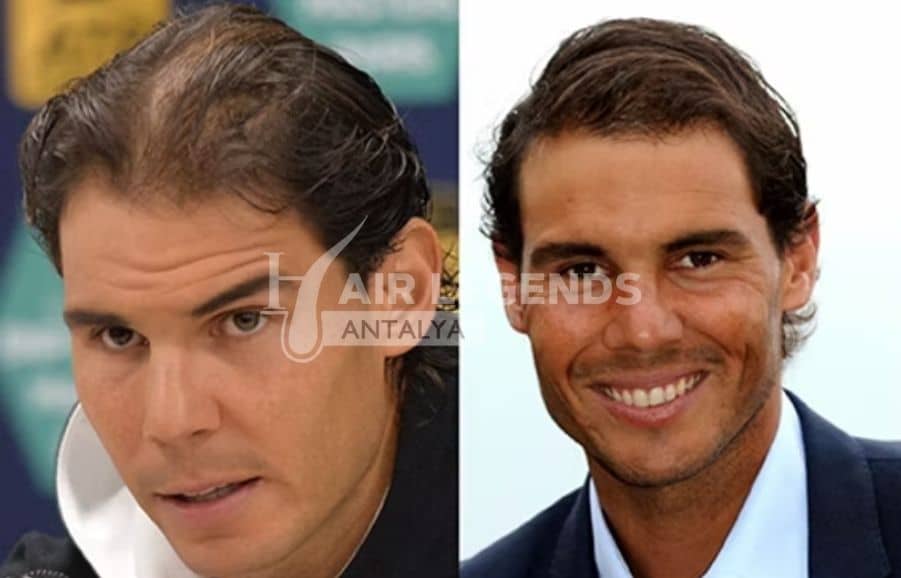
However, as with many public figures whose careers span decades, Nadal’s physical appearance has naturally evolved over time. One of the most talked-about changes has been his hair. From his early twenties onward, fans and media outlets began noticing visible thinning, especially around the temples and crown. This observation eventually led to widespread speculation about hair loss, hair restoration, and ultimately, the question that still sparks curiosity today: Did Rafael Nadal have a hair transplant?
This first part of our two-part in-depth analysis focuses on context rather than conclusions. Before discussing techniques, clinics, or medical procedures, it is essential to understand the why behind the conversation. Hair loss does not exist in a vacuum, especially not for elite athletes under constant public scrutiny. Rafael Nadal
In this section, we will explore:
- Why Rafael Nadal’s hair loss became so noticeable
- How genetics and professional sports intersect
- The early visual signs of androgenetic alopecia in Nadal
- Media attention and public perception before any hair transplant rumors
- Why celebrity hair loss matters more than people think
Part 2 will dive deeper into medical analysis, possible hair transplant methods, graft estimations, and how modern hair restoration could explain the changes seen in later years.
Rafael Nadal as a Global Icon
To understand why Nadal’s hair loss attracted such attention, we must first understand his status. Nadal is not simply a successful athlete. He is a global brand. His image has been associated with strength, endurance, youth, and physical perfection for years. Millions of fans have watched him grow from a teenage prodigy into one of the greatest tennis players of all time.
When someone with that level of visibility experiences hair thinning, it becomes instantly noticeable. Every close-up shot, every high-resolution photo, every slow-motion replay captures details that would go unnoticed in ordinary life. For celebrities and elite athletes, hair loss is not just a personal matter. It becomes a public discussion.
Hair Loss in Professional Athletes
There is a common misconception that professional athletes are somehow protected from hair loss due to their physical fitness. In reality, hair loss has very little to do with how strong or athletic someone is. The most common cause of male hair loss worldwide is androgenetic alopecia, which is primarily genetic.
In athletes, hair loss can appear even more pronounced due to several factors:
- High testosterone levels, which can increase sensitivity to DHT in genetically predisposed individuals
- Intense physical stress, which may accelerate shedding phases
- Low body fat levels, making scalp changes more visible
- Constant sweating and tight headgear, which does not cause hair loss but makes thinning easier to observe
Rafael Nadal fits many of these categories. From a medical perspective, there is nothing unusual or alarming about his hair loss. In fact, it follows a very typical male pattern.
Early Signs of Hair Loss in Nadal’s Career
When Rafael Nadal burst onto the professional tennis scene in the early 2000s, he had a full, dense head of hair. His long hair, headbands, and youthful appearance became part of his identity. However, by his mid-twenties, subtle changes started to appear.
Careful observation of match footage and photographs from around 2009 to 2012 shows:
- Mild recession at the temples
- Slight thinning in the frontal zone
- Early density loss at the crown
At this stage, the hair loss was far from dramatic. It was the kind of progression many men experience without even noticing. But because Nadal was constantly in the spotlight, these small changes did not go unnoticed by fans and commentators.
The Role of Lighting, Cameras, and Angles
One important factor often overlooked in celebrity hair loss discussions is the role of professional broadcasting. Tennis matches are filmed under extremely strong lighting, with overhead angles that directly expose the crown area. Sweat, wet hair, and movement further exaggerate thinning areas.
In Nadal’s case, long hair combined with sweat often caused the scalp to become more visible during matches. This does not necessarily indicate severe hair loss, but visually it can appear more advanced than it truly is.
This is a crucial point because many early assumptions about Nadal’s hair loss were based on match footage rather than neutral clinical observation.
Media Attention and Public Speculation
As Nadal’s career progressed, media outlets began publishing articles questioning whether stress, injuries, or even supplements could be linked to his thinning hair. Social media amplified these discussions, with side-by-side photos comparing different years circulating widely.
It is important to note that during this period, there was no confirmed statement, no visible surgical signs, and no abrupt change that would suggest a hair transplant. The progression appeared gradual and natural.
This phase is what we call the pre-rumor stage in celebrity hair restoration narratives. Hair loss is visible, but intervention is not yet apparent.
Psychological Pressure of Hair Loss for Public Figures
Hair loss affects millions of men worldwide, but for public figures like Rafael Nadal, the psychological impact can be magnified. Appearance plays a significant role in branding, sponsorships, and public image. While Nadal has always projected confidence and humility, it would be unrealistic to assume he was entirely indifferent to changes in his appearance.
Studies consistently show that hair loss can affect self-image, even in highly successful individuals. For athletes nearing their thirties, hair thinning can subconsciously reinforce the idea of aging, even while their performance remains elite.
This psychological dimension is one reason many celebrities eventually explore hair restoration options.
Why Hair Transplant Rumors Eventually Emerged
By the mid-2010s, Nadal’s hair density appeared noticeably reduced compared to his early career. Although still within a natural range, the contrast over time made speculation inevitable. Fans began asking the same questions that have been asked about countless actors, musicians, and athletes before him.
The key reason rumors began to surface was not sudden change, but expectation. When someone is constantly seen, even slow progression becomes obvious. And when modern hair transplant techniques are widely known, the assumption of intervention becomes more common.
However, at this stage in the timeline, there was still no clear visual evidence of a hair transplant.
When Did the Narrative Change
For many years, Rafael Nadal’s hair loss appeared gradual and progressive. However, around the period between 2016 and 2018, something subtly changed. The progression seemed to slow down, and in certain areas, density appeared more stable than expected for untreated androgenetic alopecia.
This is a key moment in celebrity hair analysis. Specialists do not look for dramatic overnight transformations. In real life hair transplants, especially high end ones, results are designed to look subtle, natural, and age appropriate.
What experts noticed during this period included:
A more defined frontal hairline compared to previous years
Reduced scalp visibility in the mid scalp under strong lighting
A crown area that appeared stabilized rather than continuously thinning
These changes did not happen suddenly, which is exactly why they are medically interesting.
Why Celebrity Hair Transplants Rarely Look Obvious
One of the biggest misconceptions about hair transplants is that they create instant and dramatic results. In reality, elite level hair restoration aims for the opposite.
For high profile individuals like Nadal, surgeons typically focus on:
Conservative hairline design
Density enhancement rather than full reconstruction
Strategic placement in the frontal third and mid scalp
Minimal intervention in the crown to preserve donor supply
This approach ensures that the hair ages naturally with the individual. When done correctly, even trained eyes may struggle to identify surgical intervention.
Visual Indicators Specialists Look For
Hair transplant professionals assess several specific markers when analyzing public figures. In Nadal’s case, these markers are subtle but noteworthy.
Hairline Geometry
A transplanted hairline often becomes slightly more regular compared to a naturally receding one. Nadal’s hairline in later years appears softer and more structured, without looking artificial or too low. This is consistent with conservative follicular unit extraction work.
Density Distribution
Natural hair loss usually creates uneven density patterns. In contrast, transplanted hair tends to show more uniform spacing, especially in the frontal zone. Nadal’s frontal density appears more balanced in later images compared to earlier footage.
Crown Stabilization
The crown is typically the last area treated in hair transplantation, if at all. In Nadal’s case, the crown does not look fully restored, but it does appear stabilized. This is consistent with a strategy that prioritizes the front while managing expectations for the crown.
Possible Hair Transplant Techniques Used
If a hair transplant was performed, which methods would best explain the results seen today?
Follicular Unit Extraction
FUE is the gold standard for discreet hair restoration, especially for public figures. It leaves no linear scar and allows for gradual density improvement.
Given Nadal’s lifestyle, short hair phases, and constant media exposure, FUE would be the most logical choice.
Sapphire FUE
An advanced variation of FUE uses sapphire blades to create more precise incisions. This technique allows for:
Higher graft survival rates
Denser packing in the frontal zone
Faster healing
Less visible trauma
The natural softness of Nadal’s hairline strongly aligns with sapphire based channel opening.
DHI Technique
Direct Hair Implantation is another possibility, particularly for density enhancement. However, based on the spread and blending of Nadal’s hair, FUE based implantation appears more likely than pen based dense packing alone.
Estimated Graft Numbers
This is one of the most common questions asked by patients inspired by celebrity cases.
Based on visual analysis and typical treatment strategies, experts estimate:
Frontal hairline and temples: approximately 1500 to 2000 grafts
Mid scalp reinforcement: approximately 800 to 1200 grafts
Total estimated graft count: 2300 to 3200 grafts
This range is consistent with a single session or two smaller sessions spaced over time. It is also realistic for preserving donor area integrity.
Timing and Recovery Considerations
One of the reasons Nadal’s case is so intriguing is timing. Professional tennis players have limited windows for cosmetic procedures due to tournament schedules.
Hair transplants require:
7 to 10 days for visible healing
3 to 4 months for early growth
9 to 12 months for final results
Off season periods or injury recovery phases would be the most logical times for such a procedure. Nadal has had several injury related breaks during his career, which could easily accommodate a discreet recovery.
Why the Results Look So Natural
Natural results are not accidental. They are the outcome of several critical factors.
Surgeon led hairline design
Correct angle and direction of implantation
Single graft usage in the frontal hairline
Age appropriate density planning
In Nadal’s case, the hairline was not lowered dramatically. Instead, it was reinforced. This is a key distinction. Over aggressive hairlines often expose hair transplants. Conservative reinforcement rarely does.
The Role of Medical Hair Loss Treatments
It is also possible that Nadal combined surgical intervention with medical therapy.
Many patients use:
Finasteride or alternative DHT blockers
Topical minoxidil
PRP treatments
These therapies help maintain native hair and protect transplanted grafts. Stabilization of hair loss is often the result of combined treatment rather than surgery alone.
Why No Official Statement Was Needed
Public figures are not obligated to disclose medical procedures. In fact, the success of a hair transplant is often measured by how little it needs to be explained.
Nadal’s image was never about vanity. His brand is built on discipline, humility, and performance. A subtle, natural hair restoration aligns perfectly with that identity.
The absence of an official statement does not weaken the case. If anything, it strengthens the argument that any intervention was professionally executed and discreet.
What Patients Can Learn From Nadal’s Case
Rafael Nadal’s hair journey offers valuable lessons for everyday patients.
Hair transplants do not need to be extreme
Early intervention leads to better outcomes
Natural looking results come from conservative planning
Stabilization is just as important as restoration
Many men delay treatment until hair loss becomes severe. Nadal’s case suggests that subtle reinforcement at the right time can preserve appearance for years.
Hair Transplant Expectations Versus Reality
Patients often bring celebrity photos to consultations expecting identical results. This is where professional guidance becomes essential.
Every patient has unique:
Donor capacity
Hair caliber
Scalp characteristics
Genetic progression
The goal is not to copy a celebrity but to achieve a result that fits the individual naturally.
Whether or not Rafael Nadal ever publicly confirms a hair transplant is ultimately irrelevant. What matters is that his current hair appearance reflects the principles of modern, ethical hair restoration.
Subtle improvement
Natural density
Age appropriate design
No visible signs of surgery
For anyone considering hair transplantation, this case highlights the importance of quality over quantity and strategy over impulse.
In the world of hair restoration, the best results are often the ones that spark discussion without ever demanding an explanation.