
Phil Ellis has never been the kind of comedian who takes himself too seriously. That is part of what makes his recent decision to have a hair transplant interesting. Rather than presenting hair restoration as something secretive or embarrassing, Ellis has spoken openly about why he decided to do it, what made him notice his hair loss and how he feels about the result.
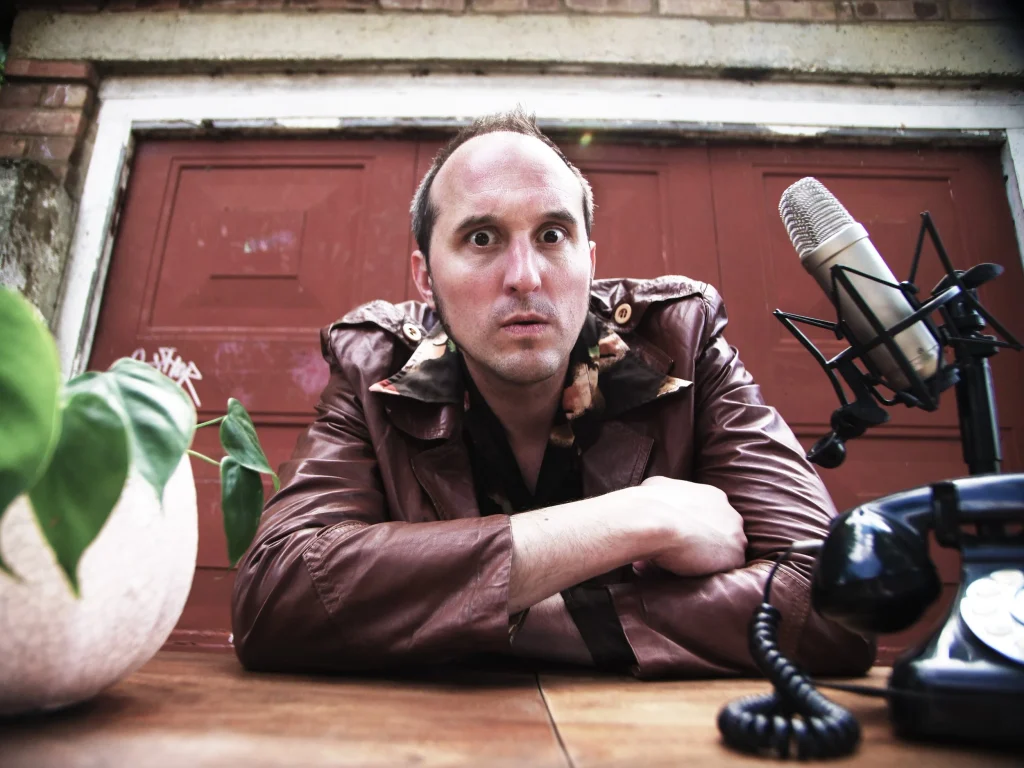
The British comedian, writer and actor, who appeared on the 20th series of Taskmaster, revealed in January 2026 that he was having a hair transplant. He later explained that the decision came after seeing himself from angles that he was not used to seeing on television, particularly the bird’s-eye camera shots used during Taskmaster.
His story is particularly relevant to men who have lived with gradual hair loss for years. Ellis explained that he had never been especially insecure about his hair and had become accustomed to his receding hairline. It was the realisation that his thinning had progressed further than he thought that finally pushed him towards treatment. In August 2026, he described the process as something that had given him additional confidence while also stressing that nobody should feel pressured into having a transplant.
For anyone researching hair transplant Antalya, Phil Ellis’s experience also raises some useful questions. When is a receding hairline worth treating? How should a hairline be designed? What should patients realistically expect during the first few months? And perhaps most importantly, how should someone choose a clinic when there are so many different options in Turkey?
Who Is Phil Ellis?
Phil Ellis is an English comedian, actor and writer who has been active in the UK comedy scene for many years. His career includes live comedy, television appearances and performances at the Edinburgh Festival Fringe. He became particularly familiar to a wider television audience after appearing on the 20th series of Taskmaster.
His appearance on the show brought an unexpected amount of attention to his hair.
Ellis has explained that the programme’s cameras were positioned from almost every possible angle. While most people see themselves primarily from the front or through familiar photographs, television cameras can reveal areas of the scalp that are rarely visible in everyday life.
For Ellis, the bird’s-eye camera angle was particularly revealing.
He described this as the moment when he became much more aware of how much hair he had lost. His thinning had happened gradually over many years, so it was not necessarily something he noticed from day to day. Seeing himself on television gave him a different perspective.
This is a surprisingly common experience among men with gradual hair loss. Because androgenetic hair loss usually develops slowly, a person can become accustomed to changes in their appearance without realising how much the hairline or crown has changed over a decade or more.
Why Did Phil Ellis Decide to Have a Hair Transplant?
Ellis has been quite clear that his decision wasn’t driven by pressure from other people.
In an August 2026 interview, he said that he had never been particularly insecure about his hair and that his thinning had been gradual. He even felt that his receding hairline suited him for a long time. Eventually, however, he reached the point where he felt that the hair loss had progressed far enough for him to want to do something about it.
That distinction is important.
A hair transplant should not be presented as something every man with a receding hairline needs. Some men are completely comfortable with their appearance and have no reason to undergo surgery. Others may decide that restoring some hair would make them feel more confident.
Neither choice is wrong.
Ellis himself made this point when discussing his experience. He has said that people should not feel pressured into undergoing a hair transplant simply because hair restoration has become more common. At the same time, he believes people should not be discouraged from doing something that genuinely makes them feel better about themselves.
That is a sensible way to look at hair restoration.
The decision belongs to the patient.
What Did Phil Ellis Say About His Hair Transplant?
Ellis first revealed publicly in January 2026 that he was having a hair transplant. At the time, he explained that he planned to share his hair journey with his followers. He also joked about the effect he hoped his new hair would have on his television career.
He later spoke more seriously about the procedure and its effect on his confidence.
One of the more interesting details from his later interviews was his approach to the hairline.
Ellis reportedly brought a photograph of Jude Law to his consultation as an example of the type of hairline he liked. However, he did not want an unnaturally low or aggressively straight hairline. He preferred the idea of retaining some recession because he felt that suited his appearance. His doctor apparently reminded him that copying another person’s hairline would not necessarily produce the same result because everyone’s facial structure and hair characteristics are different.
This is actually one of the most important principles in hair transplantation.
A good hairline should belong to the patient.
Why Hairline Design Matters More Than Simply Adding Hair
When someone begins researching a hair transplant in Antalya, it is easy to focus on graft numbers.
Patients often ask questions such as:
“How many grafts can I get?”
“Can you give me 4,000 grafts?”
“Can you make my hairline completely straight?”
But the number of grafts is only part of the treatment.
The hairline is one of the most visible areas of the face, and small mistakes can be noticeable. A hairline that is too low, too straight or too symmetrical can look unnatural even when the graft survival is excellent.
A mature hairline usually has some irregularity and follows the individual’s facial proportions.
The doctor also has to consider future hair loss.
This is particularly important for men in their thirties and forties. The hair that is transplanted today may remain stable while surrounding native hair continues to thin. If the original hairline is designed too aggressively, a patient could eventually be left with an unnatural-looking band of transplanted hair at the front.
Ellis’s preference for a slightly receding hairline is therefore an interesting example of a more conservative approach.
He wasn’t trying to look twenty years old.
He wanted a hairline that suited him.
That distinction can make a significant difference to the long-term appearance.
Phil Ellis and the Importance of a Natural Hairline
One of the most useful aspects of Ellis’s story is that he didn’t simply ask for another celebrity’s hair.
He used Jude Law’s hairline as a reference because he liked the shape, but his doctor correctly pointed out that the result would need to be adapted to Ellis himself.
This is exactly how reference photographs should be used during a consultation.
A patient can show a doctor what type of appearance they like. The doctor can then assess whether something similar is anatomically appropriate.
The hairline needs to take into account:
- Facial proportions
- Age
- Existing hair density
- Donor supply
- Degree of recession
- Future hair-loss potential
- Hair calibre and texture
- Natural direction of growth
A transplant should not turn one person’s hairline into another person’s.
It should restore the patient’s own appearance in a more favourable way.
Why Gradual Hair Loss Can Be Difficult to Notice
Phil Ellis described his hair loss as something that had happened gradually over around two decades.
That is typical of androgenetic hair loss.
A man may lose a small amount of density every year. Because the change happens slowly, there is no single day when he suddenly looks bald.
Instead, the temples gradually move backwards.
The frontal hair becomes thinner.
The mid-scalp begins to show more scalp under strong lighting.
The crown may become increasingly visible from above.
Eventually, a photograph taken from an unusual angle can reveal a much larger difference than the person sees in the mirror.
This is one reason why photographs taken from above can be useful during a hair transplant consultation. They can help the doctor understand the actual pattern of thinning rather than relying only on what the patient sees from the front.
What Can Patients Learn From Phil Ellis’s Hair Transplant?
Perhaps the biggest lesson is that there is no single “correct” reason to have a hair transplant.
Ellis wasn’t dealing with sudden hair loss.
He wasn’t necessarily desperate to completely change his appearance.
He had lived with his receding hairline for years.
Eventually, he decided that he wanted to restore some of the hair he had lost.
That is a perfectly reasonable motivation.
His story also demonstrates why a consultation should be about more than graft numbers.
A good consultation should establish what the patient actually wants to look like.
Some patients want maximum density.
Others mainly want to restore the frontal hairline.
Some want to improve the crown.
Others want to strengthen thinning areas without creating a dramatic change.
The treatment plan should follow the patient’s anatomy and goals.
What Happens After a Hair Transplant?
One thing that can be confusing for patients is the early recovery period.
The hair visible immediately after transplantation is not the final result.
Newly transplanted follicles go through a normal growth cycle, and the visible hair can shed during the early months. This is commonly referred to as shock loss or shedding and does not necessarily mean that the graft has failed.
New growth develops gradually.
Patients should therefore be careful when comparing their progress with photographs of celebrities or influencers who may already be many months into their recovery.
Ellis himself described the difference in his hair several months after the procedure as dramatic. In an August 2026 interview, he said that compared with a photograph from six months earlier, his hair looked significantly thicker.
This is a useful reminder that patience matters.
Hair transplantation is not an instant cosmetic treatment.
The final result takes time.
Why the Six-Month Mark Is Not Always the Final Result
Patients often become impatient around the six-month stage.
Some may already see substantial growth, while others are still waiting for additional density.
There is considerable individual variation in how quickly transplanted hair develops.
A patient may have good early growth but still see further maturation during the following months.
This is why clinics generally evaluate hair-transplant results over a much longer period rather than judging the outcome only a few weeks after surgery.
The texture of new hair can also change.
Early growth may appear finer before becoming thicker and more natural-looking as the follicles mature.
For anyone travelling to Turkey for a hair transplant Antalya, understanding this timeline before the procedure can make the recovery considerably easier psychologically.
Hair Transplant Antalya: What Should Patients Look For?
Phil Ellis had his procedure in Manchester, so his experience should not be presented as an Antalya hair transplant case. Reports identify Dr Asim Shahmalak at Crown Clinic in Manchester as the doctor treating Ellis.
However, his story raises questions that are directly relevant to patients considering treatment in Antalya.
Turkey has become one of the world’s major destinations for medical tourism, and Antalya has developed a significant international hair-transplant market.
That means patients have many clinics to choose from.
The challenge is deciding which clinic is appropriate.
Price is obviously relevant, particularly for international patients, but it should not be the only factor.
Patients should find out who will actually be responsible for the medical aspects of the procedure.
They should understand how the hairline will be designed.
They should know how the donor area will be assessed.
They should ask what technique is being recommended and why.
Most importantly, they should have a clear understanding of what result is realistically achievable.
Why Doctor Involvement Matters in Hair Transplantation
A hair transplant is not simply a cosmetic package involving a hotel and airport transfers.
It is a surgical procedure.
The doctor should evaluate whether the patient is a suitable candidate and develop an appropriate treatment plan.
Hairline design is particularly important because it combines medical considerations with aesthetic judgement.
The doctor should also consider the donor area’s capacity and the possibility of future hair loss.
At Hair Legends Antalya, we believe that patients should understand exactly who is responsible for each part of their procedure before they book.
This is especially important for international patients who may not be able to visit the clinic in person before travelling.
A patient should not be expected to discover on surgery day who is performing each stage.
The roles should be explained during the consultation.
FUE and DHI: Which Technique Is Better?
Phil Ellis’s procedure has been reported as a hair transplant performed in Manchester, but his story also raises the broader question of technique.
FUE and DHI are both commonly used approaches in modern hair restoration.
FUE involves extracting individual follicular units from the donor area and implanting them into prepared recipient sites.
DHI uses an implantation pen to place extracted follicles directly into the recipient area.
Neither technique is automatically better for every patient.
The appropriate choice depends on the patient’s hair characteristics, recipient area, graft requirements, donor condition and the doctor’s treatment plan.
Patients should be cautious about clinics that present one technique as universally superior.
A technique should be selected because it suits the patient.
Can a Hair Transplant Give You a Celebrity Hairline?
This is one of the biggest misconceptions surrounding celebrity hair-transplant stories.
A photograph of a celebrity can be useful as inspiration, but it cannot be used as a blueprint.
Facial structure differs.
Hair density differs.
Hair calibre differs.
Donor capacity differs.
The progression of hair loss differs.
Even the angle and lighting of the photograph can change how a hairline appears.
Ellis’s experience with the Jude Law reference is a good example. He liked the general shape of Law’s hairline, but the doctor had to consider whether that shape was appropriate for Ellis.
A responsible doctor should adapt the design rather than simply copy it.
Why Conservative Hairline Design Can Be Better Long Term
A very low hairline can look impressive immediately after surgery.
But hair transplantation needs to be considered over decades, not just months.
If native hair continues to recede behind a low transplanted hairline, the patient may eventually require another procedure.
A slightly higher and more mature hairline can often provide a more natural appearance while using donor hair more efficiently.
This doesn’t mean every patient should have a high hairline.
It means the design needs to reflect age, facial proportions and likely future hair loss.
For patients considering hair transplant Antalya, this is one of the questions worth discussing during the consultation.
Ask the doctor:
“Where would you place my hairline if you were planning for the next twenty years rather than just the next year?”
The answer can tell you a great deal about the clinic’s philosophy.
Does a Hair Transplant Change Confidence?
Hair transplantation is a physical procedure, but the reason many people choose it is psychological.
Ellis has said that although he had made peace with losing his hair, the regrowth had given him more confidence. At the same time, he has been careful not to suggest that other people need to undergo treatment.
This is an important distinction.
A transplant cannot solve every confidence problem.
But if a particular aspect of someone’s appearance has bothered them for years, changing it may make them feel more comfortable.
The decision should come from the patient rather than from social pressure.
Phil Ellis Shows How Hair Transplants Are Becoming More Normal
Hair transplantation was once something many celebrities tried to keep completely private.
That has changed considerably.
Public figures now talk about their procedures openly, and hair restoration has become a much more normal part of conversations about appearance.
Ellis’s approach is particularly refreshing because he has combined humour with a fairly straightforward explanation of why he chose treatment.
He wasn’t claiming that everyone should restore their hair.
He simply decided that it was right for him.
That is probably a healthier way to discuss cosmetic procedures in general.
What Should You Ask Before Booking a Hair Transplant in Antalya?
Phil Ellis’s story may have started with an unusual camera angle, but anyone considering a transplant should take a much more detailed approach before booking.
Ask who will perform the medical assessment.
Ask who designs the hairline.
Ask who extracts the grafts.
Ask who makes the recipient sites.
Ask who implants the grafts.
Ask how many grafts are actually required and why.
Ask how the donor area will be protected.
Ask what happens if your native hair continues to thin.
And ask what postoperative support is available after you return home.
These questions are more valuable than simply asking which package is cheapest.
Frequently Asked Questions About Phil Ellis Hair Transplant
Why did Phil Ellis have a hair transplant?
Ellis said his hair had been thinning gradually for many years and that seeing the top of his head from a bird’s-eye camera angle while appearing on Taskmaster made him realise how far the hair loss had progressed.
When did Phil Ellis have his hair transplant?
He publicly revealed that he was undergoing the procedure in January 2026. Later reports indicated that the procedure had taken place around that period.
Where did Phil Ellis have his hair transplant?
Reports identify Dr Asim Shahmalak at Crown Clinic in Manchester as the doctor who treated Ellis.
Did Phil Ellis want a completely straight hairline?
No. Reports indicate that Ellis preferred a naturally receding hairline and used Jude Law’s hairline as a reference during his consultation rather than asking for an aggressively low, straight hairline.
How long does it take to see a hair transplant result?
Hair growth takes time. Patients may experience shedding during the early months before new growth becomes visible. Significant improvement can occur during the first year, with further maturation possible afterwards.
Is a hair transplant permanent?
Transplanted follicles are selected from areas that are generally more resistant to androgenetic hair loss, but surrounding native hair can continue to thin. Long-term planning is therefore important.
Is Antalya a good destination for a hair transplant?
Antalya is an established international medical-tourism destination with numerous hair-transplant clinics. However, the city itself does not guarantee a good result. Patients should research the individual clinic, doctor involvement, treatment plan and aftercare before booking.
Conclusion: What Phil Ellis’s Hair Transplant Can Teach Patients
Phil Ellis’s hair transplant story is interesting because it isn’t really about becoming a different person.
He had lived with a receding hairline for years. He had even reached a point where he was comfortable with it. Then, after seeing himself from a different angle on Taskmaster, he realised that his hair loss had progressed further than he had appreciated. Eventually, he decided to do something about it.
His experience also demonstrates why natural hair restoration is about more than simply adding as many grafts as possible.
The design of the hairline matters.
The patient’s age matters.
Future hair loss matters.
Donor capacity matters.
And the patient’s own idea of what looks natural matters.
Ellis’s decision to use Jude Law’s hairline as inspiration but retain a degree of recession is a good example of the difference between copying a celebrity and using a celebrity as a reference.
For patients considering a hair transplant Antalya, the same principle applies. You can bring photographs to your consultation and explain what you like, but the final design should be adapted to your own face, hair characteristics and long-term expectations.
At Hair Legends Antalya, our approach is to look beyond the immediate cosmetic result. A hair transplant should be planned around the patient’s current hair loss while also considering what may happen in the future.
Phil Ellis’s story is ultimately a reminder that hair restoration is a personal decision. Nobody needs to have a transplant simply because they are losing hair. But if hair loss has reached the point where restoring some density or rebuilding the hairline would make you feel more comfortable, modern hair transplantation can offer a realistic option.
The key is choosing the right treatment for you, rather than trying to become someone else.