
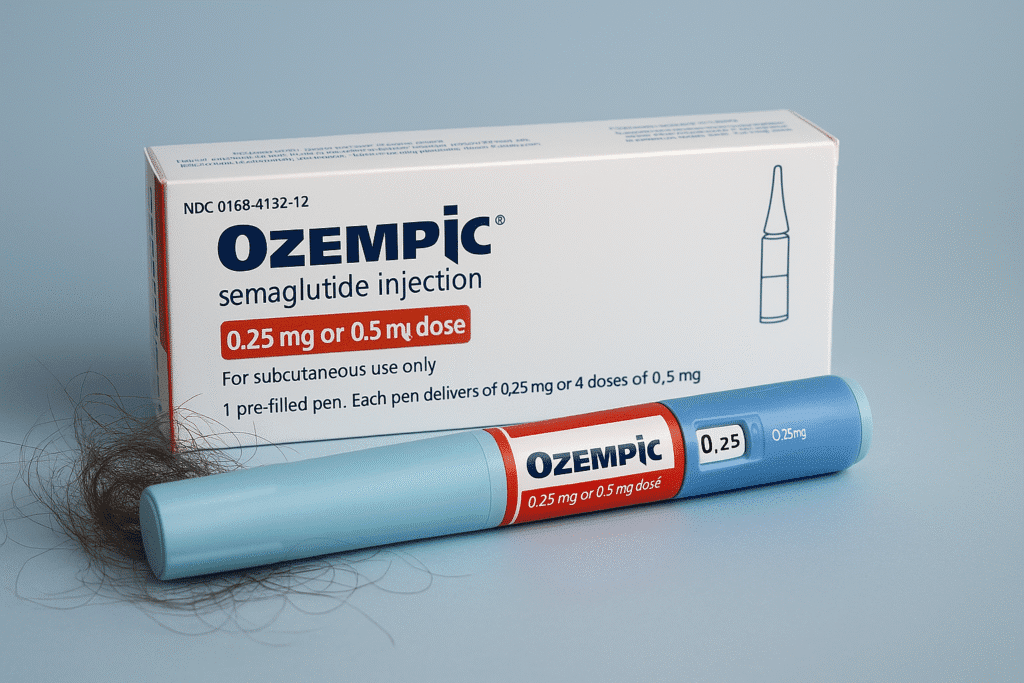
Ozempic Hair Loss: Ozempic, the brand name for semaglutide, has recently gained widespread attention for its remarkable effects on blood sugar regulation and, more notably, weight loss. Originally developed to treat type 2 diabetes, it has become a popular off-label choice for individuals seeking to lose weight. But with its rising popularity, a new concern has emerged: does Ozempic cause hair loss?
In this in-depth guide, we’ll explore the relationship between Ozempic and hair loss, separating fact from fiction and helping you understand what to expect if you’re considering or currently using this medication.
What is Ozempic?

Ozempic (semaglutide) is a glucagon-like peptide-1 (GLP-1) receptor agonist used to manage blood glucose levels in people with type 2 diabetes. It works by:
- Increasing insulin secretion
- Decreasing glucagon production
- Slowing gastric emptying
- Reducing appetite
These mechanisms not only help control blood sugar but also lead to significant weight loss, which is why semaglutide has gained popularity among non-diabetic individuals as well.
Is Hair Loss a Known Side Effect of Ozempic?

Officially, hair loss is not listed as a common side effect of Ozempic in its clinical trials or product literature. The most frequently reported side effects include:
- Nausea
- Vomiting
- Diarrhea
- Constipation
- Decreased appetite
However, despite the absence of hair loss in clinical trial data, a growing number of users have reported experiencing hair shedding or thinning after starting Ozempic, especially in online forums and social media groups.
Understanding the Indirect Causes of Hair Loss While Using Ozempic
Let’s clarify an important point: Ozempic may not directly cause hair loss, but indirect mechanisms can lead to it. Here’s how:
Rapid Weight Loss (Telogen Effluvium)
One of the primary causes of hair loss in individuals taking Ozempic is rapid weight loss. This can trigger a condition called telogen effluvium, a temporary hair loss that occurs when the body undergoes physical stress or a sudden metabolic shift.
How it works:
- Hair follicles prematurely enter the resting (telogen) phase.
- Within 2–3 months, increased hair shedding becomes noticeable.
- It is usually reversible, and hair regrowth begins after the body stabilizes.
This is similar to the hair loss seen after bariatric surgery, extreme dieting, or childbirth.
Nutrient Deficiencies
Weight loss—especially if done rapidly—can lead to deficiencies in essential nutrients, such as:
- Iron
- Zinc
- Biotin
- Vitamin D
- B-complex vitamins
Even if you’re eating, your body may not absorb or utilize nutrients efficiently during periods of rapid weight loss. These deficiencies can compromise hair follicle health, causing weakening or shedding.
Hormonal Imbalances
Ozempic impacts appetite and metabolic pathways, which may indirectly affect hormonal balance, especially in women. Hormones such as estrogen, thyroid hormones, and androgens are deeply tied to the hair growth cycle.
Hormonal disruptions can:
- Shorten the hair’s growth phase (anagen)
- Increase hair follicle sensitivity
- Cause hair miniaturization
Does the Hair Grow Back?
In most cases of telogen effluvium, hair regrows within 3–6 months after the initial shedding phase, assuming the root cause is addressed.
If hair loss is due to nutrient deficiencies or hormone imbalance, proper supplementation and medical guidance are essential for regrowth.
Real-World Patient Reports: What Are People Saying?
Many individuals using Ozempic (especially off-label for weight loss) have taken to online platforms like Reddit, Facebook groups, and weight-loss forums to share their experiences. A few recurring themes emerge:
- “I noticed hair coming out in the shower more than usual.”
- “Three months into Ozempic, I saw significant thinning.”
- “I love the weight loss, but I’m worried about how much hair I’ve lost.”
These reports are largely anecdotal and not part of official clinical studies, but they do indicate that hair loss is a real concern for some users.
How to Reduce the Risk of Hair Loss While on Ozempic
If you’re starting Ozempic or already using it and concerned about hair thinning, here are actionable steps to help minimize hair loss:
Lose Weight Gradually
Avoid crash dieting or pushing your weight loss to extremes. A steady pace of 0.5–1 kg per week is healthier and less likely to shock your body into telogen effluvium.
Monitor Nutrient Intake
- Eat a balanced diet rich in protein, iron, and healthy fats.
- Consider supplements such as:
- Biotin
- Zinc
- Omega-3 fatty acids
- Multivitamins
But always consult your doctor before starting any new supplements.
Get Your Bloodwork Done
Ask your healthcare provider for a full blood panel, including:
- Iron levels (ferritin)
- Vitamin D
- Thyroid panel (TSH, T3, T4)
- B12 and folate
Addressing deficiencies early can help prevent or reverse hair loss.
Consult a Dermatologist or Trichologist
If hair shedding is significant, a professional evaluation is recommended. They can determine the exact type of hair loss and offer treatments like:
- Minoxidil
- PRP (Platelet-Rich Plasma) therapy
- Stem cell hair treatments
- Microneedling
How is Ozempic Hair Loss Different from Androgenetic Alopecia?
It’s important not to confuse telogen effluvium with androgenetic alopecia (genetic hair loss). Key differences include:
| Feature | Telogen Effluvium | Androgenetic Alopecia |
|---|---|---|
| Onset | Sudden, diffuse shedding | Gradual thinning, especially on crown and temples |
| Reversibility | Usually reversible | Progressive without treatment |
| Trigger | Stress, weight loss, illness | Genetics, hormones |
| Duration | 3–6 months | Ongoing |
If unsure, a scalp examination or trichoscopy by a professional can provide a clear diagnosis.
What to Do If You’re Experiencing Hair Loss on Ozempic
Step-by-Step Plan:
- Don’t Panic – Hair loss is often temporary.
- Track Your Timeline – Did the hair loss start 2–3 months after weight loss began?
- Start Supportive Supplements – With medical advice.
- Use Mild Hair Products – Avoid harsh shampoos or chemicals.
- Manage Stress – Practice mindfulness, sleep well, and hydrate.
- Discuss with Your Doctor – They may recommend adjusting the dosage or exploring other options.
Final Thoughts: Should You Stop Ozempic Because of Hair Loss?
For most people, the benefits of Ozempic outweigh the risks—especially if hair loss is mild and temporary. However, if hair shedding is significant and emotionally distressing, it’s essential to explore underlying causes and potential solutions.
Remember:
- Hair loss is often reversible.
- Supportive care can make a big difference.
- A slow, steady, and nutritionally supported weight loss journey is key.
Ozempic can be a powerful tool in managing weight and diabetes, but like all medications, it’s best used under medical supervision, with an understanding of potential side effects—even the rare ones.
FAQs About Ozempic and Hair Loss
Q1: Is hair loss a permanent side effect of Ozempic?
A: No, it is typically temporary and related to weight loss or nutrient deficiencies.
Q2: How soon after starting Ozempic can hair loss begin?
A: Usually 2–3 months after rapid weight loss begins.
Q3: Can I take hair supplements while using Ozempic?
A: Yes, but only after consulting with your healthcare provider to ensure safety and effectiveness.
Q4: Should I stop Ozempic if I’m losing hair?
A: Not necessarily. Consider adjusting lifestyle factors and speaking with a doctor before making changes.
Considering Hair Regrowth Treatments?
If you’re struggling with hair loss after Ozempic and looking for solutions, advanced hair restoration therapies like PRP, stem cell therapy, or FUE transplants may be effective. At Hair Legends Antalya, we specialize in natural, minimally invasive solutions tailored to your specific needs. Book a free consultation today.