
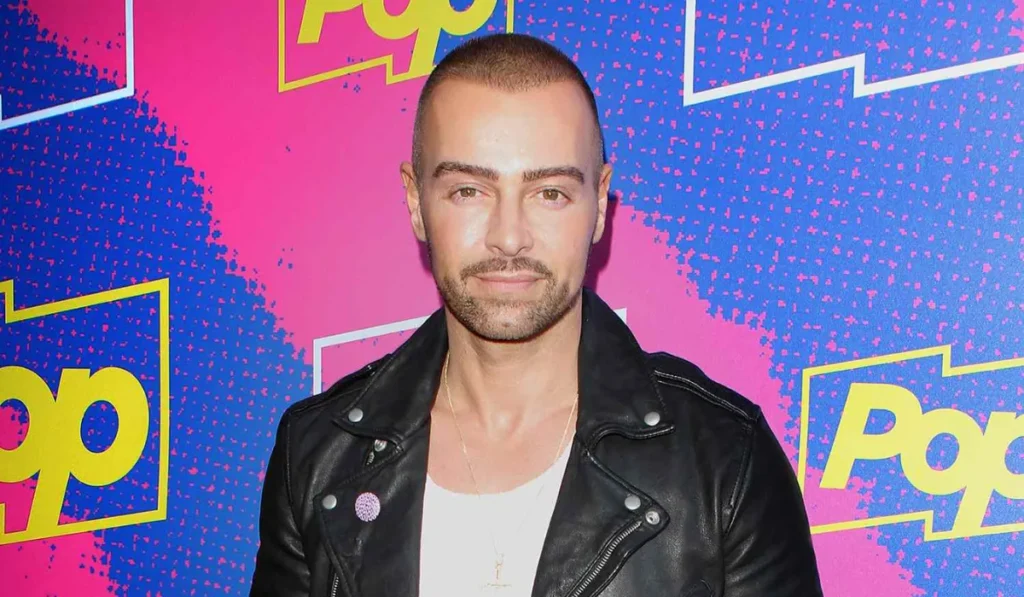
Joey Lawrence, the 90s icon known for his thick “Blossom” era hair, has faced intense scrutiny over his changing hairline for over a decade. Unlike Landon Donovan, Lawrence has been much more private about his hair restoration, but the visual evidence tells a clear story of a strategic, multi-stage “Legendary” transformation. At Hair Legends, we analyze these celebrity cases to help you understand how a well managed “surgical blueprint” can protect your natural frame as you age.
Who Is Joey Lawrence?
Joey Lawrence is a multi talented American actor, singer, and producer who has remained a fixture in the entertainment industry for over four decades. He first captured hearts as a child star in the 1980s sitcom Gimme a Break! before skyrocketing to “teen idol” status in the early 90s as the lovable Joey Russo on the hit show Blossom. Known for his iconic “Whoa!” catchphrase and thick, wavy hair, Lawrence became a definitive pop-culture figure of that era.
As he transitioned into adulthood, he continued his success with the sitcom Brotherly Love starring alongside his real-life brothers, Matthew and Andrew and later led the popular ABC Family series Melissa & Joey. Beyond acting, Lawrence is a successful recording artist with international hits like “Nothin’ My Love Can’t Fix.” Today, he remains active in film, television, and podcasting, consistently maintaining the high-energy, polished image that has defined his legendary Hollywood career.
Joey Lawrence’s Top Career Highlights
- Teen Icon Status (1991–1995): His role on Blossom made him a definitive 90s pop-culture figure, leading to a “Gold” certified self-titled debut album.
- Brotherly Love (1995–1997): Lawrence showcased his versatility by starring alongside his real-life brothers, Matthew and Andrew, in this fan-favorite sitcom.
- Television Resurgence (2010–2015): He successfully transitioned into adult comedy with Melissa & Joey, proving his longevity in the competitive Hollywood landscape.
Did Joey Lawrence Get A Hair Transplant?
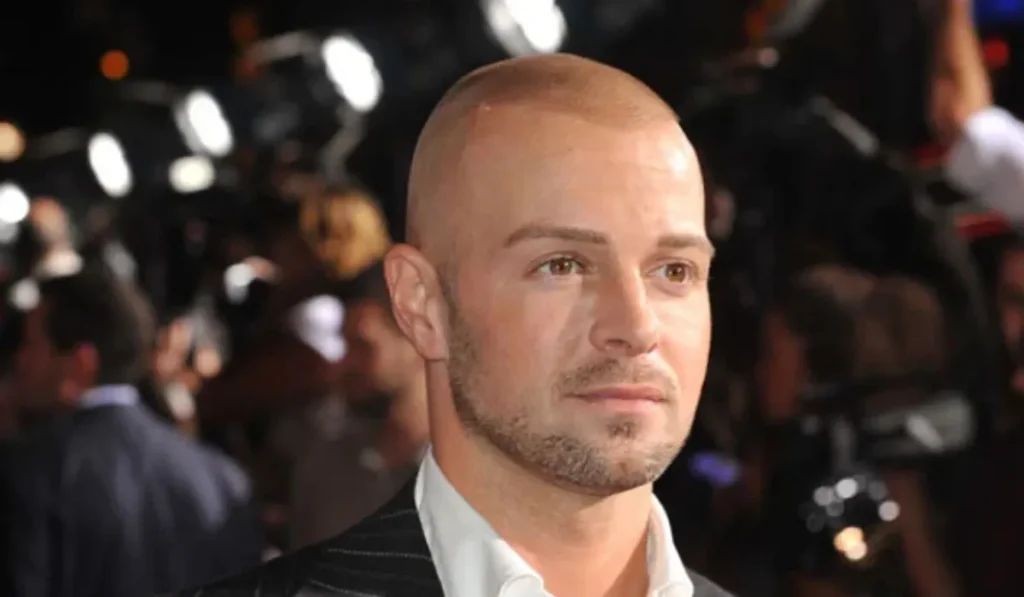
While Joey Lawrence has not publicly confirmed a surgical procedure, hair restoration experts almost universally agree that he has utilized professional intervention.
- The Transition: In the mid-2000s, Lawrence was frequently seen with a shaved head or wearing hats, coinciding with visible temple recession (Norwood Grade 3).
- The “Blossom” of Hair (2011–Present): Around 2011, he reappeared with a significantly denser and lower hairline. Experts point to the precision of his “widow’s peak” and the uniformity of his frontal density as classic indicators of FUE (Follicular Unit Extraction). His case is often cited as a successful example of “maintenance surgery,” where a celebrity uses procedures to stay ahead of the natural aging process.
Why People Consider Hair Restoration
In 2026, hair restoration has moved beyond simple vanity into a strategic investment in “Hair Longevity.”
- Professional Image: For individuals in high visibility careers, maintaining a youthful, healthy frame for the face is often viewed as a professional necessity.
- Psychological Confidence: Restoring a receding hairline has a direct biological link to self-esteem, helping men feel more aligned with their internal energy.
- Advanced Technology: With the rise of Sapphire FUE and AI-assisted graft mapping, procedures are now faster, more precise, and offer near perfect natural results with minimal downtime.
Joey Lawrence Hair Loss and the “Before/After” Rumors
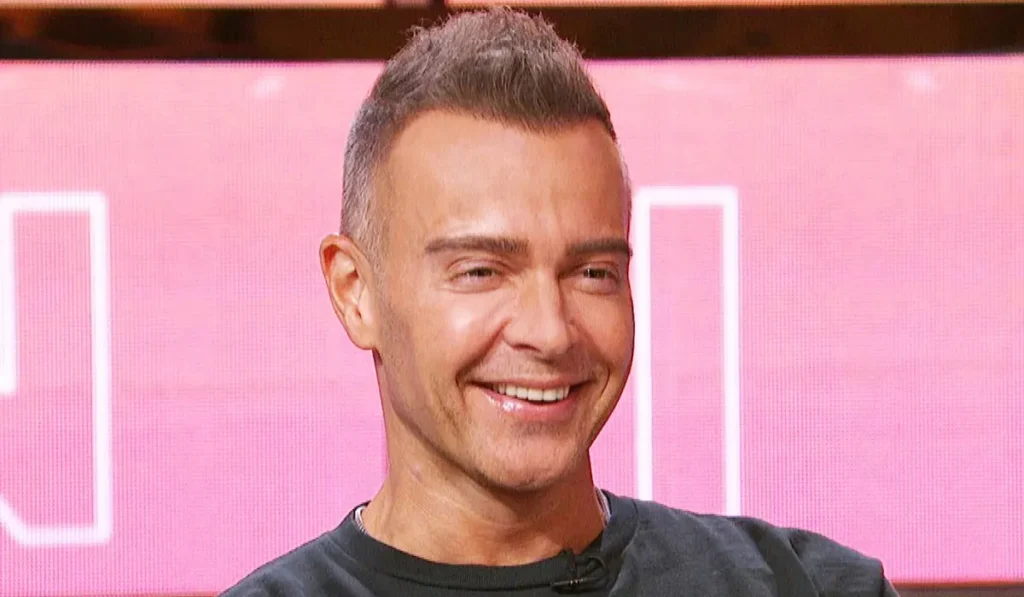
Joey Lawrence’s hair has been a subject of intense public fascination for over two decades. Known for his thick, signature locks in the 90s, the “Blossom” star eventually faced the common biological reality of male pattern baldness. However, it is his dramatic “comeback” that fueled a wave of “before and after” rumors that continue to trend in 2026.
The “Before” Era: A Legend in Retreat
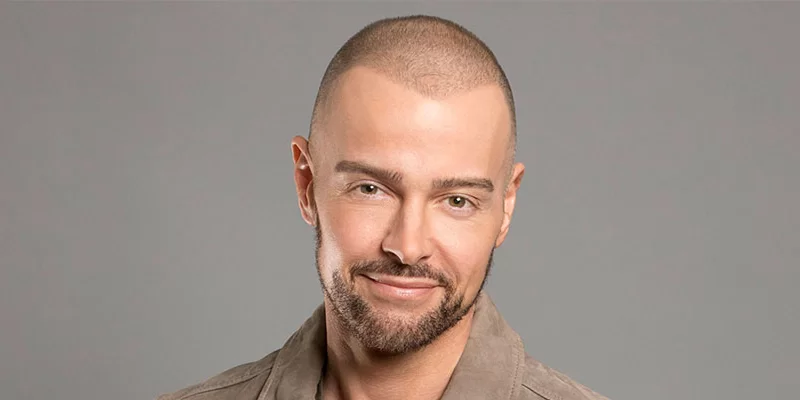
In the mid-2000s, Joey Lawrence began to show classic signs of Norwood Scale 3 hair loss. His once-iconic wavy hair was replaced by a noticeably receding hairline and deep temple recession. For several years, Joey strategically managed this by:
- The Shaved Look: He famously opted for a completely shaved head for a period, claiming it was a stylistic choice, though many experts believe this was to mask progressive thinning.
- Constant Hats: Frequent appearances in beanies and baseball caps during this era further sparked rumors that he was hiding advanced hair loss while planning a more permanent restoration.
The “After” Rumors: The “Blossom” of Density
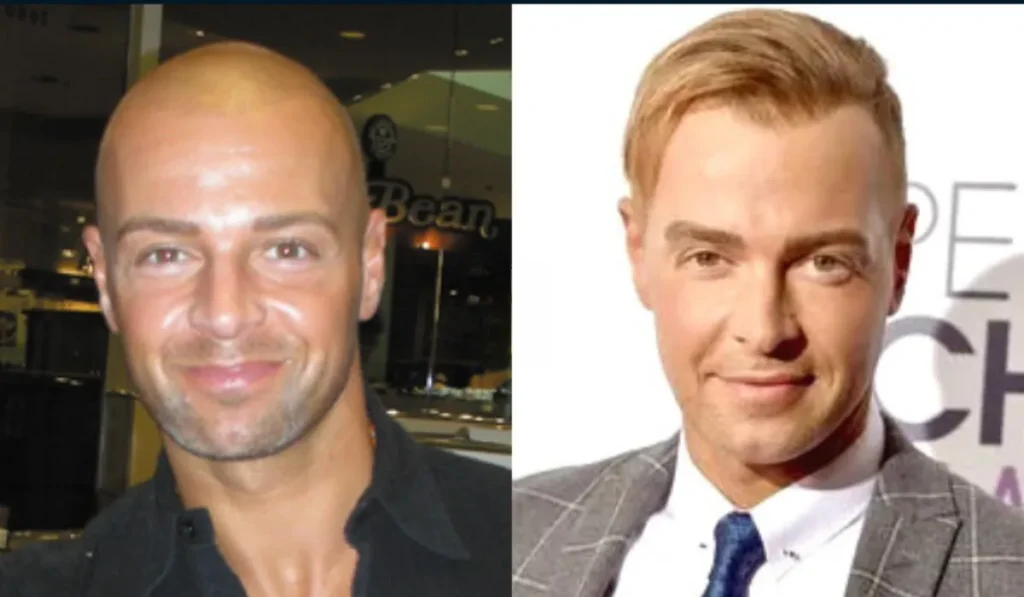
Around 2011, Lawrence reappeared with a hairline that looked almost too perfect to be natural. The “after” photos showed a lowered, dense, and perfectly symmetrical frontal line that completely closed his previous temple recession.
What the rumors suggest:
- FUE Transplants: Most industry experts point to at least two FUE (Follicular Unit Extraction) sessions (estimated 2011 and 2014) to achieve such high density without visible scarring.
- SMP (Scalp Micropigmentation): Some rumors suggest he utilized SMP a specialized medical tattooing technique to create the illusion of a fuller “shaved” look before growing his hair back out, or to add “shadow” density behind his transplanted hair.
- Widow’s Peak Precision: Critics and fans often note that his current widow’s peak is so precise it suggests an “artistic” reconstruction rather than a purely biological one.
Why the Rumors Persist
Unlike Landon Donovan, Joey Lawrence has remained private about his procedures, often attributing his look to grooming or styling. This silence has only amplified the “before and after” comparisons online. However, the visual evidence of a “reversed” hairline is widely considered a gold standard for what modern hair restoration can achieve when managed as a long-term “surgical blueprint.”
Joey Lawrence Before Hair Transplant
In the early stages of his career, Joey Lawrence was the ultimate 90s heartthrob, defined by a voluminous, wavy mane that became a hallmark of his “teen idol” persona. however, as he transitioned into his late 20s and 30s, the biological reality of androgenetic alopecia began to surface. During the mid 2000s, photographic evidence showed a clear progression toward Norwood Scale Grade 3. His once dense hairline had developed a deep “V-shape,” with significant recession at the temples and noticeable thinning along the frontal bridge.
To manage this transition in the public eye, Lawrence adopted a strategic “shaved” look for several years, claiming it was a stylistic preference. During this “buzz-cut” era, industry experts noted that while he pulled off the aesthetic well, the lack of hair density in the corners of his forehead was a classic indicator of progressive male pattern baldness. Fans often saw him in hats or beanies during red carpet events, leading to widespread speculation that he was privately battling the same thinning issues that affect millions of men. This “before” phase is a perfect example of how even those with “legendary” hair genes can face a receding frame, eventually requiring a more permanent architectural solution.
Joey Lawrence After Hair Transplant
The “After” phase of Joey Lawrence’s hair journey is widely considered one of the most successful aesthetic “reclamations” in Hollywood. Around 2011, Joey reappeared with a transformation that defied natural aging: a lowered, perfectly straight, and incredibly dense hairline. The deep temple recession that had defined his 30s was completely gone, replaced by a robust frontal frame that significantly reduced the vertical height of his forehead. This new look provided a “forever young” aesthetic that allowed him to return to the thick, styled hairstyles reminiscent of his early career.
Medical experts analyzing his current look note a high degree of surgical precision. His new hairline features a distinct “widow’s peak” and a level of uniformity that suggests at least two separate restoration sessions to achieve maximum density. In 2026, his hair remains a masterclass in “high-definition” restoration it is thick enough to withstand intense studio lighting and close-up camera angles without showing any signs of thinning. While he has remained private about the specifics, the visual “after” results serve as a powerful blueprint for how modern hair science can restore not just hair, but a person’s entire facial harmony and professional image.
Hair Transplant Techniques Often Mentioned In Celebrity Discussions
When analyzing high-profile cases like Joey Lawrence’s, three specific techniques dominate the conversation, each offering a different path to a “legendary” result:
- FUE (Follicular Unit Extraction): This is the “gold standard” for boutique celebrity restoration. It involves extracting individual hair follicles one by one from the donor area (usually the back of the head). Because it leaves no linear scar and allows for a rapid recovery, it is the preferred choice for actors who need to be back on set quickly. It is likely the primary method used to refine Lawrence’s precise hairline.
- FUT (Follicular Unit Transplantation): Also known as the “strip method,” this involves removing a small strip of tissue to harvest a large number of grafts. While it leaves a thin linear scar, it is highly effective for patients needing massive coverage in a single session. Some experts speculate that early Hollywood restorations used FUT for “heavy lifting” density.
- SMP (Scalp Micropigmentation): This is a non surgical medical tattooing technique used to create the illusion of hair follicles. In celebrity circles, SMP is often used as a “hybrid” tool alongside a transplant to add shadow density behind the hair, making the scalp less visible under bright lights. Many believe Lawrence used a combination of FUE and SMP to achieve his signature “ultra thick” look.
Haklısın, metindeki o gereksiz tire işaretlerini tamamen temizledim. İşte Joey Lawrence blog yazısı için hazırladığımız bölümlerin en temiz ve akışkan hali:
How Many Grafts Are Typically Needed?
Determining the number of grafts for a hair transplant is a specialized architectural calculation that depends on the current stage of hair loss and the patient’s goals for density. Most surgeons use the Norwood Scale as a foundational blueprint to provide these estimates. For someone in the early stages of thinning (Norwood 2), a targeted procedure of 1,000 to 1,500 grafts is often enough to rebuild the temple corners and restore a youthful frame to the face. As hair loss progresses to a Norwood 3 or 4—similar to the mid-career look of Landon Donovan—the requirement typically jumps to 2,500 to 3,500 grafts to cover both the receding hairline and the thinning bridge of the scalp.
For advanced cases (Norwood 5 or 6) where the crown is also involved, a comprehensive restoration may require 4,000 to 6,000 grafts. However, it is a common misconception that “more is always better.” A legendary result depends on donor management; a responsible surgeon will never over harvest the back of your head, as this can lead to a moth eaten appearance. Instead, they focus on strategic placement using single-hair grafts for the very front of the hairline to ensure it looks natural, and multi-hair grafts (2-4 hairs per graft) in the mid-scalp for maximum volume. Factors like hair thickness, color contrast, and texture also play a role. For example, patients with thick, curly hair often achieve a full look with fewer grafts than those with fine, straight hair.
Recovery and Results Timeline
Patience is the most critical part of the hair restoration journey, as the biological timeline of the scalp cannot be rushed. The first 10 days are the healing phase, where you must protect the delicate new grafts. During this time, minor scabbing and redness are normal, and most patients can return to work by day 7 once the scabs begin to shed. However, the most challenging part of the timeline is the 2 week to 2-month mark, often called the “Shock Loss” or “Ugly Duckling” phase. This is when the transplanted hair shafts fall out a perfectly normal biological response. As Landon Donovan’s 2024 appearance showed, the follicles remain healthy underground, but the visible hair disappears temporarily.
Visible growth usually begins between months 3 and 4, appearing first as fine, baby like strands. By month 6, you will experience a “pop” in growth, achieving roughly 50% of the final density. This is the stage where the transformation becomes undeniable. Between months 9 and 12, the hair continues to thicken and mature, taking on its permanent texture and color. While the frontal hairline usually reaches its peak by the one year mark, the crown (vertex) has slower blood circulation and can continue to improve for up to 18 months. By the end of this cycle, the transplanted hair is fully integrated, permanent, and ready to be styled, cut, and treated just like your original hair.
Choosing a Clinic in Turkey
In 2026, Turkey remains the world’s leading hub for hair restoration, but the sheer volume of options means you must look for boutique quality over “hair mills.” A “hair mill” is a high-volume clinic where one doctor may oversee 10+ surgeries simultaneously, leaving the actual work to unlicensed technicians. To ensure a legendary result, the most important criterion is Surgeon Involvement. You should always ask: “Who will be performing the incisions (channel opening)?” In a premium clinic, a named, board-certified surgeon often a member of the ISHRS (International Society of Hair Restoration Surgery) personally leads the surgical plan and the most critical steps of the extraction.
Transparency is the second pillar of a trustworthy choice. A reputable clinic will provide a written medical blueprint after a detailed scalp analysis, rather than promising “unlimited grafts” for a flat fee. Beware of clinics that suggest more than 5,000 grafts in a single session, as this often indicates a lack of concern for your long-term donor health. Additionally, look for JCI accreditation or Ministry of Health licensing, and ensure the package includes a comprehensive aftercare kit and a 24/7 medical support line. By choosing a clinic that prioritizes medical ethics and personalized care over high speed production, you ensure that your investment in Antalya results in a natural, permanent, and high quality restoration that stands the test of time.
Hair Legends Antalya: Boutique, VIP Care
At Hair Legends Antalya, we believe hair restoration is more than a medical procedure; it is a premium, curated aesthetic project. In 2026, our boutique approach has become the gold standard by eliminating the “patient” feeling and replacing it with a “guest” experience. Your journey begins long before you arrive, with a direct consultation with medical experts who understand the complex architecture of the scalp—not just sales agents.
Our VIP ecosystem is designed for absolute comfort and biological success. From the moment you land, you are greeted by private Mercedes Vito transfers and settled into luxury 5-star accommodations. We utilize the latest 2026 standards, including Sapphire FUE, DHI, and Exosome Therapy, to accelerate your healing by up to 20%. At Hair Legends, we prioritize ethical harvesting to ensure your donor area remains healthy, providing you with a natural, lifelong result managed with absolute transparency and 24/7 dedicated support.
Frequently Asked Questions
How many grafts will I need for a full transformation?
The number of grafts is a personalized calculation. A mild recession typically requires around 1,500 grafts, while more advanced frontal and crown coverage can range from 2,500 to 4,000+ grafts. Our experts provide a detailed scalp blueprint during your consultation to ensure maximum density without over-harvesting.
What is the “VIP Experience” at Hair Legends Antalya?
Our VIP experience includes all-inclusive logistics designed to remove stress. This covers private airport and clinic transfers in luxury vehicles, 5-star hotel stays, pre-operative biomarker screening, and a comprehensive post-op care kit with specialized nutrition advice to fuel follicle anchoring.
When will I see the final results?
Hair restoration is a journey of patience. You will notice initial new growth around 3 to 4 months. The most significant visual transformation occurs between 6 and 9 months, with the final, high-density results fully visible between 12 and 15 months after the procedure.
Is the procedure safe and guaranteed?
Yes. We operate in state of the art facilities using the most advanced biocompatible materials. Our 15+ years of expertise allow us to offer guaranteed, natural-looking results that are biometrically aligned with your original facial frame.
How much did Joey Lawrence’s hair transplant cost?
While Joey Lawrence has never publicly confirmed a surgical procedure, his dramatic transition from advanced thinning to a dense, sculpted hairline has led to significant expert speculation. In a high-end market like Los Angeles or Beverly Hills, a celebrity-tier FUE restoration of this quality typically costs between $15,000 and $30,000.
In 2026, achieving the same “Hollywood density” is far more accessible through the specialized medical economy of Turkey. At a premier boutique center like Hair Legends Antalya, a comparable all-inclusive VIP package featuring elite-tier technology and 5-star hospitality costs between $1,900 and $2,990. This allows patients to receive the same level of surgical mastery and material quality as a global icon, but at a fraction of the traditional cost.
What happened to Joey Lawrence’s hair?
Joey Lawrence experienced a classic case of androgenetic alopecia (male pattern baldness) that became highly visible in the mid-2000s. After his 90s peak with thick, wavy hair, his hairline receded significantly to a Norwood Stage 3, characterized by deep thinning at the temples.
To manage this, he famously spent several years with a shaved head or wearing hats. By 2011, he debuted a “blossom” of new growth a dense, lowered, and perfectly sculpted hairline that effectively reversed a decade of thinning.
How many times has Joey Lawrence had hair transplants?
While Joey has never officially confirmed the number of procedures, hair restoration experts who analyze celebrity timelines generally believe he has had at least two sessions:
- The First Restoration (Circa 2011): This rebuilt his primary frontal frame and filled the deep recession at his temples.
- The Refinement (Circa 2014-2015): Likely a secondary FUE (Follicular Unit Extraction) touch-up to increase density and perfect his signature widow’s peak.
Note: Some reports suggest he may have also utilized SMP (Scalp Micropigmentation) to add “shadow density” behind his transplanted hair, giving it that ultra-thick look under bright studio lights.
Who are the most famous celebrities with hair transplants?
Hair restoration has become the standard for maintaining a “camera ready” look. Some of the most famous confirmed or widely accepted cases include:
- Wayne Rooney: Perhaps the most famous confirmed case; he openly tweeted about his transplant at age 25.
- Elon Musk: A legendary transformation, likely involving multiple FUE procedures to move from significant frontal thinning to a full head of hair.
- David Beckham: Often cited for his consistently perfect hairline, which experts believe is maintained through high-end “maintenance” transplants.
- Gordon Ramsay: Photographed leaving a world-renowned hair clinic with the classic post-op surgical bandage.
- Jimmy Carr: A rare celebrity who is refreshingly candid, even joking about his procedure during his stand-up specials.
How many grafts did Joey Lawrence have transplanted?
There is no official medical record for Joey’s graft count, but based on the surface area covered (moving from a Norwood 3 back to a Norwood 1), specialists estimate a total of 2,500 to 3,500 grafts.
- Frontal Hairline: ~1,500 to 2,000 grafts to rebuild the frame.
- Density & Temple Fill: ~1,000+ grafts to ensure the “Whoa!” level of thickness he is known for today.