
Eyebrow Transplant After Microblading: For many, the journey to the perfect brow begins at the tattoo studio. Microblading has been the “holy grail” of eyebrow enhancement for years, offering a semi-permanent solution to thin, over-plucked, or asymmetrical brows. However, as the pigment fades and the reality of lifelong maintenance sets in, many patients find themselves asking: Is there a better way?
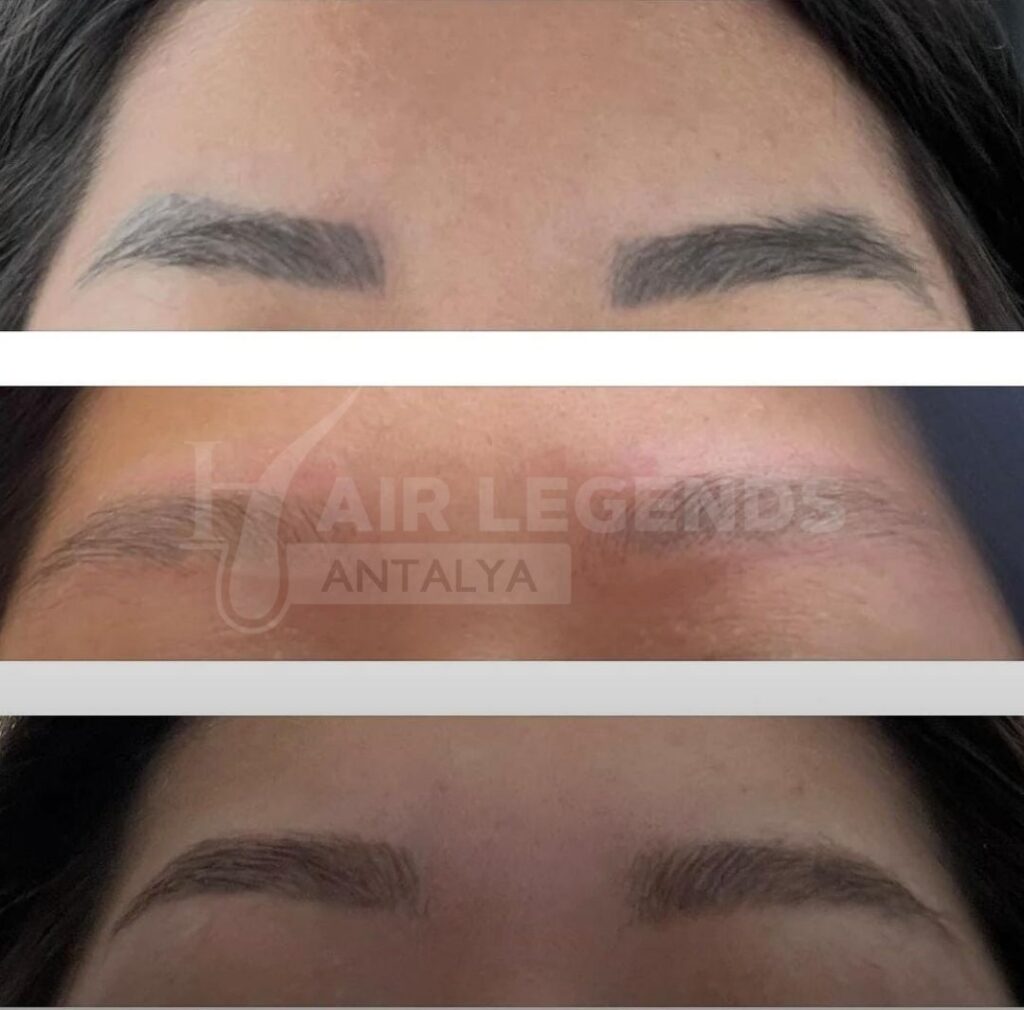
The answer is a resounding yes. An eyebrow transplant after microblading is the bridge between a temporary “painted” look and the authentic, three-dimensional texture of natural hair.
In this exhaustive guide, we will explore why patients are making the switch, how to prepare for the procedure, and why choosing a clinical expert is vital for your aesthetic future.
Why Move Beyond Microblading?
While microblading is a skilled art form, it is fundamentally a surface-level fix. It uses tiny needles to deposit pigment into the upper layers of the skin. Over time, several issues often arise:

- Pigment Discoloration: High-quality inks can still shift hue over time, turning ashy blue, grey, or even salmon-pink.
- Skin Trauma: Repeated “touch-ups” every 12–18 months can lead to sub-dermal scarring, making it harder for the skin to retain pigment in the long run.
- Lack of Dimension: No matter how skilled the artist, ink cannot replicate the way natural light catches individual hair follicles.
- The Maintenance Cycle: The cost and time commitment of perpetual appointments become a burden.
An eyebrow transplant (FUE or DHI technique) offers a permanent, one-time solution using your own living hair follicles.
Can You Get an Eyebrow Transplant Over Microblading?
The short answer is yes, but with strategic planning. In fact, having a microblading “blueprint” can sometimes serve as a helpful guide for the surgeon to see the shape you’ve grown accustomed to. However, there are two critical factors to consider: pigment density and skin health.
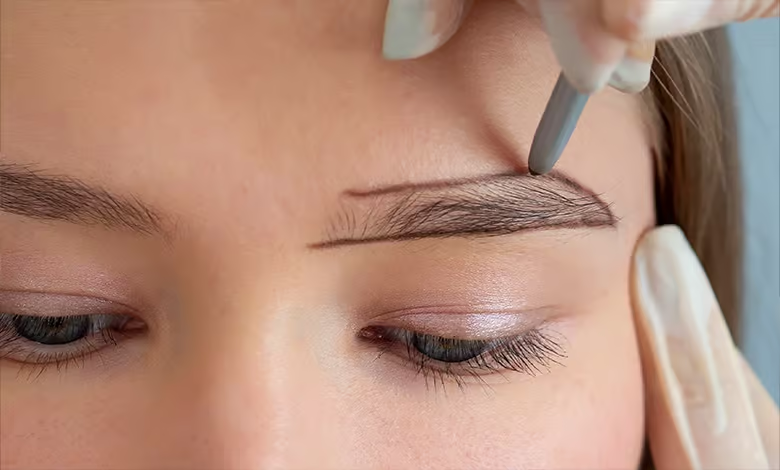
The Role of Laser Removal
If your microblading is very dark, saturated, or outside the natural “ideal” brow line, your surgeon may recommend a few sessions of laser tattoo removal before the transplant.
- Why? Because once the new hair grows in, the old, misplaced pigment underneath might look like a “shadow” in the wrong place.
- The Goal: We want a clean canvas where the hair placement defines the shape, not the old ink.
Assessing Scar Tissue
Repeated microblading can cause fibrosis (micro-scarring). A specialized hair transplant surgeon must assess the vascularity of your brow area. Healthy blood flow is essential for the “take” rate of the new grafts.
The Biological Advantage: Hair vs. Ink
When we perform an eyebrow transplant after microblading, we are essentially moving from 2D to 3D.
| Feature | Microblading | Eyebrow Transplant |
| Longevity | 1–2 Years | Lifetime |
| Texture | Flat / Ink-based | Real, growing hair |
| Material | Synthetic Pigment | Your own follicles (usually from the nape) |
| Grooming | None | Occasional trimming required |
| Natural Look | High (initially) | Absolute (permanent) |
To help you find the best care, it’s important to understand the terminology used in the industry. Our clinic specializes in:
- FUE Eyebrow Transplant (Follicular Unit Extraction) in Antalya
- DHI Eyebrow Restoration (Direct Hair Implantation) in Antalya
- Corrective Eyebrow Surgery in Antalya
- Natural Hairline Design in Antalya
- Post-Microblading Hair Recovery in Antalya
Designing Your Forever Brows
The most critical step in transitioning from microblading to a transplant is the design phase. Unlike a tattoo artist, a transplant surgeon must account for:
- Exit Angle: Hair on the brow grows at a very acute angle, almost flat against the skin.
- Directional Flow: The “medial” (inner) brow hairs point upward, while the “tail” hairs point outward and slightly downward.
- Density Gradient: A natural brow is softer at the start and denser in the arch.
Expert Tip: If you currently love your microbladed shape, take high-resolution photos. We can use these as a template while refining the edges to ensure a more “organic” and less “stenciled” appearance.
Preparing for the Procedure
To ensure the highest survival rate for your new grafts, we recommend the following:
- Stop Blood Thinners: Avoid aspirin or herbal supplements that increase bleeding at least 7 days prior.
- Evaluate Pigment: If you are planning laser removal, this should be completed at least 2–3 months before the transplant to allow the skin to heal completely.
- Hydration and Nutrition: Healthy skin accepts grafts more readily.
Why Choose Our Clinic for Your Transition?
Moving from the world of aesthetics (microblading) to the world of medical surgery (transplant) requires a team that understands both. We don’t just “plug in hair”; we sculpt a frame for your face.
Our surgeons are experts in navigating skin that has been previously treated with microblading needles, ensuring that the follicular units are placed with precision despite any underlying tissue changes.
The Technical Mastery: FUE vs. DHI in the Context of Tattooed Skin
When transitioning from a pigment-based brow to a biological one, the choice of technology is not just a preference it’s a clinical necessity. Microblading involves making small cuts in the upper dermis, which inevitably leads to some degree of tissue fibrosis. To ensure the new hair follicles survive and thrive in this previously “worked” skin, we utilize the most advanced methods available in the field of hair restoration.
The Precision of Direct Hair Implantation (DHI)
For many of our patients, we recommend the DHI technique using the Choi Implanter Pen. Unlike the traditional FUE where channels are opened first and follicles are placed later, DHI allows for simultaneous incision and implantation.
- Angle Accuracy: Eyebrow hair doesn’t grow straight out; it grows at an acute, almost flat angle against the bone. In the “head” of the brow, hairs point upward; in the “bridge,” they transition horizontally; and in the “tail,” they sweep downward. The Choi pen allows our surgeons to control the depth and direction to a fraction of a degree.
- Vascular Protection: Because DHI is less invasive, it preserves the blood flow in the brow area, which is crucial when we are grafting into skin that has been subjected to years of microblading needles.
- Density over Pigment: Our goal is to achieve a density that naturally masks the “flat” look of the old ink, creating a three-dimensional masterpiece.
Follicular Unit Extraction (FUE) and Single-Graft Selection
The success of an eyebrow transplant after microblading relies heavily on the “donor” site. We typically harvest hair from the nape of the neck because it is finer and more delicate.
In a standard scalp transplant, we look for grafts with 3 or 4 hairs. However, for the eyebrows, this would look unnaturally thick or “pluggy.” Our specialists meticulously separate these into single-hair grafts. This ensures that the leading edge of your new brow looks soft, feathered, and completely natural just like a virgin brow that has never been touched by a tattoo needle.
The Biological Journey: What Happens After the Procedure?
Understanding the recovery timeline is essential to managing expectations. Many patients who are used to the “instant” results of microblading are surprised by the slower, more rewarding pace of a biological transplant.
The First 72 Hours: Protecting Your Investment
Immediately after the surgery, your brows will look remarkably defined. You will see the individual hairs placed exactly where your microblading used to be. During this window:
- The “Scab” Phase: Tiny, pin-sized crusts will form around each graft. This is a sign of healing.
- Zero Friction: You must avoid touching, rubbing, or washing the brows. The follicles are like “seeds” newly planted in soil; they need time to take root.
- The Look: You might look like you’ve had a very dark “power brow” treatment. This is just the combination of the hair shafts and the healing skin.
Days 7 to 14: The Gentle Cleanse
By the end of the first week, the grafts are usually “locked in.” We will guide you through a gentle washing protocol to soften and remove the crusts. As the skin clears, you will see the clean, crisp work of the surgeon. This is often the “honeymoon phase” where patients see a glimpse of their future look.
The “Shedding” Phase (Weeks 2–8)
This is the most critical time for patient education. Almost all transplanted hairs will fall out within the first month. Do not panic.
- This is a natural biological process called Telogen Effluvium. The hair shaft falls out, but the follicle underneath is entering a regenerative cycle.
- This is where your old microblading actually serves a purpose! It acts as a temporary shadow while your new hairs are “sleeping” and preparing to grow back permanently.
Months 3 to 12: The Permanent Bloom
New hairs begin to sprout around the third or fourth month. Initially, they may be fine or slightly curly, but as they mature, they strengthen and straighten. By the 12-month mark, the transformation is complete. You will have full, thick, natural eyebrows that no longer rely on ink to exist.
Grooming and Maintenance: Living with Your New Brows
Since the transplanted hair comes from your scalp, it retains its original DNA. This means it will grow faster and longer than original eyebrow hair.
- The Trimming Routine: You will need to trim your brows once every week or two. Using a simple spoolie brush and aesthetic scissors, you can keep the length perfect.
- Directional Training: During the first few months of growth, using a clear brow gel helps “train” the hairs to lay perfectly flat, especially if they are transitioning from the scalp environment.
- No More “Tattoo Fatigue”: Say goodbye to the 18-month cycle of fading, redrawing, and “ghosting” pigments. Your new brows are permanent. You can swim, sweat, and wash your face without ever worrying about your eyebrows “disappearing.”
Why an Eyebrow Transplant is the Ultimate “Microblading Correction”
We often see patients who are unhappy with the long-term results of their cosmetic tattoos. Common issues include:
- Pigment Migration: The ink has blurred, creating a “smudged” look.
- Color Shift: High-quality inks can turn grey, blue, or even orange over time due to UV exposure and skin chemistry.
- Asymmetry: As the face ages and skin laxity changes, a tattooed brow can end up looking “out of place.”
An eyebrow transplant solves these issues by providing actual volume. By placing hair over the migrated pigment, we create a new focal point. The eye sees the texture and shadow of the hair, not the flawed ink underneath. It is the most effective form of “correction” because it addresses the root cause: the lack of three-dimensional structure.
Safety, Ethics, and the Clinical Advantage
Choosing a clinic for an eyebrow transplant is a medical decision, not just a beauty one. At our facility, we prioritize the Triple-A Standard: Anatomy, Artistry, and Aftercare.
- Medical Supervision: Unlike a tattoo studio, our procedures are performed in a sterile, surgical environment by licensed professionals.
- Natural Design: We don’t use “stencils.” We design your brows based on your unique bone structurethe supraorbital ridge, the distance between your eyes, and your forehead height.
- Lifetime Support: Our relationship with our patients doesn’t end when the surgery is over. We provide a full year of follow-up care to ensure every graft has grown as intended.
The Final Step in Your Brow Journey
Microblading was a great first step. It showed you how much better you look and feel with defined eyebrows. But you deserve a solution that is as real as you are.
An eyebrow transplant after microblading is more than a cosmetic upgrade; it is a release from the cycle of temporary fixes. It is the confidence of waking up every morning with perfect brows, the freedom to enjoy a sauna or a pool without a second thought, and the peace of mind that comes with a permanent, medical-grade solution.
Stop drawing your brows. Start growing them.
Whether your microblading is fresh or fading, we are here to help you navigate the transition to permanent perfection. Contact our specialists today for a detailed assessment and take the first step toward the last brow treatment you will ever need.