
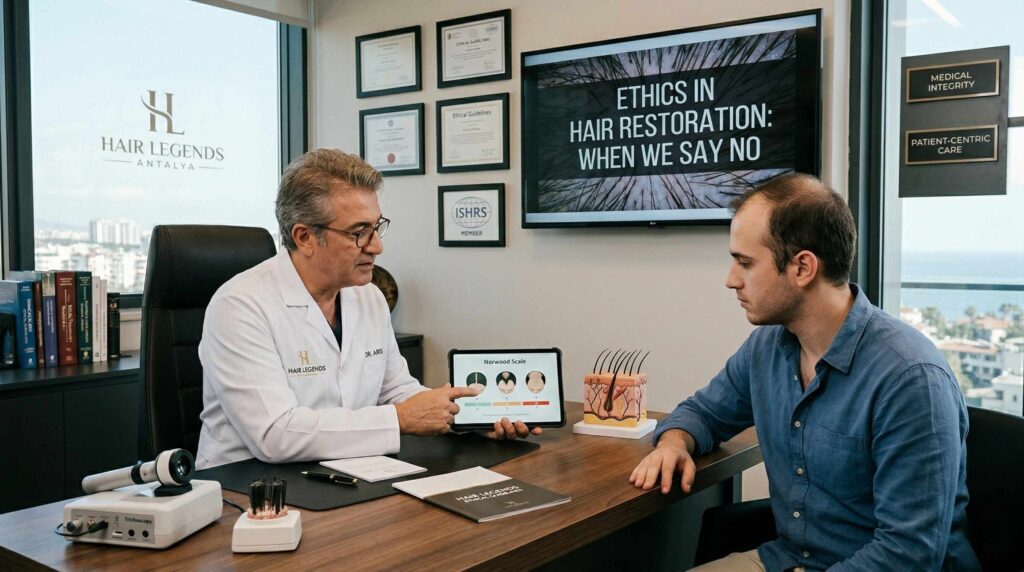
Ethics in Hair Restoration: In the modern era of the global hair transplant boom, the industry has shifted dangerously toward a retail driven model. Many clinics treat hair restoration as a simple commodity, where the only requirement for surgery is a patient’s willingness to pay. This “all comers” approach is the antithesis of medical ethics. At Hair Legends Antalya, we operate under a different mandate: we are medical professionals first and aesthetic consultants second. True expertise is not defined by the ability to perform a surgery; it is defined by the wisdom to know when a surgery should not be performed.
A hair transplant is a permanent, life altering surgical intervention. When performed on an unsuitable candidate, it can lead to devastating aesthetic failure, permanent donor depletion, and long-term psychological distress. This masterclass explores the clinical, ethical, and anatomical reasons why “No” is often the most professional answer a patient can receive, and how this integrity protects the “Legendary” standards of our brand.
The Ethical Framework: Non Maleficence in Hair Restoration
The primary oath of any physician is Primum non nocere First, do no harm. In hair restoration, harm is not just an infection or a scar; harm is the mismanagement of a patient’s limited donor hair or the creation of a result that will look unnatural in ten years.
High volume clinics often ignore this oath because their business model depends on high patient turnover. They use aggressive sales tactics to bypass a patient’s medical suitability. At our boutique clinic, we utilize a Strict Candidacy Protocol. We believe that saying “no” to an unsuitable patient is a service to that individual’s long-term well-being. By maintaining this boundary, we ensure that every “yes” we give is backed by a clinical guarantee of success and naturalness.
The Biological Limitation: Assessing the Donor to Recipient Ratio
The most common reason for an ethical refusal is an insufficient donor area. A hair transplant does not create “new” hair; it is a strategic redistribution of existing follicles from the back and sides of the head (the donor) to the thinning areas (the recipient).
1. The Trap of Low Donor Density
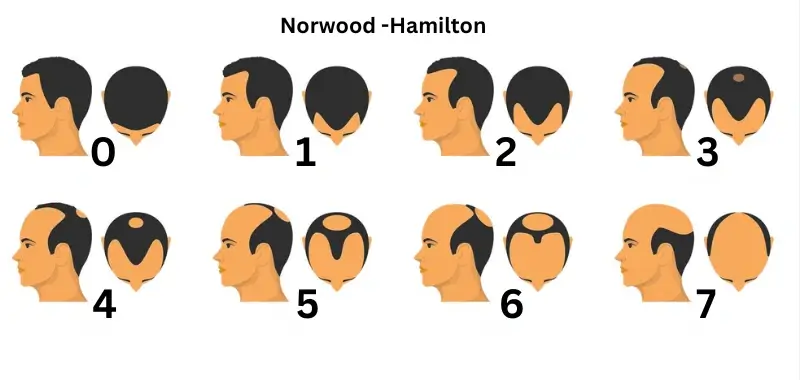
If a patient has advanced hair loss (Norwood 6 or 7) and a donor area that is already sparse or thin, the math simply does not work. A clinic that says “yes” to this patient will be forced to “over-harvest” the donor area, leaving it looking moth eaten and transparent. Furthermore, the recipient area will never achieve enough density to look natural. The result is a “thin look” everywhere.
2. Retrograde Alopecia and Unstable Donor Areas
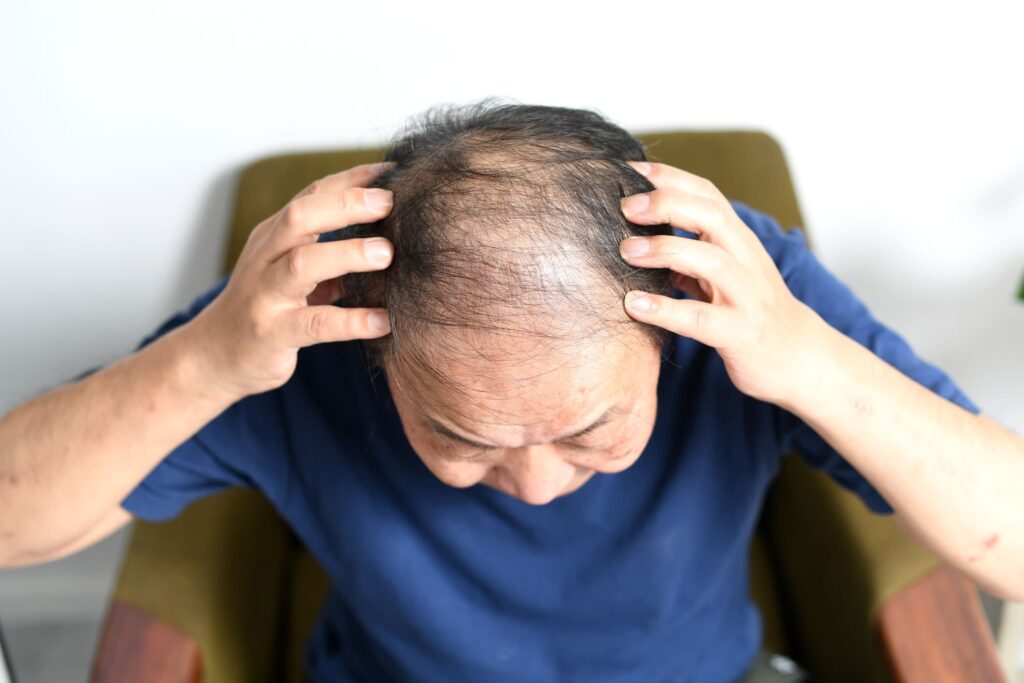
In some patients, the hair at the back of the head is not “permanent.” If a patient suffers from Retrograde Alopecia (thinning that moves upward from the neck) or DUPA (Diffuse Unpatterned Alopecia), the donor hair itself is susceptible to miniaturization. Transplanting these hairs is an ethical failure because the transplanted hair will eventually fall out, leaving the patient with surgical scars and no hair. We perform a microscopic Trichoscopic Analysis on every candidate to ensure their donor hair is genetically stable before we ever consider them for surgery.
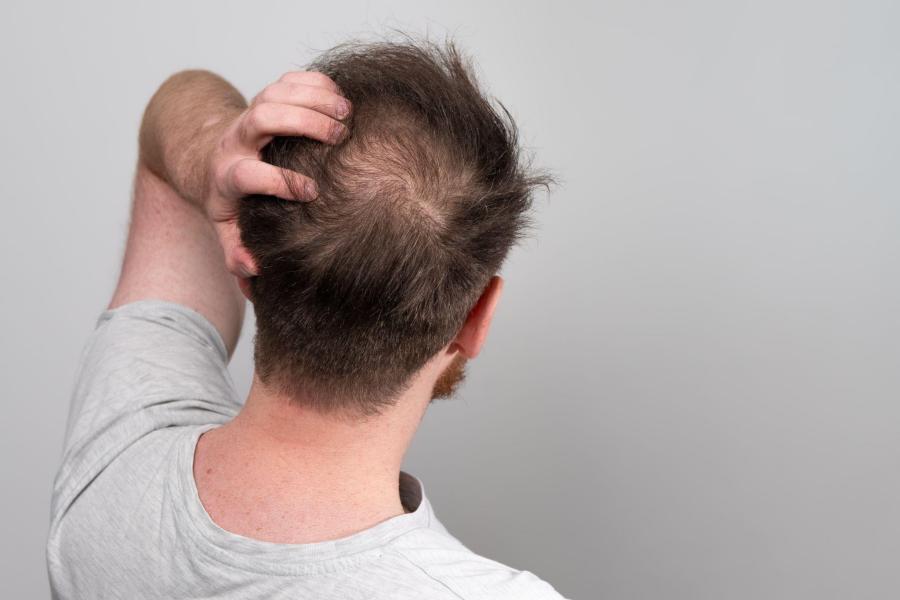
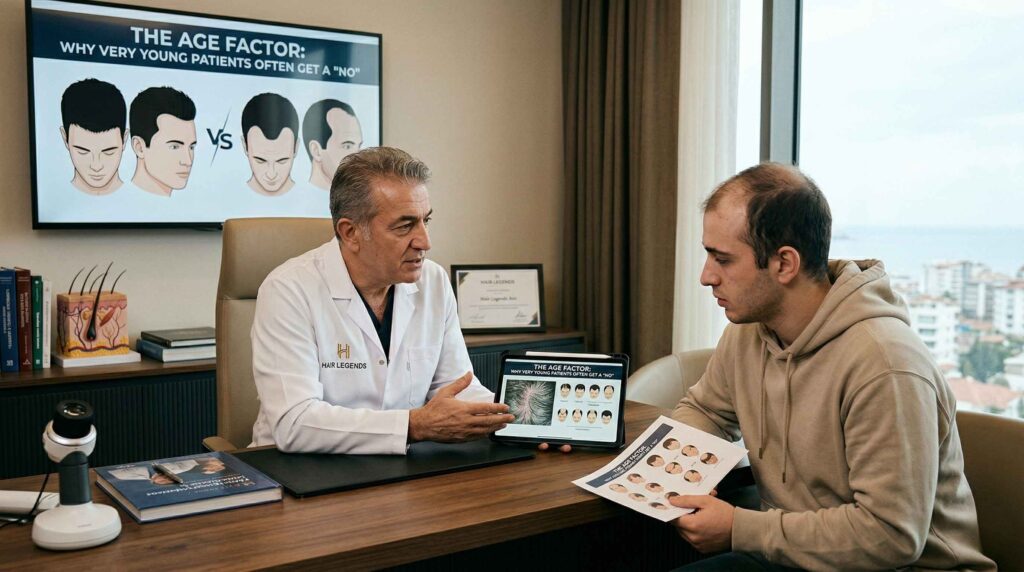
The Age Factor: Why Very Young Patients Often Get a “No”
One of the most difficult ethical conversations involves young men in their early 20s who are experiencing rapid hair loss. While their distress is immense, performing a transplant too early is often a surgical mistake.
1. The Unpredictability of Future Loss
Hair loss is a progressive condition. If we transplant a dense hairline on a 21 years old, we cannot predict how much hair he will lose behind that transplant over the next decade. If the hair continues to recede, the patient may be left with an “isolated island” of transplanted hair at the front and a bald scalp behind it.
2. Preserving the “Graft Bank”
A young patient has a lifetime of hair loss ahead of them. Using 3,000 grafts to lower a hairline for a 22 years old might seem like a win today, but if he reaches Norwood 5 by age 35, he may have no donor hair left to cover the crown. Our ethical approach involves Long-Term Strategic Planning. Often, we recommend medical stabilization (using Finasteride or Minoxidil) and waiting until the hair loss pattern stabilizes before intervening surgically.
Psychological Ethics: Managing Unrealized Expectations
Hair restoration is a transformative procedure, but it is not a “magic wand.” Some patients approach surgery with expectations that no surgeon on earth can meet.
1. The “Celebrity Hairline” Fallacy A patient with fine, thin hair cannot expect the dense, coarse hairline of a professional athlete or a movie star. If a patient refuses to accept the limitations of their own biology, we must say “no.” Proceeding with surgery on a patient with unrealistic expectations guarantees a dissatisfied patient, regardless of how perfect the surgical execution is.
2. Body Dysmorphic Disorder (BDD) A small percentage of patients suffer from BDD, a psychological condition where they are hyper-focused on perceived flaws that are invisible to others. Performing surgery on a patient with BDD often exacerbates their anxiety rather than solving it. Ethically, these patients require psychological support, not a Choi Implanter Pen. Identifying these cases during the consultation phase is a vital part of our medical responsibility.
The Technical and Ethical Verdict Protecting the Legend
Continuing our deep dive into the ethics of hair restoration, we must look at the specific surgical scenarios and long-term consequences that demand a refusal. At Hair Legends Antalya, our reputation is built on the results we do produce, which is why we are so protective of our surgical criteria.
Medical Contraindications: When Health Comes First
A hair transplant is a surgery, and like any surgery, it requires a healthy physiological environment to succeed. We say “no” or “not yet” when a patient’s underlying health compromises the safety of the procedure or the survival of the grafts.
1. Active Scalp Inflammation
Conditions like Lichen Planopilaris (LPP) or Frontal Fibrosing Alopecia (FFA) are inflammatory, scarring types of hair loss. Transplanting hair into an active inflammatory site is futile; the body’s immune system will attack the new grafts just as it did the old ones. A “hair mill” will eked out a profit from these patients, but an ethical clinic will refer the patient to a dermatologist to stabilize the condition first.
2. Systemic Health and Healing Power
Patients with uncontrolled diabetes, severe cardiovascular issues, or heavy smoking habits have compromised microcirculation. Since graft survival depends on the rapid establishment of new blood vessels (neovascularization), poor circulation leads to poor “take” rates. If a patient is unwilling to quit smoking or manage their systemic health, we must refuse the procedure to protect them from a failed investment.
The Ethics of “Graft Greed”: Saying No to Excessive Requests
Often, a patient will ask for a hairline that is too low or a graft count that is too high.
1. The Low Hairline Trap A hairline that looks great at age 25 can look bizarre at age 60. A low, flat hairline requires an immense number of grafts to look dense. If we use all the donor hair to create an adolescent hairline, the patient will have nothing left for the crown as they age. Ethically, we design Age-Appropriate Hairlines. We often say “no” to aggressive lowering in favor of a mature, natural recession that will look dignified for a lifetime.
2. Over-Harvesting the Donor If a patient demands 5,000 grafts but their donor can only safely provide 3,000, a “hair mill” will take the 5,000 to close the sale. At Hair Legends Antalya, we say “no.” We refuse to destroy the back of a patient’s head for a temporary gain at the front. We prioritize the Donor Integrity because once those follicles are gone, they never come back.
The “Repair” Dilemma: When a Transplant Cannot Be Fixed
We frequently see patients who have been victims of high-volume hair mills. They come to us with “pluggy” hairlines, severe scarring, or completely depleted donor areas, hoping for a miracle.
The Hardest “No” The most difficult part of our job is telling a victim of a bad transplant that their case is irreparable. If the donor area has been completely “raided” and there is significant scarring in the recipient area, adding more hair may not be possible. Ethically, we cannot take a patient’s money if we do not believe we can significantly improve their situation. In these cases, we offer honesty over false hope, often recommending alternative solutions like Scalp Micro-Pigmentation (SMP) or medical therapies.
The Transparency of Cost vs. Value
Ethics also extend to financial transparency. A “hair mill” often uses “hidden costs” or low-quality materials to keep their “packages” cheap.
- Ethical Pricing: At our boutique clinic, our pricing reflects the surgeon’s time, the quality of Sapphire/DHI tools, and the high-level medical aftercare provided.
- Refusing Compromise: We say “no” to cutting corners. We do not use cheaper, non sterile tools or unmonitored technicians to lower the price. If a patient is looking for the “cheapest deal,” we are honest about the fact that we are not the clinic for them. Quality in medicine has a price, and ethics demand we never compromise that price for a sale.
Post-Operative Ethics: The Commitment to Follow Up
Ethics don’t end when the patient leaves the clinic. Many clinics say “yes” to everyone but have no system to handle complications or poor growth.
- The Guarantee of Support: When we say “yes” to a patient, we are committing to a 12-month mentorship. If the growth is not as expected, we don’t hide; we investigate the cause and provide solutions.
- The Ethical Follow-Up: We say “no” to the “ghosting” culture. Every patient has a direct line to the medical team. This accountability is why our “yes” carries so much weight in the international community.
Conclusion: The “Legend” is Built on Truth
At Hair Legends Antalya, our philosophy is simple: we treat every patient as if they were a member of our own family. If we wouldn’t perform the surgery on our brother or father because of poor donor density or unrealistic expectations, we won’t perform it on you.
Saying “no” is not a sign of weakness; it is the ultimate sign of Surgical Authority. It proves that we value our results and your well-being more than your payment. By maintaining these strict ethical boundaries, we ensure that Hair Legends Antalya remains a sanctuary for those who seek the truth, a natural aesthetic, and a hair restoration journey built on medical integrity.
We don’t just build hairlines; we build trust. And sometimes, the foundation of that trust is a simple, honest “No.”