
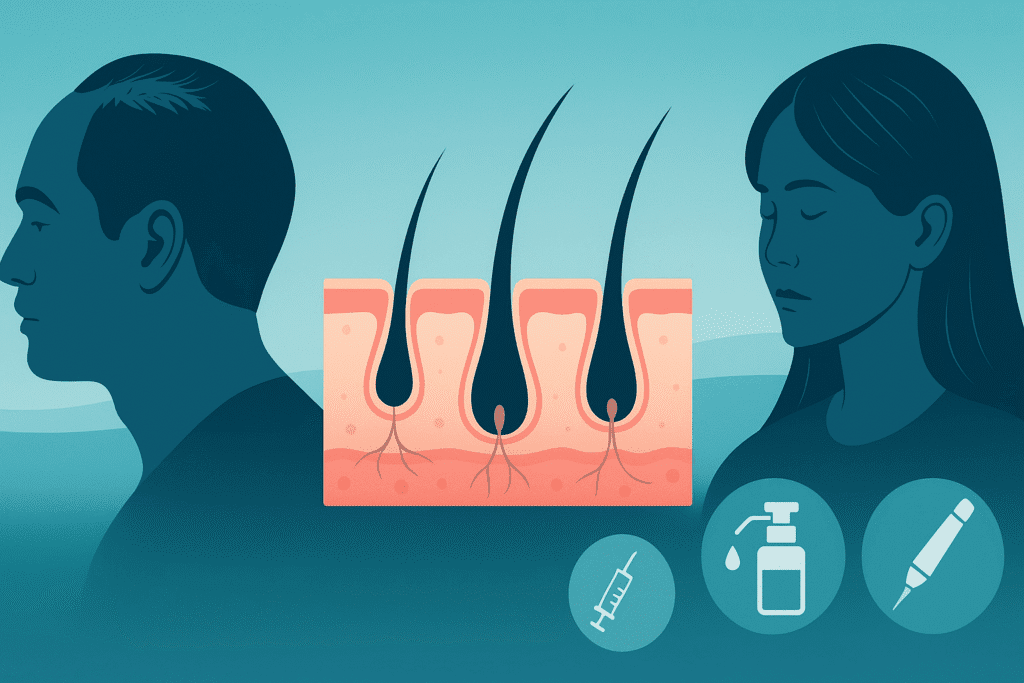
Asian hair has unique strengths and challenges. Strands are often thicker in diameter and naturally straight, which can deliver great coverage when hair is dense. At the same time, many patients notice that thinning looks very visible once miniaturization begins, because straight, dark hair lies flat and contrasts with the scalp. This guide explains why thinning happens, what truly works to slow or reverse it, and how a modern hair transplant can be tailored to Asian hair characteristics. It also includes practical notes for patients considering Hair Transplant in Antalya with all inclusive support.
Why Asian Hair Appears To Thin Quickly
- Hair shaft characteristics
Asian hair commonly has a larger average diameter and a rounder cross section. This is good for coverage, yet straight strands reflect light from the scalp more easily when density falls, so part lines widen and the crown looks see through sooner. - Density distribution
Many patients of East and South Asian backgrounds have slightly lower average follicular unit density in the donor area compared with some European groups. Fewer units per square centimeter means any loss in the mid scalp or crown shows earlier. - Contrast and styling
Dark hair against lighter skin creates a strong contrast. When hair thins, this contrast makes gaps more visible. Straight styling can accentuate any lack of volume, while moderate texture or gentle layering can help camouflage.
These are averages, not rules. The correct plan starts with a proper diagnosis.
Root Causes Of Hair Thinning In Asian Patients
- Androgenetic alopecia
The most common cause in both men and women. In men it shows as temple recession, mid scalp thinning, or a vertex bald spot. In women it presents as a widening part line and diffuse density loss over the crown while the hairline usually stays intact. - Telogen effluvium
A temporary shedding surge triggered by stress, illness, crash dieting, postpartum changes, or major life events. Shedding occurs two to three months after the trigger and often recovers once the cause is addressed. - Traction alopecia
More frequent where tight hairstyles are popular. Repeated tension from braids, buns, extensions, or tight helmets damages follicles over time, especially near the hairline and temples. Early intervention is essential. - Scalp inflammation and dandruff spectrum
Seborrheic dermatitis and other inflammatory conditions can worsen shedding and reduce shaft quality. Managing the scalp microbiome calms inflammation and supports thicker looking hair. - Endocrine or nutritional issues
Thyroid disorders, iron or ferritin deficiency, vitamin D deficiency, and polycystic ovary syndrome in women can all contribute. Blood work should be part of any medical plan. - Less common causes
Alopecia areata, scarring alopecias, and medication related shedding require targeted management and are not immediate indications for transplantation.
Evidence Based Treatments That Work
A great plan often combines two or more of the options below. Treatments are listed for completeness. Your clinician will tailor them to your case.
- Minoxidil
Topical foam or solution once or twice daily improves hair cycling and shaft diameter. Oral low dose minoxidil can be considered for suitable patients under medical supervision. Side effects are usually mild and reversible. - Finasteride and dutasteride for men
These reduce DHT’s impact on follicles and are the cornerstone for male pattern loss. They preserve native hair and improve transplant longevity. Topical finasteride is an option for patients who prefer a local route. Medical screening and ongoing follow up are important. - Anti androgen strategies for women
Options include topical minoxidil as the base, with spironolactone or combined oral contraceptives when indicated. These are prescription based and require a gynecologic or endocrine review. - Microneedling
Weekly or biweekly microneedling supports growth factor signaling and may synergize with minoxidil. Correct depth and sterile technique matter. - Low level laser therapy
At home devices can support thicker shafts over several months. Consistency is the key. - Scalp care
Ketoconazole or zinc pyrithione shampoos two or three times per week control dandruff and inflammation. Gentle, frequent washing keeps follicles clear of sebum and debris. Avoid very tight hairstyles to reduce traction. - Regenerative adjuncts
PRP is widely used to improve hair caliber and reduce shedding. Exosome based products are being studied. These are best considered as add ons to a medical foundation rather than stand alone solutions. - Nutrition and lifestyle
Correct iron and vitamin D deficiency when present, aim for adequate protein, manage stress and sleep quality, and avoid crash dieting. Hair responds to systemic balance.
When A Hair Transplant Makes Sense
A transplant redistributes permanent follicles from the donor area to thinning regions. It does not create new follicles or stop the genetic process. Asian patients can be excellent candidates because thicker shafts provide strong visual coverage when placed at the correct angle and direction.
Transplant timing is important. It works best when the pattern is stable or medically controlled. For diffuse thinning, your surgeon may stage the plan to protect native hair and reduce temporary shedding.
Donor Area Realities In Asian Hair
• Many patients have a slightly lower average follicular unit density, so smart harvesting is crucial.
• Hair shafts are thicker, which helps coverage but requires careful punch selection to avoid transection.
• Some individuals have a higher tendency to visible hypopigmentation or hypertrophic scarring. Surgeons mitigate this by conservative extraction spacing, appropriate punch size, and precise depth control.
Technique Choices And How They Are Tailored
- FUE
Follicular Unit Extraction removes grafts one by one using micro punches. It avoids a linear scar and suits most Asian patients. Surgeons often choose a punch diameter that balances intact extraction with minimal scarring, then distribute extractions widely to preserve donor look. - Sapphire FUE
Channel creation uses sapphire tips to produce very fine, consistent incisions. This can support high density in the hairline and frontal zone while promoting smooth healing. The result is a refined, natural look when singles are used in the first rows. - DHI
Direct Hair Implantation uses implanter pens to control angle and depth during placement. It is helpful for hairline micro work, temple peaks, and cases where minimal shaving is preferred. It can also lower the risk of pop out in very straight hair. - FUT
A strip method that can yield many grafts but leaves a linear scar. It is less requested by medical tourists and by patients who prefer short hairstyles. It remains an option when donor supply is limited and a single pass with high graft yield is needed.
Your plan may combine Sapphire FUE in dense areas with DHI in micro critical zones. This mixed approach is very effective for Asian hairlines, which benefit from soft feathering and precise angle control.
Hairline Design Principles For Asian Faces
• The goal is a natural, age appropriate frame. Juvenile low hairlines rarely suit adult faces.
• A gentle, slightly rounded front with subtle, irregular micro and macro breaks avoids a straight edged look.
• Singles belong in the first one to two rows. Two hair and three hair grafts go behind to build volume.
• Temple peaks are critical. Straight, dark hair reveals mistakes immediately, so angulation must follow the native direction and lie flat.
Advanced Considerations And Common Myths
• More grafts are not always better. Thick shafts create volume efficiently. A smarter distribution often beats higher numbers.
• Transplants do not stop genetic loss. Continue medical therapy after surgery to maintain native hair and protect your investment.
• Hair grows gradually. Expect visible change by month three to four, major improvement by month six to eight, and full maturation by month twelve.
Asian Women And Hair Restoration
Female pattern hair loss in Asian women often shows as a widening part with maintained frontal edge. First line therapy is medical. When miniaturization remains despite treatment and donor hair is strong, carefully planned transplantation can add density along the part and frontal zone. Singles are used to avoid a pluggy look. Eyebrow restoration is also popular and requires precise angle and curl control for a natural arc.
What To Expect From A Three Day Antalya Journey
Day 1
Arrival, hotel check in, consultation, donor mapping with magnification, and hairline design. You receive a written plan that lists graft targets per zone and the techniques to be used.
Day 2
Surgery with local anesthesia. Light sedation is available for patients with needle anxiety. Breaks are scheduled for comfort. The team documents graft counts and zones in your operative report.
Day 3
First wash, scab care demonstration, written aftercare calendar, and a travel letter for airport security. Remote follow ups continue via WhatsApp at predefined checkpoints.
Patients choosing Hair Transplant in Antalya appreciate short transfers, multilingual staff, and a calm recovery setting near the sea. Search friendly phrases that reflect these benefits include Affordable Hair Transplant Antalya, Best Hair Clinic in Antalya, Hair Transplant Packages in Antalya, DHI Hair Transplant Antalya, Eyebrow and Beard Transplant Antalya, and Stem Cell Hair Transplant Antalya.
Costs And Value
Budgets vary with graft count, technique mix, and add ons such as sedation or PRP. Turkey generally offers bundled packages that include airport transfers, hotel nights, medications, and follow ups, which makes the total cost of care predictable. This model is why many Asian patients traveling from France, Germany, the UK, and the Gulf consider Antalya first.
How We Tailor Transplants For Asian Hair At Consultation
- Diagnosis and stability
Confirm the pattern and rule out reversible causes with history and targeted blood tests. Start or optimize medical therapy where needed. - Donor mapping
Quantify density, hair caliber, and safe extraction zones. Discuss realistic coverage today while preserving options for the future. - Design
Create a hairline that suits your face now and in ten years. Show reference photos and agree on a soft transition zone. - Technique plan
Choose FUE, Sapphire FUE, DHI, or a blend by zone. Explain why each zone benefits from that choice. - Graft economics
Explain singles for the first rows and multi hair grafts behind them. Set expectations for density in frontal, mid scalp, and crown zones. - Recovery roadmap
Outline swelling, scab care, washing, work return timing, and exercise. Provide a written calendar and quick response channels for questions.
When A Transplant Should Wait
• Active dermatitis or infection
• Uncontrolled thyroid, iron deficiency, or other medical triggers
• Unstable shedding from telogen effluvium
• Diffuse unpatterned alopecia where donor stability is uncertain
• Unrealistic expectations about density from a limited donor supply
Solving these issues first improves your long term outcome.
Frequently Asked Questions
How long will results last
Transplanted follicles from the permanent zone are generally resistant to DHT. Native hair can still thin with time, so maintenance therapy protects the overall look.
Will the donor look patchy
With proper spacing and conservative extraction, the donor remains natural. Thick Asian shafts help because fewer grafts can create strong coverage.
Is shaving mandatory
Most large sessions require shaving for precision. Partial shave DHI can be used for small hairline refinements or female cases.
What is the discomfort level
Local anesthesia controls pain during the procedure. Mild soreness or tightness is common for a day or two and is well managed with standard medications.
When can I fly
Most medical tourists depart on day three after the first wash and instruction set. Extra rest days are optional.
Why Antalya Is A Strong Choice For Asian Patients
• High experience with straight, dark hair and temple peak artistry
• Technique blending that matches Asian hairline needs
• Turnkey logistics and multilingual coordinators
• Transparent photos and documentation before and after
• Competitive, all inclusive pricing that simplifies planning
Your Next Step
Send clear photos from front, both sides, top, crown, and a close view of the donor in good light. Share your goals and any prior treatment history. We will estimate graft needs per zone, recommend FUE, Sapphire FUE, DHI, or a blend, and provide a transparent quote that includes hotel, transfers, medications, and a full aftercare calendar.
If your goal is a natural, age appropriate result that respects the unique characteristics of Asian hair, Antalya offers the expertise, value, and patient support to make the journey smooth and successful.