
Hair transplantation has become one of the most effective long-term solutions for restoring hair in patients affected by male and female pattern baldness. However, surgery is only one part of the journey. Proper aftercare plays a major role in achieving healthy growth, protecting existing hair, and maximizing the final result.
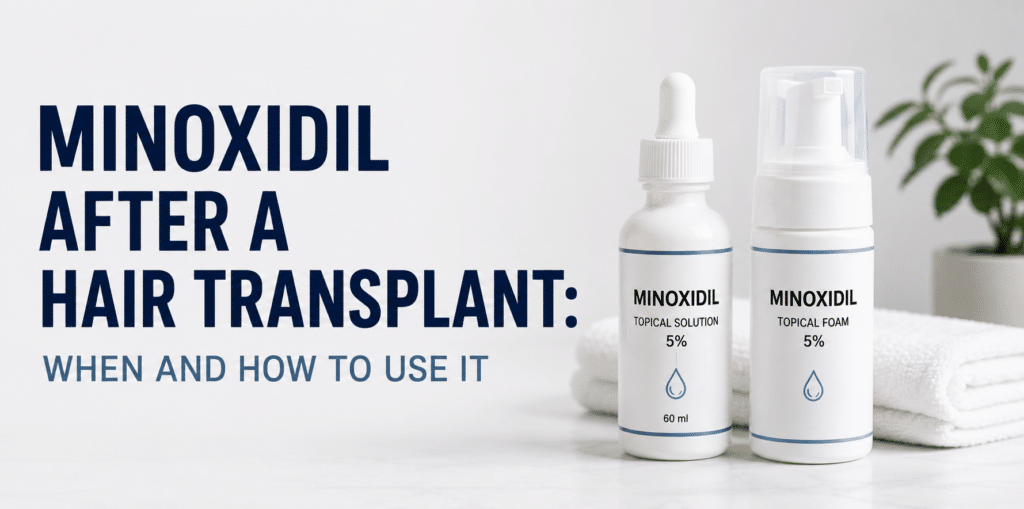
One of the most frequently discussed medications after surgery is Minoxidil. Many patients visiting Hair Legends for a Hair Transplant Antalya procedure ask the same questions: Should I use Minoxidil? When should I start? Is it really necessary after a hair transplant?
The answers depend on your hair loss pattern, your surgeon’s recommendations, and your long-term goals. While Minoxidil is not mandatory for every patient, it can help support existing hair, reduce the effects of ongoing hair loss, and improve overall density in suitable candidates.
This guide explains how Minoxidil works, when to start using it after a hair transplant, how to apply it correctly, and what results you can realistically expect.
What Is Minoxidil?
Minoxidil is a topical medication that has been used for decades to treat certain types of hair loss. Originally developed as a treatment for high blood pressure, researchers noticed that many patients experienced increased hair growth while taking it. This unexpected effect eventually led to the development of topical Minoxidil products designed specifically for scalp application.
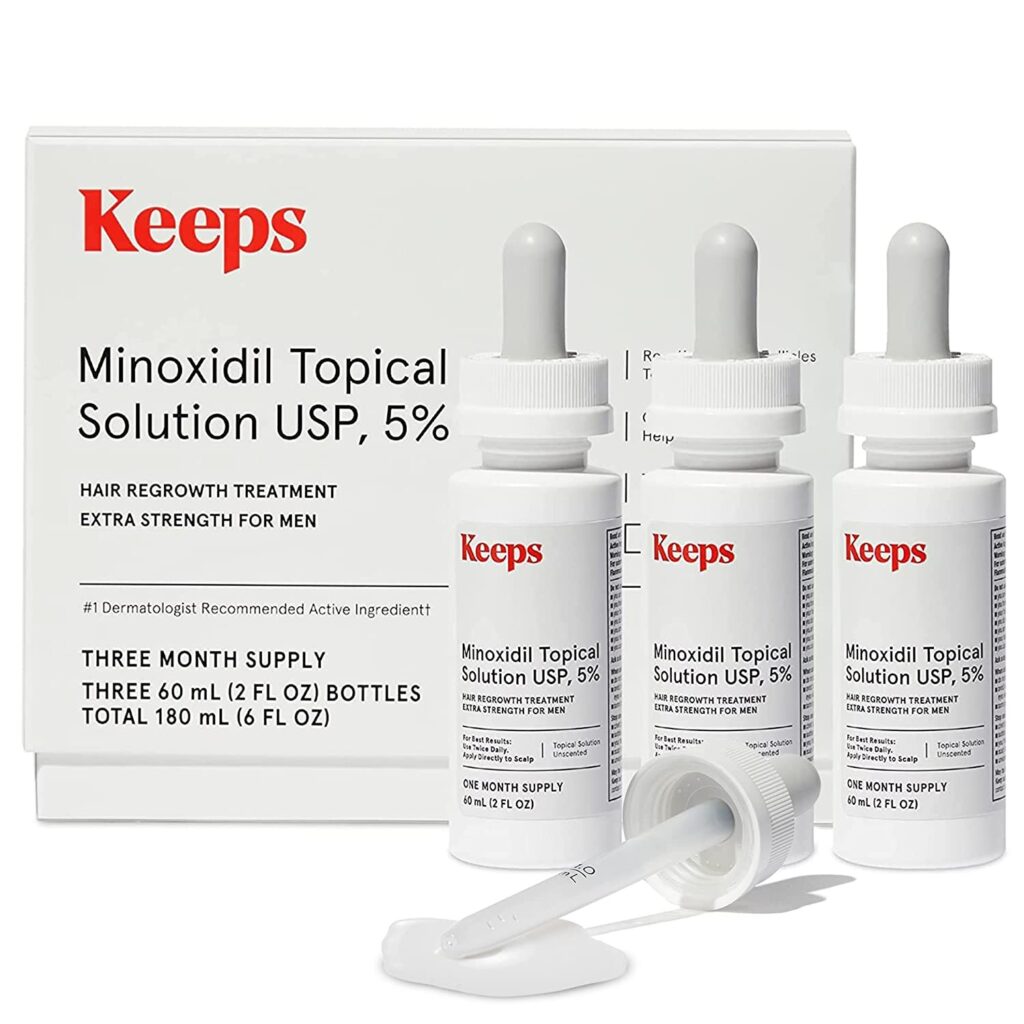
Today, Minoxidil is one of the most widely recommended non-surgical hair loss treatments worldwide. It is available in different strengths, most commonly 2% and 5%, and comes in both liquid solution and foam formulations.
Rather than creating new hair follicles, Minoxidil works by stimulating existing follicles that have become weaker or dormant.
How Does Minoxidil Work?
Hair follicles naturally cycle through phases of growth, transition, and rest. In androgenetic alopecia, these growth cycles become progressively shorter, while the follicles themselves gradually shrink. Over time, hairs become thinner until they eventually stop growing.
Minoxidil helps by increasing blood flow around the follicles and prolonging the hair’s active growth phase, known as the anagen phase. This allows many weakened follicles to produce thicker and healthier hair.
Although researchers continue to study its exact mechanism, Minoxidil appears to:
- Increase blood circulation around follicles
- Extend the growth phase of the hair cycle
- Stimulate miniaturized follicles
- Improve hair shaft thickness
- Slow ongoing hair thinning
It is important to remember that Minoxidil primarily helps preserve and strengthen existing hair rather than permanently stopping hair loss.
Why Is Minoxidil Recommended After a Hair Transplant?
A successful hair transplant restores hair to thinning or bald areas, but it does not prevent future loss of your existing, non-transplanted hair.
This is where Minoxidil may be beneficial.
Many surgeons recommend Minoxidil because it can help maintain native hair surrounding the transplanted grafts. This often creates a fuller and more natural overall appearance, particularly in younger patients who may continue to experience progressive hair loss over the coming years.
Another reason Minoxidil is commonly recommended is its potential role in reducing temporary shock loss, a normal condition in which some surrounding native hairs shed after surgery before growing back.
Although transplanted follicles are generally resistant to genetic hair loss, preserving the surrounding natural hair remains an important part of achieving long-term density.
Is Minoxidil Necessary After a Hair Transplant?
Not necessarily.
Many patients achieve excellent results without using Minoxidil. Whether it is recommended depends on several factors, including:
- Your age
- Family history of hair loss
- Current hair density
- Pattern of hair loss
- Future risk of thinning
Patients with stable hair loss and good overall density may not require long-term Minoxidil treatment.
However, younger patients who still have active hair loss often benefit from combining surgery with medical therapy to protect their remaining hair.
During your consultation at Hair Legends, your doctor will assess whether Minoxidil is appropriate for your individual treatment plan after your Hair Transplant Antalya procedure.
When Should You Start Minoxidil After a Hair Transplant?
Timing is important.
Applying Minoxidil too early may irritate the scalp while the tiny recipient sites are still healing.
Most experienced hair transplant surgeons recommend waiting until the scalp has recovered sufficiently before introducing topical products. Depending on the patient’s healing progress, this is commonly around two to four weeks after surgery, although the exact timing should always follow your surgeon’s advice.
Never restart Minoxidil simply because you have used it before. Every recovery is different, and your doctor will recommend the safest time based on your healing process.
Minoxidil Foam or Solution: Which Is Better?
Both formulations contain the same active ingredient, but each has advantages.
Foam
Many patients find foam easier to use because it dries quickly and is less likely to drip. It also contains fewer ingredients that commonly cause scalp irritation.
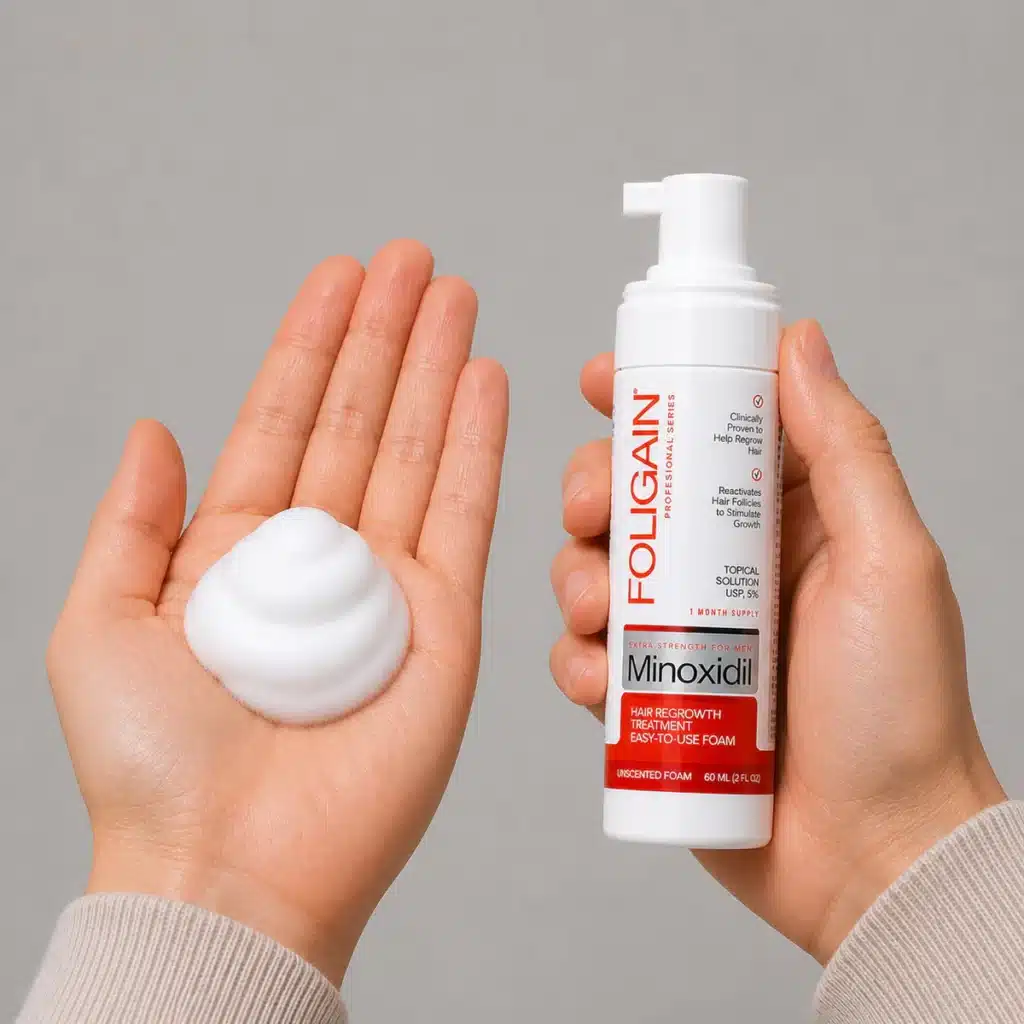
Foam may be preferable for patients with sensitive skin or those who experience redness with the liquid version.
Solution
Liquid Minoxidil allows precise application directly onto the scalp, especially in patients with longer hair.
However, because the solution contains propylene glycol, some users may experience itching or dryness.
Neither option has been proven universally superior. The best choice often depends on personal preference, scalp sensitivity, and your doctor’s recommendation.
How to Apply Minoxidil After a Hair Transplant
Correct application is just as important as choosing the right product.
Always begin with a clean, completely dry scalp. Wash your hands before application and avoid rubbing the treated area aggressively.
Allow the medication to absorb naturally before using styling products or wearing hats.
Consistency is essential. Missing applications regularly can reduce effectiveness over time.
How to Apply Minoxidil Solution
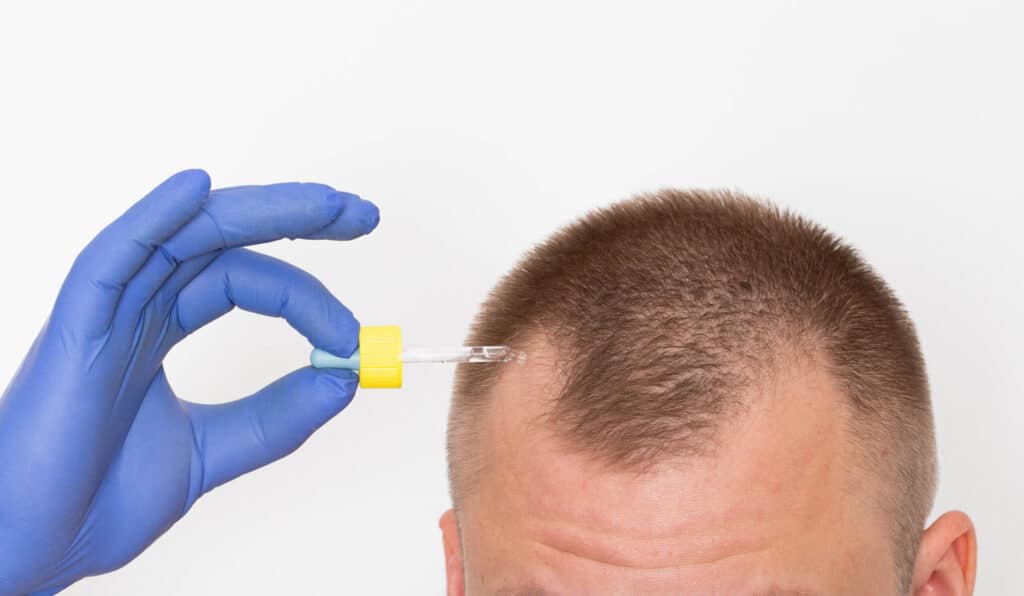
Using the supplied dropper, place the recommended amount directly onto the thinning areas of the scalp.
Spread the solution gently using your fingertips without scratching the skin.
Allow it to dry completely before lying down or wearing head coverings.
How to Apply Minoxidil Foam
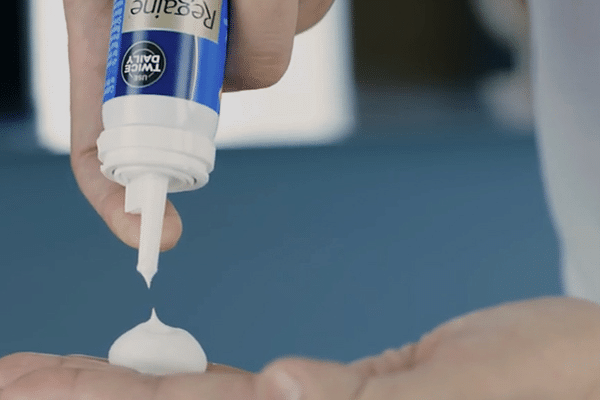
Dispense the recommended amount onto your fingertips rather than directly onto the scalp.
Massage the foam gently into the treatment area using light pressure.
Foam usually dries faster than liquid solution and leaves less residue.
Important Application Advice
To maximize effectiveness:
- Apply only to the scalp, not the hair.
- Use the amount recommended by your doctor.
- Avoid washing your hair immediately after application.
- Wash your hands thoroughly after use.
- Be patient, as visible improvement takes time.
Applying more Minoxidil than recommended will not accelerate hair growth and may increase the likelihood of side effects.
Where Should You Apply Minoxidil?
One of the most common misconceptions is that Minoxidil should only be applied to transplanted hair. In reality, this is not usually the case.
Minoxidil is primarily used to support existing, non-transplanted hair that may still be vulnerable to androgenetic hair loss. The transplanted follicles are generally resistant to DHT because they are taken from the permanent donor area. However, the surrounding native hairs can continue to thin over time.
For most patients, Minoxidil should be applied to the areas experiencing ongoing thinning rather than exclusively to the transplanted grafts.
Your surgeon may recommend applying it to:
- The frontal scalp surrounding the transplanted area
- The mid-scalp if thinning continues
- The crown (vertex), where progressive hair loss is common
- Areas showing signs of miniaturization
Patients who have undergone a Hair Transplant Antalya procedure at Hair Legends receive individualized aftercare instructions based on their hair loss pattern and long-term treatment goals.
How Often Should You Use Minoxidil?
For most patients, topical Minoxidil is applied twice daily, once in the morning and once in the evening.
However, not everyone follows the exact same routine.
Some doctors recommend once-daily application for patients with sensitive scalps or those who experience irritation. Others may adjust the schedule depending on the patient’s lifestyle and response to treatment.
The key is consistency.
Applying Minoxidil regularly over several months is far more important than applying large amounts inconsistently.
Skipping treatments frequently reduces the medication’s effectiveness because the hair growth cycle requires continuous stimulation.
How Long Does Minoxidil Take to Work?
Hair growth is a slow biological process, so visible improvements require patience.
Most patients do not notice immediate changes after starting Minoxidil. In fact, during the first few weeks, the scalp may appear unchanged.
A general timeline looks like this:
First Month
The scalp adapts to the medication.
Some patients notice increased shedding, which is usually temporary.
Two to Four Months
New hairs may begin appearing, although improvements are often subtle.
Hair shafts gradually become thicker as follicles remain in the growth phase for longer periods.
Four to Six Months
Many patients begin noticing visible improvements in density.
Hair often appears healthier and stronger.
Six to Twelve Months
Results become easier to appreciate.
Consistency during this period is essential because stopping treatment too early may reduce the long-term benefits.
Patients recovering from a Hair Transplant Antalya procedure should remember that transplanted grafts and Minoxidil work on different timelines. Hair transplant growth itself continues for up to twelve months regardless of when Minoxidil is introduced.
Can Minoxidil Cause Shedding?
Yes.
Temporary shedding is one of the most common reasons patients become concerned after starting Minoxidil.
Fortunately, this initial shedding is generally considered a normal part of the treatment process.
Minoxidil encourages weaker hairs to leave the resting phase sooner, making room for healthier hairs to begin a new growth cycle.
Although seeing additional shedding can be worrying, it does not necessarily mean the medication is making hair loss worse.
Most patients who experience shedding notice it improves within several weeks.
Stopping Minoxidil immediately because of temporary shedding may prevent patients from seeing its long-term benefits.
Possible Side Effects of Topical Minoxidil
Like any medication, Minoxidil may cause side effects in some individuals.
Fortunately, topical Minoxidil is generally well tolerated when used correctly.
Possible side effects include:
- Mild scalp irritation
- Dryness
- Itching
- Flaking
- Redness
- Temporary shedding during the first weeks
Less commonly, patients may experience allergic reactions to ingredients contained within certain formulations.
If severe irritation develops or symptoms persist, patients should consult their doctor before continuing treatment.
Using more Minoxidil than recommended will not improve results and may increase the likelihood of unwanted side effects.
Who Should Avoid Minoxidil?
Although Minoxidil is suitable for many people, it is not appropriate for everyone.
Patients should seek medical advice before using Minoxidil if they:
- Have certain cardiovascular conditions
- Are allergic to Minoxidil or its ingredients
- Have significant scalp infections or inflammation
- Are pregnant or breastfeeding
- Have unexplained hair loss that has not been medically evaluated
Hair loss can occur for many reasons besides androgenetic alopecia.
A proper diagnosis should always be made before beginning treatment.
Can Minoxidil Be Combined With Finasteride?
Yes.
Many hair restoration specialists recommend combining topical Minoxidil with Finasteride for suitable male patients experiencing androgenetic alopecia.
While Minoxidil stimulates follicles externally, Finasteride works internally by reducing levels of DHT, the hormone responsible for male pattern hair loss.
Because the two medications work through different mechanisms, they are often considered complementary rather than competitive.
Not every patient requires both treatments.
Your doctor will determine whether combination therapy is appropriate based on factors such as age, medical history, hair loss progression, and future treatment goals.
What Can Reduce Minoxidil’s Effectiveness?
Several factors may reduce the benefits of Minoxidil.
These include:
- Inconsistent application
- Stopping treatment too early
- Applying the medication incorrectly
- Washing the scalp immediately after use
- Ignoring your doctor’s instructions
- Continuing habits that negatively affect scalp health
Patients should also understand that Minoxidil cannot restore completely inactive hair follicles that have been dormant for many years.
The earlier treatment begins, the greater the likelihood of preserving existing hair.
How Can You Improve Your Results?
Hair restoration rarely depends on a single treatment alone.
Many patients achieve the best outcomes by combining healthy lifestyle habits with professional medical care.
To maximize results:
- Follow your surgeon’s aftercare instructions carefully.
- Use Minoxidil consistently if recommended.
- Consider prescribed medical therapy where appropriate.
- Maintain a balanced diet rich in protein, vitamins, and minerals.
- Avoid smoking whenever possible.
- Attend scheduled follow-up appointments.
Patients who undergo a Hair Transplant Antalya procedure at Hair Legends also receive individualized aftercare guidance designed to support healthy healing and long-term growth.
When Can You Stop Minoxidil?
This depends on why you are using it.
If Minoxidil is prescribed to protect existing native hair from ongoing androgenetic alopecia, discontinuing treatment may allow hair loss to gradually resume over time.
The transplanted follicles themselves are generally permanent, but surrounding native hairs remain genetically susceptible to hair loss.
For this reason, some patients choose to continue Minoxidil as part of their long-term hair maintenance plan.
Others may discontinue treatment after discussing their individual circumstances with their doctor.
There is no universal answer.
The decision should always be based on professional medical advice rather than internet recommendations.
Minoxidil and Hair Transplantation
Hair transplantation and Minoxidil are often viewed as competing treatments, but they actually serve different purposes.
A hair transplant restores hair by relocating permanent follicles from the donor area into thinning or bald regions.
Minoxidil helps preserve existing hair that has not been transplanted.
Together, these approaches may provide better overall density, particularly for patients with progressive hair loss.
However, not every patient requires Minoxidil after surgery.
Treatment should always be individualized according to hair loss severity, donor quality, age, and long-term expectations.
At Hair Legends, every Hair Transplant Antalya treatment plan is developed individually rather than following a standard protocol for every patient.
Frequently Asked Questions
Can I use Minoxidil immediately after a hair transplant?
No. Most surgeons recommend waiting until the scalp has healed sufficiently before restarting topical Minoxidil. Always follow your surgeon’s instructions.
Does Minoxidil help transplanted hair grow faster?
Current evidence suggests that Minoxidil mainly supports existing native hair. While some surgeons believe it may encourage a healthier growth environment, transplanted grafts follow their own natural healing timeline.
Do I need Minoxidil forever?
Not necessarily. Some patients use it long-term to preserve native hair, while others discontinue treatment under medical supervision.
Is Minoxidil better than a hair transplant?
They are different treatments with different purposes. A hair transplant restores hair to bald areas, while Minoxidil helps preserve existing follicles.
Can women use Minoxidil after a hair transplant?
Yes, in many cases. However, the appropriate concentration and treatment plan should always be determined by a qualified medical professional.
Final Thoughts
Minoxidil can be a valuable part of a comprehensive hair restoration strategy, but it is not a substitute for proper diagnosis or individualized treatment planning.
For some patients, it helps preserve existing hair and improve overall density following surgery. For others, a hair transplant alone may provide the desired result without the need for long-term topical therapy.
The most important step is receiving professional guidance from an experienced medical team. Every patient has a unique pattern of hair loss, different donor characteristics, and different long-term expectations.
If you are considering a Hair Transplant Antalya procedure or would like personalized advice about using Minoxidil after surgery, the specialists at Hair Legends can evaluate your individual case and recommend the most appropriate treatment plan based on your needs and long-term goals.