
Hair loss affects millions of men worldwide, regardless of age, profession, or lifestyle. While it is often associated with getting older, many men begin noticing a receding hairline or thinning hair in their twenties. Celebrities are no exception. In fact, because they spend so much time in front of cameras, every small change in their appearance becomes noticeable to fans and the media.

One celebrity who has openly discussed his experience with hair restoration is Jamie Laing. Best known for appearing on Made in Chelsea, Jamie surprised many people by publicly confirming that he had undergone a hair transplant. Rather than hiding the procedure, he spoke honestly about why he chose to have it and how it affected his confidence.
His openness helped challenge the outdated stigma surrounding hair transplants and encouraged many younger men to consider treatment before hair loss became more advanced.
Today, thousands of people search online for “Jamie Laing Hair Transplant” because they want to understand what procedure he may have had, how natural his results appear, and whether similar outcomes can be achieved with modern techniques.
At Hair Legends in Antalya, we believe celebrity transformations are useful educational examples. While every patient is unique, Jamie’s journey demonstrates how restoring a receding hairline with a conservative and natural approach can dramatically improve overall appearance without making the procedure obvious.
Who Is Jamie Laing?
Jamie Laing first rose to fame through the British television series Made in Chelsea, becoming one of the show’s most recognizable personalities. Over the years he expanded his career beyond reality television, establishing himself as a successful entrepreneur, radio presenter, podcast host, and founder of the confectionery company Candy Kittens.
Living in the public eye means every aspect of appearance is constantly photographed, recorded, and discussed. As Jamie entered his twenties, fans gradually noticed changes to his frontal hairline. The recession was not severe, but under studio lighting and high-definition cameras it became increasingly visible.
Like many men experiencing hereditary hair loss, Jamie initially accepted the changes. However, as the recession continued, he began exploring long-term solutions rather than relying on hairstyles or cosmetic products to disguise the problem.
Unlike many celebrities who choose not to comment on cosmetic procedures, Jamie openly acknowledged his decision to undergo a hair transplant. His honesty has made him one of the most frequently searched celebrity hair transplant cases in the UK.
Did Jamie Laing Really Have a Hair Transplant?
Yes.
Jamie has publicly confirmed that he underwent a hair transplant after becoming concerned about his receding hairline.
Interestingly, he has explained that the decision happened somewhat spontaneously. According to interviews, he accompanied a friend to a clinic and eventually decided to have the treatment himself after learning more about the procedure.
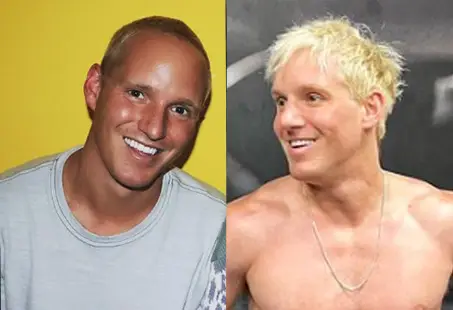
He has also spoken humorously about the recovery process, admitting that he underestimated what the first few days would be like. Nevertheless, he has repeatedly described the procedure as worthwhile and has expressed satisfaction with the final outcome.
His willingness to discuss both the positives and the temporary recovery process has helped provide a realistic picture of modern hair transplantation.
Understanding Jamie Laing’s Hair Loss
Looking at photographs taken before his procedure, Jamie appears to have experienced a classic pattern of male pattern baldness.
The recession primarily affected the frontal hairline and temple regions while leaving the mid-scalp and crown relatively dense.
This pattern is extremely common among men and is usually caused by genetic sensitivity to the hormone DHT (dihydrotestosterone). Over time, affected hair follicles gradually shrink, producing thinner hairs until growth eventually stops.
From publicly available photographs, Jamie appears to have been somewhere around a Norwood III pattern before treatment. Although this cannot be confirmed without a medical examination, it represents one of the most common stages at which patients decide to undergo hair transplantation.
Choosing surgery before extensive baldness develops often allows surgeons to create highly natural results while preserving the donor area for any future procedures that may become necessary.
Jamie Laing Before and After: What Changed?
The most impressive aspect of Jamie’s transformation is not that he suddenly appeared to have dramatically more hair.
Instead, he simply looks younger, healthier, and more balanced.
That is exactly what an excellent hair transplant should accomplish.
When comparing before and after photographs, several improvements become noticeable.
His frontal hairline appears fuller.
The temple recessions have been softened.
Hair density across the front of the scalp appears stronger.
Most importantly, the overall shape of the hairline still looks completely natural.
Rather than lowering the hairline aggressively, it appears that the surgeon respected Jamie’s facial proportions and recreated a mature but youthful-looking hairline.
This conservative design is one of the biggest reasons why many people do not immediately realize he has undergone a hair transplant.
Naturalness is always more important than density alone.
At Hair Legends, our philosophy follows the same principle. A successful hair transplant should enhance your appearance while remaining virtually undetectable.
Which Hair Transplant Technique Was Likely Used?
Jamie has not publicly disclosed the exact surgical technique used during his procedure.
However, judging by the natural-looking result and the period when the procedure was performed, many hair restoration specialists believe that a modern FUE-based approach is the most likely possibility.
Follicular Unit Extraction (FUE) involves removing individual hair follicles from the donor area at the back and sides of the scalp before implanting them into thinning regions.
Today, one of the most advanced variations of this technique is Sapphire FUE, which uses sapphire blades to create precise recipient sites.
Compared with older techniques, Sapphire FUE offers several potential advantages:
- Smaller and more precise incisions
- Faster healing
- Reduced tissue trauma
- Improved graft placement
- Natural hairline design
- Excellent density planning
- Minimal visible scarring
At Hair Legends, Sapphire FUE is our preferred technique for many suitable candidates because it allows our medical team to create refined, age-appropriate hairlines while protecting the surrounding healthy tissue.
Every treatment plan is personalized after a detailed consultation, ensuring that the design complements the patient’s facial proportions rather than following a one-size-fits-all template.
How Many Grafts Did Jamie Laing Need?
Jamie has never publicly revealed how many grafts were transplanted.
Therefore, any estimate should be considered speculative.
Based solely on publicly available before and after photographs, many experienced hair transplant professionals might estimate that approximately 1,500 to 2,000 grafts would be sufficient to restore a hairline with a similar level of recession.
Because Jamie maintained strong density across the crown and mid-scalp, the procedure appears to have focused mainly on rebuilding the frontal hairline and temple corners rather than covering large bald areas.
For patients with a comparable pattern of hair loss, this graft range is often capable of producing excellent cosmetic improvement while preserving valuable donor hair for the future if additional restoration is ever required.
It is important to remember, however, that graft requirements vary significantly depending on hair calibre, donor density, hair colour, curl pattern, scalp characteristics, and individual aesthetic goals. A thorough consultation and scalp assessment remain the most reliable way to determine the appropriate treatment plan.