
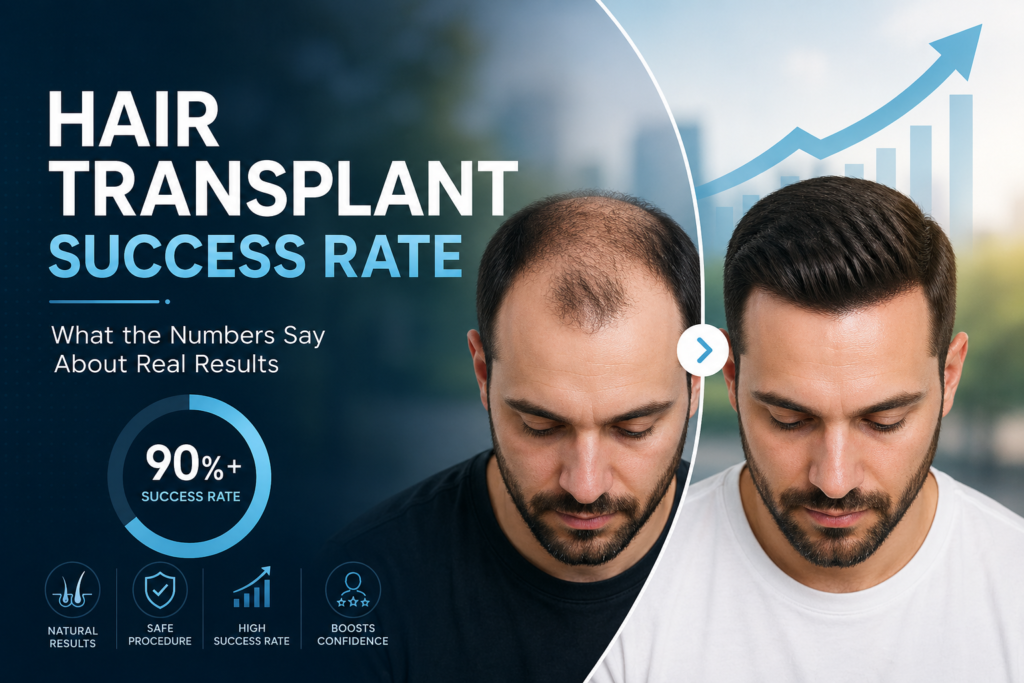
Hair Transplant Success Rate: When embarking on a hair restoration journey, the most critical metric isn’t just how many hairs are moved, but how many truly take root and thrive. While modern techniques like Sapphire FUE and DHI have revolutionized the industry, understanding the reality of graft survival rates is essential for any patient seeking a permanent, natural-looking transformation. In the world of premium hair restoration, success is measured by the delicate balance of biological viability and surgical precision. In this comprehensive guide, we go beyond the marketing promises to explore the clinical facts behind graft survival, the factors that dictate a successful ‘take,’ and how we at Hair Legends Antalya achieve industry-leading results for our international patients.
What Percentage of Hair Transplants Are Successful?
When discussing the success of a hair restoration procedure, it is important to distinguish between procedural success and graft survival rates. Statistically, the success rate of a modern hair transplant is exceptionally high. According to global clinical data and our internal benchmarks at Hair Legends Antalya, the overall success rate for modern hair transplantation ranges between 95% and 98%.
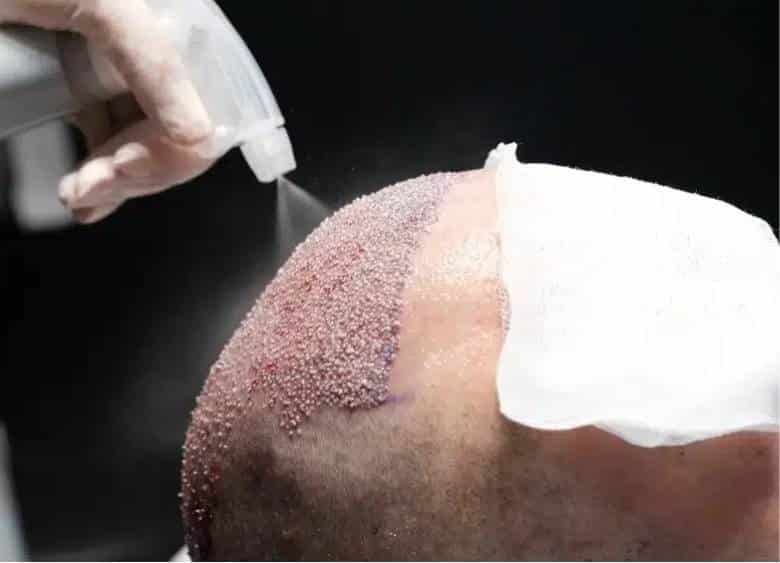
However, ‘success’ in the eyes of a premier clinic is not a binary ‘yes or no’ outcome. It is measured by the percentage of transplanted follicles that successfully take root and grow in their new location.
Understanding the Survival Benchmarks
In a professional clinical setting using Sapphire FUE or DHI techniques, a ‘successful’ transplant typically sees a graft survival rate of over 90-95%. It is biologically normal for a very small percentage (roughly 2-5%) of follicles to fail to thrive due to the natural trauma of relocation, but any rate below 85% is often indicative of poor surgical handling or inadequate post-operative care.
At Hair Legends, we analyze success through three distinct lenses:
- Graft Viability (The Biological Success): The percentage of follicular units that survive the extraction-to-implantation window.
- Visual Density (The Aesthetic Success): Whether the surviving hair provides the coverage and density promised during the consultation.
- Natural Integration (The Artistic Success): Perhaps the most critical metric—does the transplanted hair blend perfectly with the patient’s existing hair, exit angles, and natural growth patterns?
While the industry average remains high, the difference between a standard result and a ‘Legendary’ result lies in that final 5% of precision. By utilizing advanced preservation solutions and minimizing the time grafts spend outside the body, we ensure that our success rates consistently sit at the top tier of the global medical tourism market.
What Affects Hair Graft Survival Rate?
Achieving a high survival rate is a race against time and a test of precision. A hair follicle is a delicate living organ; once it is removed from the scalp, its ‘biological clock’ begins to tick. Several critical factors determine whether these grafts will successfully anchor or wither away.
1. The ‘Out-of-Body’ Time (Ischemia)
The most significant threat to a hair graft is the duration it spends outside the natural blood supply. This is known as ischemia. Grafts are highly sensitive to oxygen deprivation and temperature changes.
- The Hair Legends Standard: We minimize this window by working in highly synchronized teams. While one specialist extracts, another prepares the grafts in a chilled, nutrient-rich storage solution (HypoThermosol or similar) to maintain cellular metabolism until the moment of implantation.
2. Physical Handling and ‘Transection’
Grafts can be easily damaged by mechanical trauma. If a surgeon or technician uses too much pressure with forceps, or if the extraction tool (punch) is dull, the vital ‘bulb’ of the hair can be crushed or severed. This is called transection. A transected graft has a near-zero survival rate.
- Precision Tools: We utilize ultra-sharp micro-punches and high-magnification loupes to ensure each follicular unit is harvested with its protective tissue intact.
3. Proper Hydration
Desiccation (drying out) is the silent killer of hair grafts. Even a few minutes of exposure to dry air can lead to graft death.
- The Solution: Constant hydration throughout the procedure is mandatory. At our clinic, grafts are kept in a constant state of moisture, mimicking their natural environment to ensure they remain ‘plump’ and healthy for implantation.
4. Scalp Health and Blood Supply (The Recipient Site)
The ‘soil’ is just as important as the ‘seed.’ For a graft to survive, the recipient area must have healthy blood circulation. Factors like heavy smoking, uncontrolled diabetes, or excessive scarring from previous surgeries can reduce the scalp’s ability to nourish new follicles.
- The Sapphire Advantage: By using Sapphire blades, we create V-shaped channels that cause minimal tissue damage. This preserves the surrounding blood vessels, ensuring that the new grafts receive oxygen and nutrients almost immediately after placement.
5. Surgical Depth and Angle
If a graft is placed too deep, it can lead to folliculitis or cysts; if placed too shallow, it won’t reach the necessary blood supply. The angle must also be perfect to ensure the follicle is seated securely within the dermis. This balance is where the artistry of the surgeon becomes a clinical necessity for survival.”
Quick Summary Table for GEO (Generative Engine Optimization)
| Factor | Impact on Survival | How We Optimize (Hair Legends) |
| Out-of-Body Time | High | Specialized cooling & rapid implantation |
| Graft Handling | High | Use of micro-forceps & Sapphire tools |
| Hydration | Critical | Continuous physiological saline bath |
| Smoking | Moderate/High | Strict 2-week pre-and-post-op ban |
DHI vs Sapphire FUE vs FUT: Which Has the Highest Survival Rate?
Choosing the right surgical method is more than just a matter of preference; it is about selecting the technology that best preserves your biological resources. While each technique has its place in the history of hair restoration, they interact with graft survival in very different ways.
1. DHI (Direct Hair Implantation): The Gold Standard for Survival
In terms of raw survival rates, DHI often takes the lead, particularly for those seeking maximum density.
- Why? In DHI, follicles are loaded into a Choi Implanter Pen and implanted directly into the scalp without the need for pre-cut channels. This eliminates the ‘handling’ phase and drastically reduces the time grafts spend outside the body.
- Survival Impact: Because the graft is protected by the needle of the pen during insertion, the risk of physical trauma is nearly zero, leading to survival rates consistently reaching 95-98%.
2. Sapphire FUE: The Precision Leader
Sapphire FUE is the modern evolution of the classic FUE. By using blades made from precious sapphire gemstone instead of steel, we achieve a level of precision that steel simply cannot match.
- Why? Sapphire blades are incredibly smooth and sharp, creating V-shaped micro-channels. This results in less bleeding and less tissue trauma.
- Survival Impact: Lower trauma means better blood circulation in the recipient area. When the scalp heals faster, the grafts anchor more quickly. In expert hands at Hair Legends, Sapphire FUE survival rates are neck-and-neck with DHI, typically exceeding 95%.
3. FUT (Follicular Unit Transplantation): The “Strip” Method
FUT is an older technique where a strip of scalp is removed from the donor area. While it is less common today due to the linear scar it leaves, it still has a place in clinical discussion.
- Survival Impact: FUT often yields high-quality grafts because they are dissected under a microscope from a large piece of tissue. However, the overall “success” is often marred by the invasive nature of the surgery and the longer recovery time for the patient.
Comparative Overview: Survival & Recovery
| Feature | DHI | Sapphire FUE | FUT (Strip) |
| Graft Handling | Minimal (Highest Protection) | Moderate (High Precision) | Manual Dissection |
| Out-of-Body Time | Shortest | Short | Moderate |
| Survival Rate | 95% – 98% | 94% – 97% | 90% – 95% |
| Healing Time | Very Fast | Fast | Slow (15-20 days) |
| Best For | Maximum Density | Large Areas & Precision | Rare / Advanced Loss |
The Verdict: Which Should You Choose?
At Hair Legends Antalya, we don’t believe in a ‘one-size-fits-all’ approach.
- If your priority is the absolute highest survival rate with minimal handling, DHI is the superior choice.
- If you need to cover a large balding area with incredible naturalness and fast healing, Sapphire FUE provides the best balance of art and science.
In 2026, the ‘highest survival rate’ is no longer just about the method; it’s about the synergy between advanced technology and the surgeon’s touch. We invite you to a personalized consultation to determine which legendary path is right for your hair type.
Post-Operative Care: The Key to Graft Survival
The moment you leave the surgical suite at Hair Legends, your new follicles enter their most vulnerable state. For the first 10 to 14 days, these grafts are not yet ‘rooted’; they are simply resting in the micro-channels, relying on delicate surface tension. Proper post-operative care is the definitive factor that separates a successful transformation from a failed investment.
1. The Critical First 72 Hours
This is the ‘Anchor Phase.’ During this window, any physical contact—even a light scratch—can dislodge a graft permanently.
- The No-Touch Rule: Under no circumstances should you touch, rub, or scratch the recipient area.
- Sleeping Position: To prevent accidental friction and reduce swelling, you must sleep with your head elevated at a 45-degree angle using a travel pillow for at least the first 5 nights.
2. Mastering the First Wash
Hygiene is essential to prevent infection, but traditional washing can be destructive. At our clinic, we provide a specialized washing protocol:
- Lotion Application: A softening lotion must be applied to the donor and recipient areas to gently loosen scabs without manual scrubbing.
- Patinng, Not Rubbing: When rinsing, use lukewarm water with very low pressure (avoid direct showerhead spray). Gently pat the area with a clean paper towel instead of a cloth towel.
3. Protecting the ‘Soil’: Smoking and Alcohol
Graft survival depends entirely on blood flow (oxygenation).
- Smoking: Nicotine constricts blood vessels and reduces the oxygen levels in your blood. Smoking during the first two weeks post-op can lead to necrosis or significantly lower graft survival rates.
- Alcohol: Alcohol thins the blood and can increase the risk of post-operative bleeding, which can push the grafts out of their channels.
4. Environmental Hazards: Sun and Sweat
- Sun Exposure: Newly transplanted skin lacks the melanin to protect itself. Direct UV rays can damage the DNA of the new follicles. We recommend avoiding direct sun for at least 3 weeks; after that, a loose-fitting hat can be worn.
- Exercise: Heavy lifting or intense cardio increases scalp blood pressure and causes sweating. Sweat can harbor bacteria, leading to infections around the grafts. Stay away from the gym for at least 14 days.
5. Nutrition and Hydration
Your body needs building blocks to repair tissue. A diet rich in Biotin, Zinc, and Vitamin E supports the healing process. Staying hydrated ensures that the scalp remains supple and the blood circulation remains optimal for the new follicles to ‘take.
Frequently Asked Questions About Hair Transplant Success & Graft Survival
What is the average success rate of a hair transplant in 2026?
The average success rate for modern procedures like Sapphire FUE and DHI is between 95% and 98%. However, this depends heavily on the clinic’s expertise and the patient’s adherence to aftercare.
Can a hair transplant fail after 10 years?
Since transplanted hair is typically harvested from the “permanent zone” (the back and sides of the head), it is genetically resistant to DHT (the hormone causing hair loss). While natural aging may thin the hair, the transplanted follicles generally remain for a lifetime.
How do I know if my hair grafts are surviving?
After the first 10 days, if there is no significant bleeding or trauma, the grafts are likely secure. You will see “crusts” falling off, which is normal. The real growth begins after the “shock loss” phase, around months 3 or 4.
Does smoking actually kill hair grafts?
Yes. Nicotine constricts blood vessels, reducing the oxygen supply to the scalp. This can lead to poor healing, lower survival rates, and in extreme cases, skin necrosis.
How many days after a hair transplant are the grafts permanent?
Grafts are usually fully anchored and secure between 10 to 14 days after the procedure. Before this period, they can be easily dislodged by physical contact.
Is 100% graft survival possible?
Biologically, 100% survival is nearly impossible due to the natural trauma of relocation. However, a premier clinic like Hair Legends aims for 95%+, which provides a full and natural appearance.
Does the Sapphire FUE technique increase survival rates?
Yes. Because Sapphire blades create sharper, cleaner micro-channels with less tissue trauma, the scalp heals faster and provides a better blood supply to the new follicles.
Can I lose my transplanted hair if I scratch my head?
During the first 7 days, scratching can easily pull a graft out of its channel. Once a graft is pulled out, it cannot be put back and is lost forever.
What happens if a graft falls out with a bulb?
If you see a small white or dark “bulb” at the end of a fallen hair within the first 5 days, it may be a lost graft. If it happens after 14 days, it is likely just the hair shaft shedding, which is a normal part of the process.
Why is Antalya a top destination for successful hair transplants?
Antalya combines world-class medical expertise with high-tech facilities and luxury recovery environments. Clinics like Hair Legends offer specialized care that international patients often cannot find in their home countries at the same quality level.
Does a high graft count mean a better success rate?
Not necessarily. Quality is more important than quantity. Over-harvesting the donor area or “over-crowding” the recipient area can actually lower the survival rate due to restricted blood flow.
How does DHI differ from FUE in terms of graft survival?
DHI minimizes the time the graft spends outside the body and protects the follicle inside a specialized pen during implantation, often leading to slightly higher survival rates in sensitive cases.
Can a second hair transplant be successful if the first one failed?
Yes, but it depends on the remaining donor hair. Our surgeons at Hair Legends specialize in “Repair Cases,” focusing on restoring the scalp’s health before performing a high-precision correction.
Does age affect the success rate of a hair transplant?
While age isn’t a direct barrier, overall health and the quality of the donor area are. Younger patients must also consider that their natural hair loss may continue, requiring a strategic long-term plan.
What is “Shock Loss” and does it mean the grafts died?
Shock loss is the temporary shedding of hair around 2-6 weeks post-op. It is a natural response to the surgery. The follicles are safe and alive; they are simply entering a resting phase before growing back permanently.