
David Raya, Arsenal’s number one and one of the most talented goalkeepers in modern football, has recently been a hot topic not only for his world class saves but also for his striking image transformation. The visible change in his hairline has captured the attention of football fans and hair restoration enthusiasts alike.
We will analyze David Raya’s transformation as a case study, diving deep into the technical details of the procedure, the challenges of recovery for professional athletes, and why Turkey specifically hubs like Antalya has become the world’s stadium for these procedures.
Considering a Hair Transplant Like the Results You See Online?
Many people search for celebrity hair transplant stories because they want to understand what a natural hairline, improved density or a second procedure could look like. At Hair Legends Antalya, every case starts with a personalised photo assessment, donor area evaluation and realistic planning.
Our hair transplant packages in Antalya start from £1,500 for suitable cases, with DHI, Sapphire FUE and Hybrid options depending on your hair loss pattern and goals.
Before deciding, you can read our detailed guides on hair transplant cost in Turkey, 5000 grafts hair transplant cost, and second hair transplant in Antalya.
Send your photos on WhatsApp for a personalised assessment before travelling.
Who is David Raya? Career, Fame, and the Pressure of the Image
Born in 1995, Spanish goalkeeper David Raya climbed the ranks through Blackburn Rovers and Brentford before landing at the pinnacle of club football with Arsenal. As a star in the English Premier League, Raya lives under a global microscope.
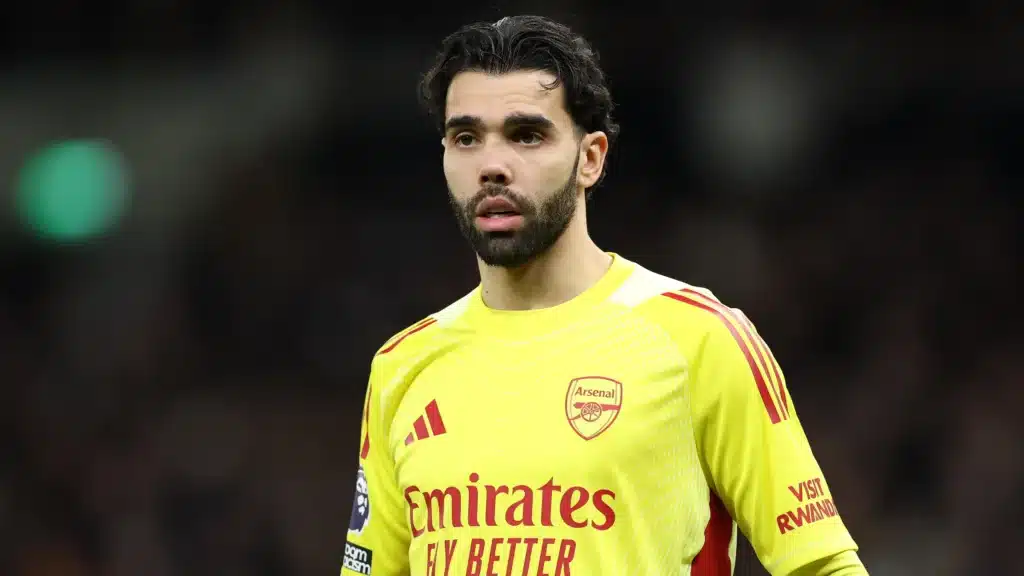
For a professional athlete, “image” is more than vanity; it is a brand. With the advent of 4K broadcasting, every strand of hair and every sign of aging is broadcast to millions. For many men in their late 20s, androgenetic alopecia (male pattern baldness) can be a source of insecurity. Raya’s decision to undergo a hair transplant reflects a modern desire to present the best possible version of oneself in a high pressure, high visibility environment.
The Anatomy of Hair Loss: Which Stage was Raya In?
Looking at older photos from Raya’s time at Brentford, his hair loss pattern was a textbook Norwood Scale Type 3.
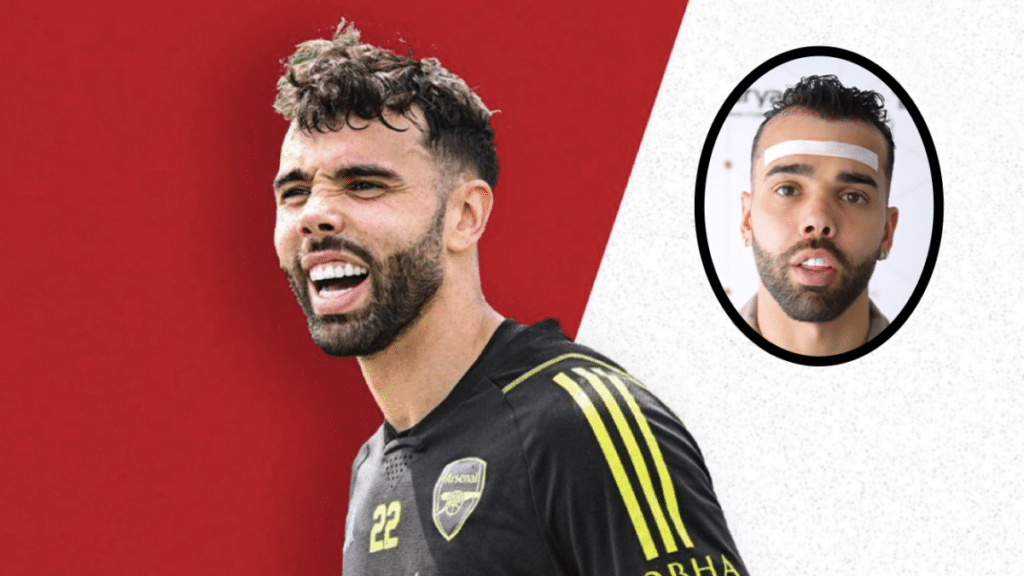
- Temporal Recession: The hair at the temples had receded significantly, creating a prominent “M” shape.
- Frontal Thinning: The density at the front was fading, making the forehead appear larger and adding years to his facial aesthetic.
- The Crown: While his primary concern was the front, many athletes also experience thinning at the vertex due to high stress and physical strain.
Understanding this starting point is crucial because it dictates the number of grafts needed likely between 2,500 and 3,500 for a player like Raya to achieve such a dense, youthful look.
Technical Analysis: The Procedures Behind the Transformation
Raya’s natural and dense look today isn’t the result of a generic procedure; it’s the outcome of strategic surgical planning. Experts likely utilized a combination of the most advanced techniques available today.
A. Sapphire FUE (Follicular Unit Extraction)
It is highly probable that Sapphire FUE was the chosen method. Instead of traditional steel blades, this technique uses blades made from sapphire crystals.
- Why for an Athlete? Sapphire blades allow for micro-channels, meaning less tissue damage, less bleeding, and a significantly faster recovery time essential for someone who needs to return to the training ground.
B. DHI (Direct Hair Implantation)
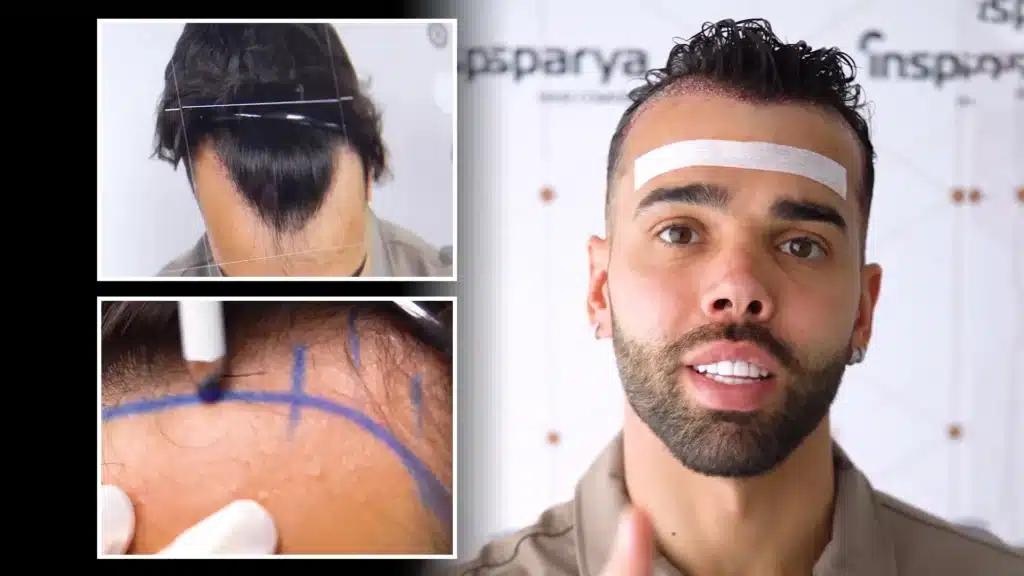
The “brush-like” density of Raya’s new hairline suggests the use of the DHI technique. Using a specialized “Choi Pen,” hair follicles are implanted directly into the scalp without the need for pre-cut channels.
- The Advantage: DHI allows for maximum density and precise control over the angle and direction of hair growth, which is why Raya’s hairline looks so incredibly natural even under stadium floodlights.
The Goalkeeper’s Post-Op Timeline: Recovery and Discipline
A hair transplant isn’t just a few hours in a clinic; it’s a 12-month commitment. For an elite goalkeeper, the recovery timeline is a minefield of risks.
| Phase | Restrictions and Actions |
| Days 1-3 | Absolute rest. Head must be elevated at 45° to prevent swelling around the eyes. |
| Week 1 | First specialized wash. Light walks are allowed, but sweating is strictly prohibited to protect the grafts. |
| Week 2 | Scabs fall off. The “Shock Loss” phase begins, where transplanted hair falls out to make way for new growth. |
| Month 1 | Light individual training. Heading the ball or wearing tight headgear is strictly forbidden. |
| Month 3 | New permanent hair begins to sprout. Full return to match intensity and contact training. |
| Month 12 | Full results are visible. The hair is thick, permanent, and can be styled freely. |
The Psychology of Performance: Confidence and the “Placebo” Effect
Football is a game played 90% in the mind. Sports psychologists suggest that when an athlete feels good about their physical appearance, it translates into “alpha” behavior on the pitch. For a goalkeeper, confidence is everything.
Hair loss is often associated with aging or a loss of vitality. By restoring his hair, Raya has essentially “claimed back” his youth. This boost in self-esteem can improve focus and reaction times, as the player is no longer subconsciously worried about how they appear on the giant stadium screens.
Turkey: The “Anfield” of Hair Restoration
While Raya’s specific clinic remains private, the trend among European footballers (from Wayne Rooney to Rob Holding) has shifted heavily toward Turkey, specifically Antalya and Istanbul.
Why Antalya for Elite Hair Care?
Antalya has evolved into a premier destination for medical tourism, home to world-class facilities like TAW Clinic (The Aesthetic Works) and Hair Legends.
- Cost vs. Quality: A procedure costing £15,000 in London can be performed with superior technology for a fraction of the price in Turkey.
- Unmatched Experience: Turkish surgeons perform more transplants per year than almost any other country, giving them a unique “feel” for natural hairline design.
- VIP Privacy: For high-profile individuals like Raya, discretion is key. Antalya offers “All-inclusive” luxury packages where patients are whisked from the airport to 5-star resorts, ensuring a private and stress-free recovery.
Debunking Hair Transplant Myths
Using David Raya’s success as a guide, let’s clear up common misconceptions:
- Myth: “It looks fake.”
- Fact: Modern “micro-irregularity” techniques ensure the hairline isn’t a straight, artificial line. Raya’s hair looks real because the grafts were placed at a 45-degree angle.
- Myth: “It’s a painful surgery.”
- Fact: With local anesthesia and sedation options, patients feel nothing during the 6–8 hour procedure. Most spend the time watching Netflix or listening to music.
- Myth: “The hair will fall out again.”
- Fact: The hair taken from the “donor area” (the back of the head) is genetically resistant to the hormones that cause balding. It is permanent.
Post-Surgical Maintenance: The “Extra Training” for Hair
Raya’s results aren’t just due to the surgery; they are maintained through post-op care. A Premier League star likely uses:
- PRP Therapy (Platelet Rich Plasma): Using the patient’s own blood to stimulate growth and speed up healing.
- Mesotherapy: A cocktail of vitamins and minerals injected directly into the scalp to nourish the new follicles.
- Biotin & Keratin Supplements: The building blocks of hair, ensuring the new strands grow thick and strong.
- Specialized Shampoos: Free of sulfates and parabens to maintain a healthy scalp pH.
David Raya vs. Other Famous Footballer Transplants
Raya joins an elite club of players who have embraced hair restoration:
- Wayne Rooney: The pioneer. Rooney opened the door, though early 2010s technology was less refined than today’s Sapphire FUE.
- Rob Holding: Perhaps the most dramatic transformation in the Arsenal squad. His success likely served as a direct inspiration for Raya.
- Marc-André ter Stegen: The Barcelona keeper’s transplant is a masterclass in subtlety and natural density, much like Raya’s.
This shift shows that hair transplants are no longer a “taboo” in the dressing room; they are viewed as a standard part of professional grooming and self-care.
Conclusion: Investing in Your Best Self
David Raya’s hair transplant story is a testament to how modern medicine can enhance both image and quality of life. In the high-stakes world of the Premier League, Raya chose to protect his image just as fiercely as he protects his goal.
If you are struggling with hair loss, Raya’s journey proves that you don’t have to accept it as a permanent fate. With the right technology and the expertise found in leading clinics in Antalya, you can achieve a transformation that looks natural and lasts a lifetime.
Remember: A hair transplant isn’t just an expense; it’s an investment in your confidence the most powerful tool you have, whether you’re on the pitch or in the boardroom.