
2026 Hair Transplant Cost Analysis: In the world of medical aesthetics, 2026 has become a watershed year. We have seen a massive influx of “hair transplant factories” clinics that treat patients like assembly-line products, offering prices that seem too good to be true. And usually, they are.
As a discerning patient, you aren’t just looking for hair; you are looking for a permanent transformation that integrates seamlessly with your natural features. When you see a price disparity of $3,000 versus $10,000, your instinct asks: “What am I actually paying for?”
The answer isn’t just “better service.” It is the difference between a surgical masterpiece and a lifelong medical regret. In this comprehensive analysis, we break down the hidden mechanics of hair transplant pricing in 2026.
The 2026 Paradox: The Rise of the “Repair” Economy
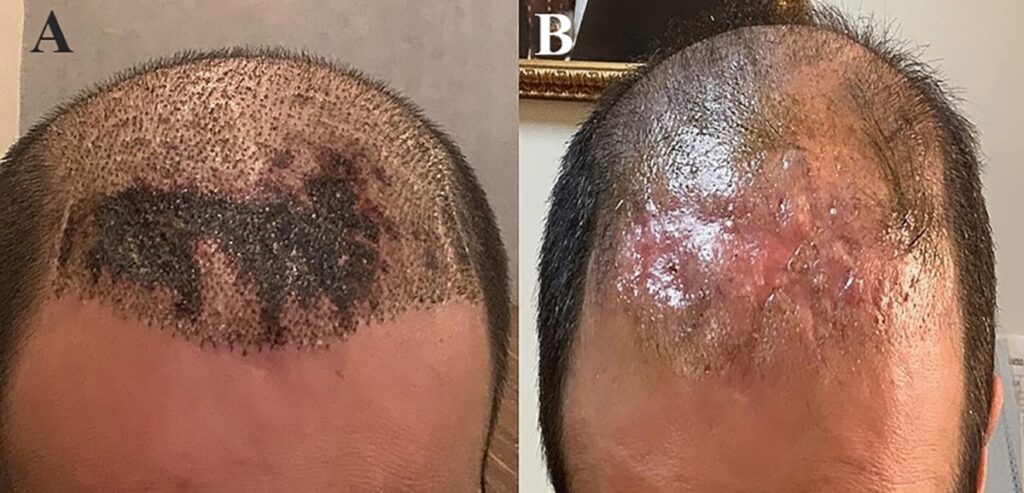
The most significant trend we’ve seen this year is the staggering rise in Revision Hair Transplants. Nearly 35% of our premium clientele in 2026 consists of patients who initially chose a “budget” clinic and are now paying double to fix the damage.
When a clinic charges bottom dollar prices, they must cut costs somewhere. Usually, this means:
- Over-harvesting the donor area: Using untrained technicians to extract as many grafts as possible, leaving the back of your head scarred and thin.
- Poor Angulation: Hair that grows straight up like “doll hair” because the surgeon didn’t spend the time to map natural growth directions.
- Low Survival Rates: Grafts dying before they even take root because of poor storage protocols.
A premium clinic isn’t just charging for the hair you get today; they are charging for the expertise that ensures you still have a healthy donor area and a natural look ten years from now.
The Technological Edge: Why Sapphire Aren’t Just Buzzwords
In 2026, the tools of the trade have evolved. A high end clinic invests millions into technology that a budget clinic simply cannot afford.
The True Quality of Sapphire Blades
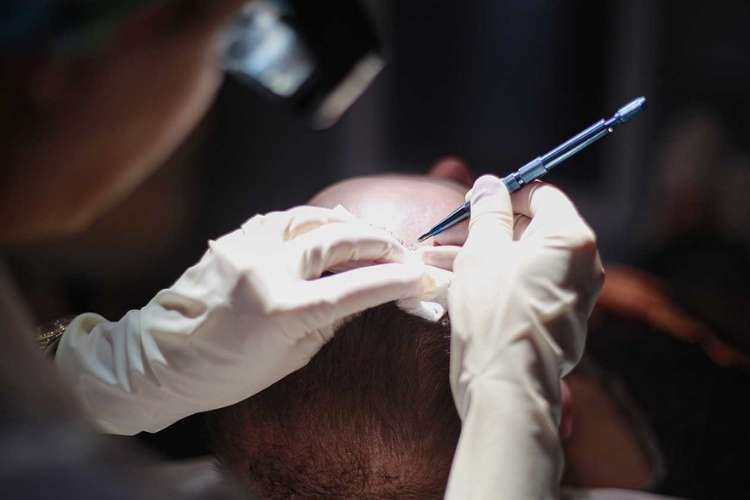
While many claim to use “Sapphire FUE,” there is a massive quality gap in the blades themselves.
- Budget Clinics: Often reuse blades or use low-grade synthetic sapphire that loses its sharpness mid-operation. This causes “tissue trauma,” leading to more swelling and slower healing.
- Premium Clinics: Use medical grade, single use, ultra sharp Sapphire blades. This allows for microscopic incisions that heal within 48 hours and leave zero visible scarring.
AI-Driven Graft Mapping
The “Gold Standard” of 2026 is AI-Assisted Diagnostics. High end clinics use software to analyze the thickness of each individual hair follicle and determine the exact “optimal harvest pattern.” This prevents the “patchy” look in the donor area and ensures that only the strongest, multi-hair grafts are placed in high impact areas like the hairline.
The “Who” Matters More Than the “How”
The single biggest factor in your 2026 price quote is the Medical Team.
The Surgeon vs. The Technician
In low-cost clinics, the “Doctor” is often just a face on a website. The actual surgery the incisions, the design, and the extraction is performed by rotating technicians with minimal oversight.
In a premium 2026 clinic:
- The Surgeon performs the “Incision” phase: This is the most critical part of the surgery. The doctor personally creates every single channel where the hair will go, controlling the depth, angle, and density.
- Specialized Graft Pharmacists: High-end clinics employ staff dedicated solely to the “holding solution.” They use expensive bio-fluids (like ATP or HypoThermosol) and chilled environments to keep the hair “alive” outside the body. Budget clinics often use simple saline, which significantly lowers the survival rate of your follicles.
The Luxury Factor: It’s Not Just About the Hotel
When you pay for a premium package in 2026, you aren’t just paying for a 5-star hotel; you are paying for Medical Safety and Seamless Logistics.
- Hyperbaric Oxygen Therapy (HBOT): Many top-tier clinics now include post-op HBOT sessions to saturate the new grafts with oxygen, speeding up recovery by 40%.
- Private VIP Transport: Reducing stress is clinical. High cortisol levels can affect graft take. A seamless, private experience from the airport to the surgical suite ensures the patient remains in a “healing state.”
- DNA-Based Aftercare: Premium clinics now offer personalized serums based on your genetic hair loss profile, ensuring that your non-transplanted hair stays healthy alongside your new grafts.
Risk Mitigation: The Price of Peace of Mind
Every surgery has risks. The difference lies in how those risks are managed.
- Sterilization Protocols: Maintaining a Grade A surgical environment costs thousands of dollars per month in equipment and staffing. Budget clinics often operate in “office-style” rooms that increase the risk of scalp infections.
- Emergency Readiness: Does the clinic have an anesthesiologist on-site? Do they have emergency cardiovascular equipment? In a premium setting, the answer is always yes.
The Hidden Math: Why a $1,500 Transplant Costs $10,000 in the Long Run
When patients look at a price tag, they often see it as a one-time expense. However, in the 2026 hair restoration market, “budget” surgeries often come with a trail of secondary costs that the clinic will never mention in their brochure.
The “Failed Growth” Tax
In a premium clinic, the expected graft survival rate is above 95-98%. In high volume, low cost “hair mills,” this rate often plummets to 60% or 70%. If you pay for 4,000 grafts but only 2,500 grow, your “cost per surviving hair” is actually much higher than you calculated. Furthermore, you have wasted 1,500 grafts from your limited donor supply hairs that you can never get back.
The Cost of Extended Downtime
Time is money, especially for the high performing professionals we treat.
- Low-Cost Impact: Rough handling of tissue leads to massive edema (swelling) and bruising that can last 14 days.
- Premium Impact: Using ultra refined sapphire blades and specialized anti-inflammatory protocols (like localized cold atmospheric plasma), our patients are often camera-ready and back in the boardroom within 3 to 5 days.
If you lose an extra week of work or executive presence, the “savings” from a cheap clinic evaporate instantly.
The Bio-Science of Graft Survival: The 2026 Standards
In 2026, the industry has realized that it’s not just about how you take the hair, but how you keep it alive while it’s outside the body. This “out of body” time is the most dangerous period for a hair follicle.
Storage Solutions: Saline vs. Bio Liquids
This is one of the biggest price drivers that patients never see.
- The Budget Way: Grafts are placed in simple saline (salt water) in plastic Petri dishes. Saline does not provide nutrients or protect the cells from “oxidative stress.” Many grafts die or weaken significantly during the 4-6 hours they sit on the table.
- The Premium Way (The 2026 Gold Standard): We use specialized holding solutions like HypoThermosol® or ATP (Adenosine Triphosphate) sprays. These fluids mimic the body’s internal environment, providing the follicles with “fuel” so they continue to function even while disconnected from your blood supply. These solutions are incredibly expensive often costing more than the surgical tools themselves but they are the secret to that “thick, lush” look 12 months later.
The Cold Chain Protocol
Just like a transplanted heart or kidney, hair follicles must be kept at a precise temperature. Premium clinics use digital chilling devices that maintain a constant (4 degree C). Budget clinics often use simple ice packs that can fluctuate in temperature, causing “thermal shock” to the delicate hair roots.
Anesthesia: Comfort vs. Safety
In 2026, “Pain-Free” is a marketing slogan for some, but a medical reality for others.
The Budget Approach: Usually involves standard needle injections of local anesthesia. Not only is this painful (the “bee sting” sensation), but it is often administered by technicians. If the dosage is calculated incorrectly based on your body weight, it can lead to toxicity or insufficient numbing.
The Premium Approach:
- Pressure Based Needle Free Systems: Using high-pressure “jet” injectors that freeze the nerves before a single needle ever touches the skin.
- MDO (Monitored Delivery): A dedicated staff member monitors your vitals throughout the day.
- Sedation Options: For patients with needle phobias, premium clinics in 2026 offer “Sleep-FUE,” where a mild sedative allows you to wake up when the procedure is nearly finished, with zero memory of the numbing process.
The Donor Area: Your Only Non Renewable Resource
The most tragic part of cheap hair transplants is the “scorched earth” policy used by untrained staff. In 2026, we see a high volume of “Donor Depletion.”
When a technician is rushed to finish 5 surgeries in one day, they extract grafts too close together. This creates:
- Moth-eaten appearance: Visible patches of baldness in the back of your head.
- Dermal Fibrosis: Scarring that makes the skin so tough that a second (repair) surgery becomes nearly impossible.
A premium surgeon treats your donor area like a high-end silk fabric. We extract in a “diffuse pattern,” ensuring that the remaining hair covers the extraction sites perfectly. We preserve your “Plan B” (future grafts) in case you lose more native hair as you age.
The Aftercare Ecosystem: Why “One and Done” is a Red Flag
In the budget sector, the relationship between the clinic and the patient often ends the moment the final payment is made. In 2026, we know that the surgery is only 50% of the journey. The remaining 50% happens during the critical 12-month recovery phase.
Remote Monitoring & AI Scans
Premium clinics now utilize AI-driven post-op apps. Patients take weekly high-resolution photos, and the software monitored by a medical team—checks for:
- Early signs of folliculitis (inflammation).
- Graft attachment progress.
- Scalp hydration levels.
This proactive monitoring prevents minor issues from becoming major failures. Budget clinics lack the staffing and technology for this, leaving you to guess whether your “shock loss” is normal or a sign of a problem.
Regenerative Boosters: PRP, PRF, and Laser Therapy
A high end 2026 quote often includes a “Regenerative Suite.” This isn’t just fluff; it’s science.
- i-PRF (Injectable Platelet Rich Fibrin): The 2026 evolution of PRP. It releases growth factors slowly over 2 weeks, ensuring the newly implanted grafts have a constant supply of “food” to anchor into the scalp.
- LLLT (Low-Level Laser Therapy): Premium clinics provide medical grade laser caps for home use. These devices stimulate the mitochondria in the hair cells, significantly shortening the dormant phase of the hair.
Decoding the “Lifetime Warranty” in 2026
Many low-cost clinics lure patients with a “Lifetime Guarantee Certificate.” In the professional medical community, this is often viewed as a marketing gimmick.
The Reality Check: A piece of paper cannot force hair to grow if the surgery was botched.
- The Budget Trick: These warranties often have “fine print” requiring you to buy their expensive vitamins for years, or they only offer a “free second surgery.” But if they ruined your donor area the first time, a second surgery is useless.
- The Premium Philosophy: We don’t offer a “warranty”; we offer Accountability. Our price includes the cost of success. If a result isn’t optimal, a premium clinic has the surgical expertise and the donor-preservation strategy to fix it. We sell outcomes, not certificates.
The Role of Nutrition and Genetic Mapping
In 2026, hair loss is treated as a systemic issue, not just a scalp issue.
Personalized Trichology: High-end clinics perform a DNA Hair Test before the surgery. This test tells us exactly which medications (Finasteride, Minoxidil, or natural alternatives) your body will respond to.
- If you are genetically non-responsive to Minoxidil, a budget clinic will still tell you to use it.
- A premium clinic will adjust your post-op serum to ingredients your DNA actually accepts.
This level of personalization is expensive because it involves laboratory work and specialized pharmacological knowledge, but it is the only way to ensure the rest of your hair doesn’t fall out while your transplanted hair grows.
Psychological Comfort: The Executive Experience
For the 2026 patient, mental stress is a physical barrier to healing. High cortisol levels constrict blood vessels, which is the last thing you want for new grafts.
The “Flow State” Surgery: Premium clinics offer a concierge level experience. This isn’t just about luxury; it’s about Bio-Hacking the Recovery.
- Ergonomic surgical beds designed for 8-hour comfort to prevent neck and back strain.
- VR entertainment or curated relaxation environments.
- Post-op nutrition designed to reduce inflammation.
When you feel like a VIP, your body is in a parasympathetic state (rest and digest), which is the optimal state for cellular repair and graft integration.
The Long Term ROI: Why This is an Investment, Not an Expense
In the financial world of 2026, we talk about Return on Investment (ROI). A hair transplant should be viewed through the same lens. When you choose a premium clinic, you are not just “buying hair”; you are securing a lifelong asset.
The Professional “Edge”
Statistics in 2026 continue to show a direct correlation between self-confidence and career trajectory. For executives, public speakers, and entrepreneurs, a “botched” or obviously fake hair transplant is a professional liability. It signals a lack of attention to detail. Conversely, a flawless, undetectable restoration enhances your “executive presence.” The cost of a premium procedure is often recovered in a single successful negotiation or career advancement fueled by renewed self-assurance.
The Maintenance Math
- Low-Cost Path: Often requires repeated “touch-up” surgeries every 2-3 years because the original design didn’t account for future hair loss.
- Premium Path: A “Master Plan” approach. We design for you at age 40, 50, and 70. By investing more upfront, you avoid the compounding costs of corrective surgeries and constant pharmaceutical “damage control.”
The “Red Flags” of 2026: How to Spot a Hair Mill
As a high-value patient, you must be able to see through the marketing gloss. Here are the warning signs that a clinic is prioritizing profit over your scalp:
- The “Unlimited Grafts” Trap: If a clinic promises 6,500+ grafts in a single session for a flat low fee, run. This is a recipe for donor depletion and tissue necrosis.
- Lack of Surgeon-Specific Portfolios: If the clinic shows general “before and after” photos but cannot tell you exactly which surgeon will perform your incisions, they are using a rotating door of technicians.
- Vague Post-Op Protocols: If their aftercare advice is just “don’t touch it for a week,” they are not invested in your long-term success.
The Ethics of 2026: Transparency in Pricing
A premium clinic’s quote is all-inclusive and transparent. In 2026, many budget clinics have started using “hidden surcharges.” You arrive for your $1,500 surgery, only to find out that:
- Local anesthesia is an extra $300.
- The “Sapphire blade” upgrade is $500.
- Post-op medications are not included.
- The transfer from the airport only goes to a specific (lower-quality) hotel.
In a high end facility, your quote is a contract. It covers every contingency, from the highest grade bio-solutions to the most advanced regenerative therapies, ensuring no financial surprises during your recovery.
Case Study: A Tale of Two Patients
To illustrate the 2026 price gap, let’s look at two hypothetical patients, “Patient A” and “Patient B.”
- Patient A (The Budget Route): Spent $1,500. Had 4,000 grafts extracted by new nurses. Suffered severe “over-harvesting.” Only 50% of the grafts grew, and the hairline was too low and straight. In 2027, he spent $8,000 on a revision surgery to fix the hairline and $3,000 on scalp micro-pigmentation to hide the scars in his donor area. Total Cost: $13,000 + 2 years of stress.
- Patient B (The Premium Route): Spent $3,000. Had a 3,500 graft Hybrid HT surgery. The surgeon personally designed a conservative, age appropriate hairline. He used ATP storage and i-PRF. He was back at work in 4 days. In 2027, his hair looks completely natural, and his donor area is pristine, leaving him options for the future. Total Cost: $3,000 + 4 days of recovery.
Conclusion: Your Scalp is Not a Bargain Bin
As we move through 2026, the technology for hair restoration has never been better but the gap between “commercial” and “medical” excellence has never been wider.
Choosing a hair transplant clinic based solely on the lowest price is a gamble where the stakes are your appearance, your health, and your self-image. A premium price tag reflects the cost of a specialized medical team, cutting-edge bio-technology, and a commitment to your safety that a “discount” clinic simply cannot sustain.
When you look in the mirror five years from now, you won’t remember the $5,000 you “saved.” You will only see the hair on your head. Make sure it’s a result you can be proud of.
Final Checklist for the 2026 Patient
Before you sign any contract, ask these three final questions:
- “Who exactly is creating the channels in my scalp, and what is their medical background?”
- “What specific bio-holding solution do you use for the grafts while they are outside my body?”
- “If I have a complication at 2:00 AM three months from now, who is my direct medical contact?”
If the answer is anything less than “A board-certified surgeon” and “A dedicated 24/7 medical team,” you are not in a premium clinic.
Final Word from the Author
At our clinic, we believe that hair restoration is the perfect marriage of art and science. In 2026, we don’t just move hair; we restore identity. Invest in yourself. You are worth the premium.