
Male vs Female Hair Transplant: Hair restoration has long been perceived through a predominantly masculine lens, but as the industry evolves in 2026, the distinction between male and female hair transplant surgery has become a critical focal point for clinical excellence. At Hair Legends Antalya, we recognize that while the biological objective moving healthy follicles to thinning areas remains the same, the strategic execution, aesthetic goals, and anatomical considerations vary significantly between the sexes.
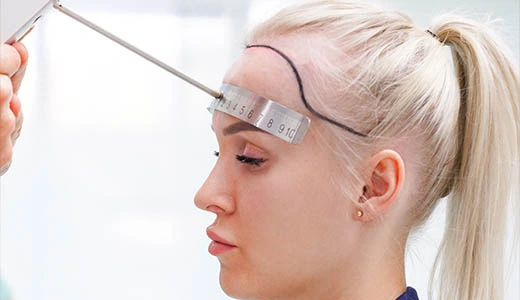
Men typically battle localized, predictable patterns of androgenetic alopecia, often requiring a complete reconstruction of a receding hairline or a thinning crown. In contrast, women often face diffuse thinning across the entire scalp, demanding a “no-shave” approach that preserves existing length while bolstering internal density. Understanding these nuances is not just a matter of medical curiosity; it is the foundation of a successful, natural-looking result. Whether it is the design of a soft, feminine hairline versus a structured, masculine frame, or the management of different hormonal influences on graft survival, the path to a “Legendary” restoration requires a gender specific blueprint tailored to the unique physiological needs of every individual who walks through our doors.
Understanding Hair Loss Patterns in Men and Women
The fundamental difference between male and female hair restoration lies in the “map” of the hair loss itself. In the 2026 clinical landscape, we categorize these patterns not just by appearance, but by their biological progression. Men typically follow the Norwood Scale, a predictable trajectory that begins with a receding hairline at the temples and eventually creates an “O” shaped thinning at the crown (vertex). This pattern is largely driven by the localized sensitivity of follicles to Dihydrotestosterone (DHT), leaving a resilient “horseshoe” of hair around the back and sides.
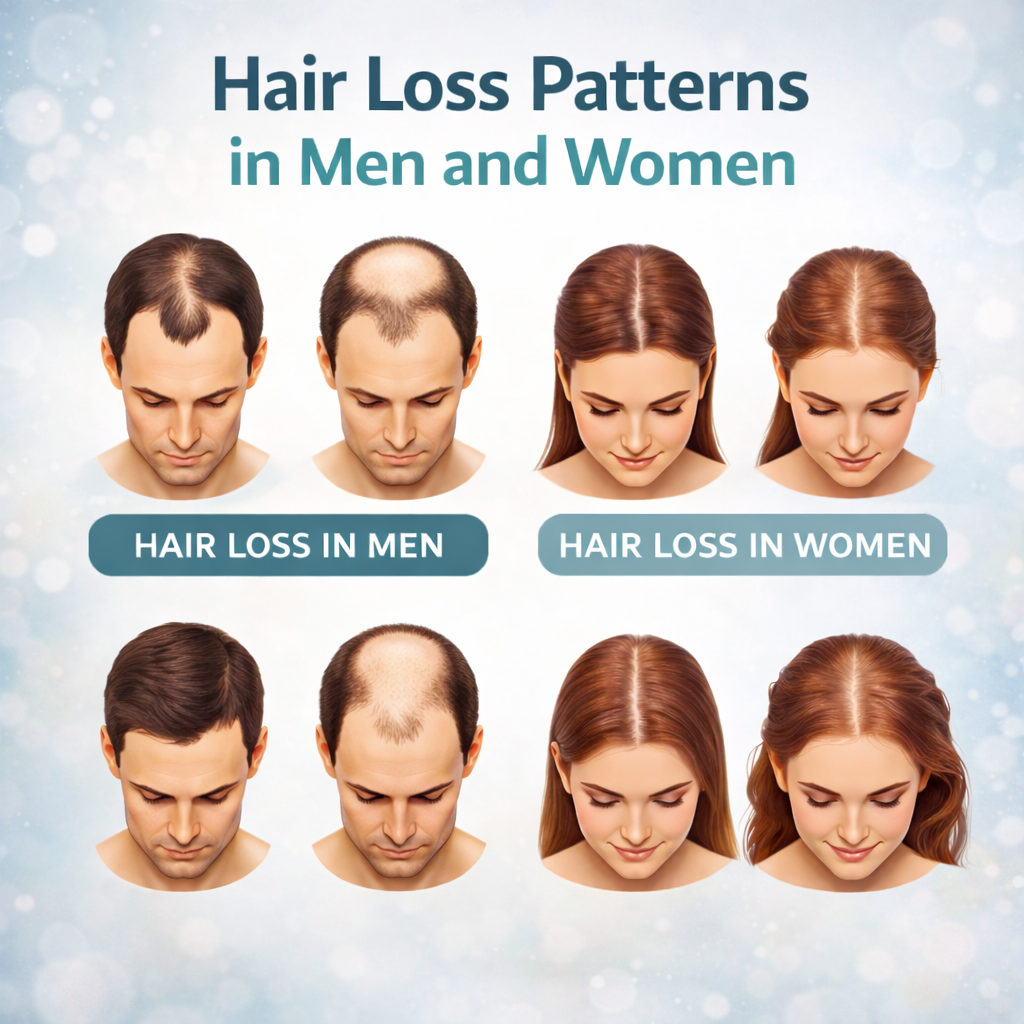
Women, however, rarely lose their frontal hairline. Instead, they follow the Ludwig Scale, characterized by diffuse thinning that radiates from the center part. This “Christmas Tree” pattern involves an overall decrease in hair volume and diameter across the top of the scalp, while the frontal frame remains intact. Because female hair loss is often more global, the surgical strategy must be far more surgical and precise. While we can “fill in” a man’s bald spot, with women, we are often working between thousands of existing hairs to boost density without damaging the healthy follicles—a task that requires the ultra-fine precision of DHI (Direct Hair Implantation) technology.
Male vs Female Hair Transplant: Technique Differences
The technical execution of a hair transplant is never “one size fits all,” especially when comparing the genders. In 2026, the primary divergence in technique at Hair Legends Antalya involves the management of the donor area and the method of implantation. For men, the Sapphire FUE (Follicular Unit Extraction) is often the gold standard. Since most men are comfortable with a short haircut, we can perform a full shave of the donor area, allowing for the rapid and efficient extraction of thousands of grafts to cover large bald areas like the crown or a recessed hairline.
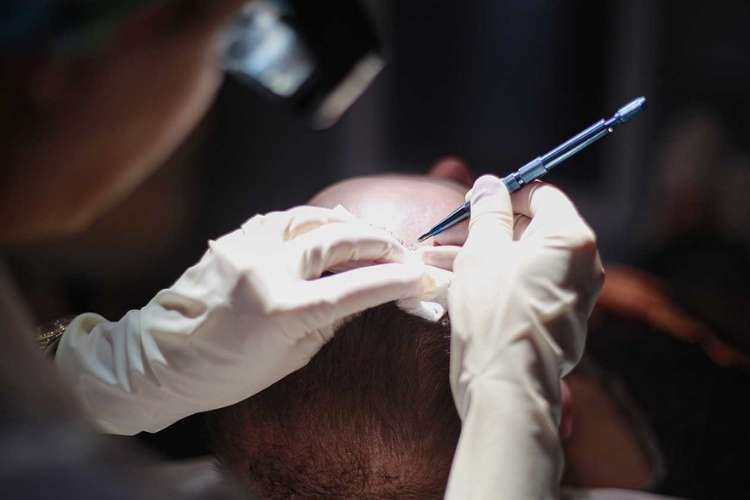
For women, however, the approach shifts toward Non-Shaved DHI (Direct Hair Implantation). Most female patients prefer to keep their existing hair length during and after the procedure. To accommodate this, we utilize “U-FUE” or “Long Hair DHI” techniques, where we harvest grafts from a small, hidden “window” at the back of the head that is easily covered by the surrounding hair. During implantation, the Choi Implanter Pen becomes an essential tool. It allows our surgeons to navigate between long, existing strands and place new grafts directly into thinning gaps with 360-degree directional control. This prevents “transection” (accidental damage to native hair) and ensures that the new follicles follow the natural, softer exit angles characteristic of a feminine hairline.
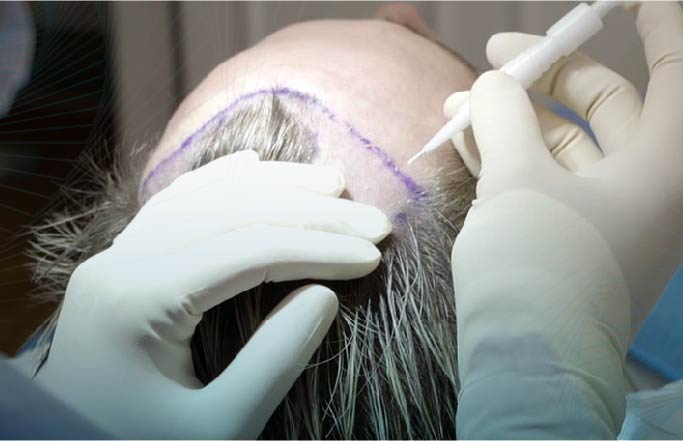
Technique Comparison (Modern Methods)
In the advanced surgical landscape of 2026, the choice of technique is dictated by the desired “density profile” and the patient’s lifestyle requirements. While both men and women benefit from the evolution of minimally invasive tools, the application of these methods differs based on the anatomical “mission.”
For Men: The Power of Sapphire FUE Men often require the reconstruction of large, completely bald surface areas. Sapphire FUE is the preferred modern method for these cases. By using blades made from precious sapphire gemstones which are significantly sharper and smoother than traditional steel we can create micro-channels at a much higher density. This allows for the implantation of up to 5,000 grafts in a single session, providing the heavy-duty coverage needed for a recessed hairline or a totally bare crown.
The primary advantage for male patients is the “healing to density” ratio. Because sapphire blades create V-shaped incisions rather than the traditional U-shape, the tissue trauma is minimized, scabbing is reduced, and the grafts can be placed closer together. This is essential for creating a masculine hairline that looks thick and “Legendary” even under the harshest lighting. For a man, the goal is often high-volume restoration, and Sapphire FUE provides the speed and efficiency to move massive amounts of genetic capital in one day.
For Women: The Precision of DHI Women rarely require “surface area” coverage; instead, they require “interstitial density” placing new hair between existing, thinning strands without disturbing the healthy ones. DHI (Direct Hair Implantation) is the undisputed champion here. Using the Choi Implanter Pen, our surgeons at Hair Legends Antalya can control the depth, angle, and direction of each graft with 100% accuracy.
This “cell by cell” approach is vital for women because it eliminates the need to shave the recipient area. The pen protects the delicate hair follicles during the implantation phase, ensuring a higher survival rate in a diffuse thinning environment. By avoiding the creation of pre opened channels, DHI prevents “shock loss” to the surrounding healthy hair, making it the most discreet and effective option for the modern woman who wants to return to her social life without any visible signs of surgery.
The Hybrid Approach At our boutique center, we frequently employ a Hybrid Protocol for complex cases. For example, a male patient with a bald front but a thinning mid-scalp might receive Sapphire FUE for the hairline and DHI for the density boost in the middle. This cross-application of modern methods ensures that the surgical tool always matches the biological need, regardless of gender. By utilizing the specific strengths of both Sapphire and DHI, we provide a customized density profile that is both natural and permanent
Are Women Better Candidates for DHI or Sapphire FUE?
When determining the ideal methodology for female hair restoration, the decision almost always leans toward DHI (Direct Hair Implantation) over Sapphire FUE. While Sapphire FUE is a powerhouse for total reconstruction in men, women typically present with diffuse thinning meaning they have existing hair that must be protected. At Hair Legends Antalya, we recommend DHI for women because it eliminates the need to shave the recipient area, allowing patients to keep their hair long and hide the signs of the procedure immediately.
Furthermore, the Choi Implanter Pen used in DHI provides a “safety shield” for the grafts. Because the follicle is loaded into a needle and implanted directly, there is no need for pre-cut channels that could accidentally sever the roots of nearby healthy hair. This precision is vital for female patients who need to bolster density between existing strands. While Sapphire FUE can be effective for women requiring a lowered hairline or forehead reduction, DHI remains the “Gold Standard” for female density enhancement, offering a discreet, non shaved recovery and a more natural, feathered result that mimics the soft exit angles of a feminine hairline.
Women’s Hairline Design vs Men’s: Aesthetic Differences
In the world of hair restoration, the hairline is the most critical signature of a surgeon’s artistry. At Hair Legends Antalya, we treat hairline design as a gender-specific architecture. A mistake in the “geometry” of the hairline can lead to an unnatural appearance that betrays the surgery, which is why we apply different mathematical and aesthetic principles for men and women.
The Masculine Frame: Sharp and Structured
For men, the goal is to create a “frame” for the face. A masculine hairline typically follows a more linear or slightly M-shaped (convex) trajectory.
- Placement: The male hairline usually starts at the transition point where the horizontal forehead meets the vertical scalp.
- Angles: We design sharper “frontotemporal” angles the corners where the hairline meets the temples. Even in a full restoration, these corners remain somewhat defined to maintain a mature, masculine look.
- Density: Men require a high-impact “wall” of density at the very front to provide a strong profile.
The Feminine Curve: Soft and Oval
Women’s hairline design is focused on “softness” and “ovality.” A feminine hairline is characterized by a continuous, downward-curving arc (concave) without sharp angles at the temples.
- Placement: The female hairline is generally positioned lower than a man’s, often creating a round or heart-shaped facial frame.
- The “Micro-Irregularity” Strategy: A woman’s hairline is never a straight line. It is composed of “fine hairs” (vellus-like) that create a soft transition. At our boutique center, we specifically select single hair grafts for the very front row to mimic this “feathered” edge.
- The Temple Flow: Unlike the sharp angles in men, a woman’s hairline flows seamlessly into the temple hair. If this transition is too sharp, the result looks masculine. We ensure the direction of the hair points downward and backward to maintain a graceful, natural flow that allows for various hairstyles, including ponytails.
Why “Gendered Artistry” Matters
If a surgeon applies a male design to a female patient, the result is a “forehead reduction” that looks unnaturally flat and aggressive. Conversely, giving a man a rounded, feminine hairline can feminize his facial features. By using DHI technology, we can control the exact exit angle of each hair often as low as 10 to 15 degrees for women to ensure the hair lays flat against the scalp, just as nature intended.
Hair Transplant Results: Women vs Men Density Differences
Achieving “Legendary” density is the ultimate goal of any hair restoration, but the definition of success differs biologically between the sexes. In the 2026 clinical landscape, we don’t just measure the number of grafts; we measure the “Visual Density” how the hair interacts with light and the scalp.
Men: Targeted High Density
For men, density is often about “re colonizing” a desert. Because men frequently have completely bald areas (Norwood 4-7), we can achieve high-impact results by packing grafts tightly.
- The Goal: To reach a threshold where the scalp is no longer visible under normal lighting.
- The Strategy: Using Sapphire FUE, we can place up to 45–60 follicular units per square centimeter. Because the recipient area is often bare, there is no “competition” between the new grafts and existing hair, allowing for a uniform, thick “wall” of hair that provides immediate visual satisfaction.
Women: The Challenge of Diffuse Thinning
For women, the mission is far more complex. Female hair loss (Ludwig Scale) usually involves thinning across the entire top of the head, meaning there is still a significant amount of “native” hair present.
- The Goal: To bolster “Interstitial Density” filling the gaps between existing hairs to create a voluminous, full look.
- The Strategy: We utilize DHI (Direct Hair Implantation) to strategically place grafts in the thinning “alleys.” Since we are working around living follicles, the density must be calculated to avoid “pressure necrosis” (overcrowding that kills both new and old hair).
- Optical Volume: Women benefit more from “Hair Diameter” than “Graft Count.” Even a 20% increase in density can result in a 100% improvement in visual volume because female hair is typically worn longer, allowing the shafts to overlap and create a “shingling” effect that covers the scalp.
The Role of Hair Texture and Caliber
Density isn’t just a numbers game; it’s a physics game. Men often have thicker, coarser hair shafts, which provide better “coverage value” per graft. Women often have finer hair, requiring a more artistic distribution to ensure the result looks natural and doesn’t appear “patchy” when the hair is parted or tied back. At Hair Legends Antalya, we use microscopic analysis to match the caliber of the donor hair to the recipient area, ensuring that the density looks balanced from every angle.
Why DHI and Sapphire FUE Are the Gold Standard Today
As we move through 2026, the global standard for hair restoration has shifted away from traditional, invasive methods toward “Minimal Trauma” technologies. At Hair Legends Antalya, we utilize Sapphire FUE and DHI not just as tools, but as the two pillars of a modern, “Legendary” result. These methods have earned their “Gold Standard” status because they solve the two biggest challenges in hair transplant history: Graft Survival and Natural Density.
Sapphire FUE: The Evolution of Precision
Sapphire FUE represents a massive leap over the steel-blade techniques of the past. By using blades made from lab-grown sapphire a gemstone known for its extreme hardness and smoothness—we can achieve a level of microscopic precision that was previously impossible.
- V-Shaped Micro-Incisions: Unlike steel blades that create U-shaped channels (causing more tissue tearing), sapphire blades create clean, V-shaped slits. This allows the surgeon to place grafts closer together without the risk of “pitting” or uneven scarring.
- Faster Healing: The smooth surface of the sapphire blade is naturally antibacterial and causes significantly less trauma to the scalp. This means scabbing disappears within days, and the “redness” associated with transplants fades much faster.
- Ideal for Large Volumes: For men requiring 4,000 to 5,000 grafts to cover significant baldness, Sapphire FUE is the most efficient way to achieve high-density results in a single session.
DHI: The Master of “Direct” Regeneration
DHI (Direct Hair Implantation) is often called the “Boutique Technique” because it offers the most controlled approach to hair placement ever developed. By utilizing the Choi Implanter Pen, the surgical team eliminates the “waiting period” for the follicles.
- No Pre-Opened Channels: In DHI, the extraction and implantation happen in a near simultaneous flow. The follicle is loaded into the pen and implanted directly into the scalp. This reduces the time the graft spends outside the body, maximizing its survival rate.
- 360-Degree Control: The implanter pen allows the surgeon to dictate the angle, depth, and direction of every single hair. This is why DHI is the gold standard for “No-Shave” transplants in women and for rebuilding the complex spiral of a man’s crown.
- Higher Interstitial Density: Because there are no pre cut slits, we can “weave” new hairs between existing ones with zero damage to the native follicles.
The Synergy of Gold Standards
In 2026, the most advanced clinics don’t just choose one method; they choose the best of both. At Hair Legends, we often use Sapphire FUE to build the heavy density of the frontal hairline and DHI to refine the mid-scalp and crown. This “Hybrid Strategy” ensures that every graft is placed using the technology that best suits its specific anatomical location, providing a result that is both permanent and indistinguishable from natural hair.
Challenges in Female Hair Transplants
While female hair restoration in 2026 has reached new heights of success, it remains one of the most technically demanding fields in aesthetic surgery. Unlike male procedures, which often focus on filling “empty” spaces, female transplants involve navigating a complex biological landscape. At Hair Legends Antalya, we address these challenges through a combination of high-definition diagnostics and microscopic precision.
The Challenge of Diffuse Thinning
Most men lose hair in a localized area (like the temples), leaving the rest of the hair thick and healthy. Women, however, often experience Diffuse Unpatterned Alopecia (DUPA). This means the thinning occurs across the entire scalp, including the “donor” area at the back of the head.
- The Clinical Risk: If the donor area is also thinning, the transplanted grafts may not be permanent.
- The Solution: We use specialized scalp biopsies and microscopic density checks to ensure that we only harvest “Legendary” quality follicles that are genetically programmed to last.
Protecting the “Native” Hair (Shock Loss)
In women, we are almost always planting new follicles between existing, thinning hairs. The primary risk here is Telogen Effluvium (temporary shock loss), where the trauma of surgery causes the surrounding healthy hair to fall out.
- The Solution: By using DHI (Direct Hair Implantation), we avoid the large incisions of older methods. The ultra-fine Choi needles allow us to “slide” between existing hairs, minimizing tissue trauma and drastically reducing the risk of shock loss.
The “No-Shave” Requirement
For many women, shaving the head for surgery is an emotional and social deal breaker. However, long hair makes the surgical site harder to see and increases the risk of the long strands getting caught in the tools.
- The Solution: We have mastered the “Hidden Window” harvest. We shave only a small, thin strip at the back of the head that is completely covered by the hair above it. This allows the patient to walk out of the clinic with their existing style intact, keeping the procedure 100% discreet.
Hormonal and Medical Complexity
Female hair loss is rarely just genetic; it is often tied to thyroid function, iron levels, or hormonal shifts like menopause.
- The Solution: At our boutique center, we don’t just “plug and play.” We conduct a thorough medical screening to ensure the hair loss has stabilized. If the underlying cause is hormonal, we may combine the transplant with Exosome Therapy to provide the chemical signaling needed for the grafts to thrive in a challenging environment.
Aesthetic “Softness”
A woman’s hairline is not a solid wall; it is a gradient. Recreating the “softness” of a feminine hairline requires a specific type of graft.
- The Challenge: Harvesting enough “single hair” units to create a natural, feathered edge.
- The Solution: Our team uses high powered microscopes to meticulously sort the harvested grafts, ensuring only the finest single hairs are placed at the very front to avoid a “harsh” or masculine-looking hairline.
Which One Is More Successful: Male or Female Hair Transplants?
Instead, success is measured by how well the clinical strategy aligns with the biological reality of the patient. While both genders achieve high satisfaction rates at Hair Legends Antalya, the “path to victory” looks different for each.
The “Success” Metric: Men vs. Women
For men, success is often defined by coverage and transformation. Because men typically have clear “bald zones” and a stable donor area at the back of the head, the success rate for graft survival (the percentage of transplanted hairs that grow) is exceptionally high often exceeding 95-98%. The surgery is predictable, and the results are dramatic, taking a patient from a Norwood 5 (mostly bald) to a full, dense head of hair.
For women, success is defined by density and preservation. Since female hair loss is usually diffuse thinning rather than total baldness, the surgeon’s goal is to weave new hair into existing patterns. While the graft survival rate is equally high, the “visual success” depends on the stability of the native hair. If the underlying cause of thinning (like hormones or iron deficiency) isn’t managed, the native hair around the transplant may continue to thin, making the result look less “complete” over time.
Why Both Are Highly Successful Today
In the modern era, the gap in success rates has closed due to three main factors:
- DHI Precision: The ability to implant between existing hairs without damaging them (interstitial density) has revolutionized female results.
- Exosome Integration: We now use Exosome Therapy to “prime” the scalp, ensuring that even in diffuse thinning environments, the follicles have the molecular signaling they need to thrive.
- Advanced Screening: We only operate on “Good Candidates.” By filtering out patients with unstable donor areas, we ensure that every procedure we perform is a “Legendary” success.
The Verdict
- Male transplants are often seen as more “successful” because the change is more dramatic (from bald to hairy).
- Female transplants are equally successful in terms of biology, but they are more of a “subtle enhancement”—bolstering volume and filling in parts so that the scalp is no longer visible.
Ultimately, at Hair Legends, a transplant is successful when the result is undetectable. Whether you are a man rebuilding a strong hairline or a woman restoring lost volume, the 2026 protocols of DHI and Sapphire FUE ensure that your new hair looks, feels, and grows exactly like your original.
FAQs
Navigating the nuances of gender specific hair transplants often leads to common questions regarding expectations, costs, and recovery. In 2026, the technology has advanced to provide answers that are more precise than ever.
1. Is the recovery time different for men and women? Generally, the biological healing of the skin takes about 7 to 10 days for both genders. However, the “social recovery” is often faster for women. Because we use No-Shave DHI for female patients at Hair Legends Antalya, the existing long hair easily hides the surgical site. Men, especially those opting for a full-shave Sapphire FUE, typically wait 10–14 days for the scabs to shed and the donor area to look like a standard “buzz cut.”
2. Does a hair transplant hurt more for one gender? No. We utilize painless local anesthesia protocols for all our patients. Whether it is a 4,500-graft male procedure or a delicate female density boost, the sensation during the surgery is virtually non-existent. Post-operative discomfort is minimal and easily managed with standard over the counter medication.
3. Are the costs different? While the basic “cost per graft” is similar, female procedures can sometimes be more investment-heavy due to the complexity of Non-Shaved DHI. Working between long hairs requires more time and a larger specialized surgical team to ensure no native follicles are damaged. However, our All-Inclusive Packages in Antalya are designed to provide transparent, fixed pricing regardless of the technical complexity.
4. Can women get “Body Hair Transplants” (BHT) like men? Technically, yes, but it is rarely recommended for women. Men often have thick beard or chest hair that can be used as a “reserve” donor source. Women’s body hair is typically too fine and has a much shorter growth cycle, making it a poor match for the scalp. For women, we focus on maximizing the scalp donor area or using Exosome Therapy to boost existing hair diameter.
5. Will the transplanted hair fall out again? The transplanted follicles are harvested from the “Safe Zone” the area at the back of the head that is genetically resistant to DHT (the hormone responsible for hair loss). These hairs are permanent for both men and women. While your non-transplanted (native) hair may continue to thin with age, your “Legendary” new grafts will continue to grow for a lifetime.
Conclusion: Your Path to a Legendary Result
Whether you are a man seeking a structured, youthful frame or a woman looking to restore the voluminous hair of your past, the 2026 surgical protocols have eliminated the “one-size-fits-all” approach. At Hair Legends Antalya, we don’t just perform surgeries; we engineer confidence. By respecting the anatomical and aesthetic differences between male and female hair loss, we ensure that every result is as unique as the patient themselves.
Ready to start your transformation? Our surgeons are standing by for a Digital Scalp Mapping session to determine which “Gold Standard” technique is right for you.