
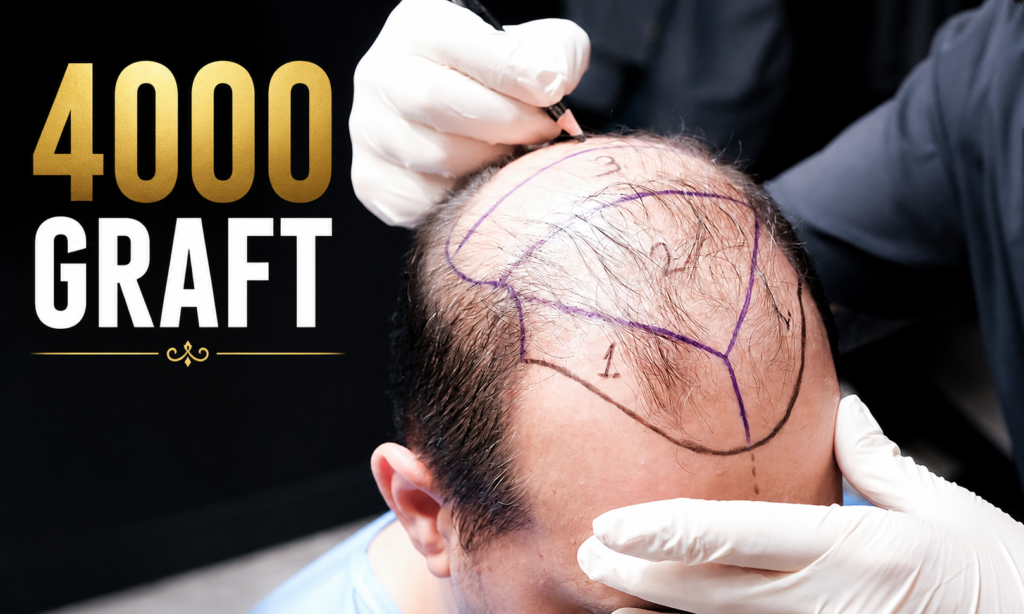
A 4000 grafts hair transplant is often the point at which hair restoration moves from treating a small receding hairline to addressing a much larger area of hair loss. For some patients, 4,000 grafts can provide substantial coverage across the frontal scalp and mid-scalp. For others, the same number may need to be distributed between the hairline and crown.
That distinction is important.
There is no universal rule saying that 4,000 grafts will restore a particular Norwood stage or produce a specific density. The result depends on the size of the bald area, donor density, hair calibre, the number of hairs contained in each graft, and how the grafts are distributed.
For international patients researching Hair Transplant Antalya, the question is therefore not simply, “How much does 4,000 grafts cost?” It is also, “What can 4,000 grafts realistically achieve for me?”
At Hair Legends, we approach large graft procedures by looking at the entire scalp rather than focusing only on the number quoted in an initial enquiry. The donor area has a finite supply, so the objective is to use those grafts intelligently and create a result that continues to look natural as the patient gets older.
This guide explains what 4,000 grafts actually means, which areas can be treated, what affects hair transplant cost Antalya, which techniques may be suitable, how long recovery takes and what kind of result you can realistically expect.
What Does a 4000 Grafts Hair Transplant Mean?
First, it is important to understand what the word “graft” actually means.
A graft is a naturally occurring follicular unit containing one or more hairs. Depending on the individual, a graft can contain one, two, three or sometimes more hair follicles.
Therefore, 4,000 grafts does not mean 4,000 individual hairs.
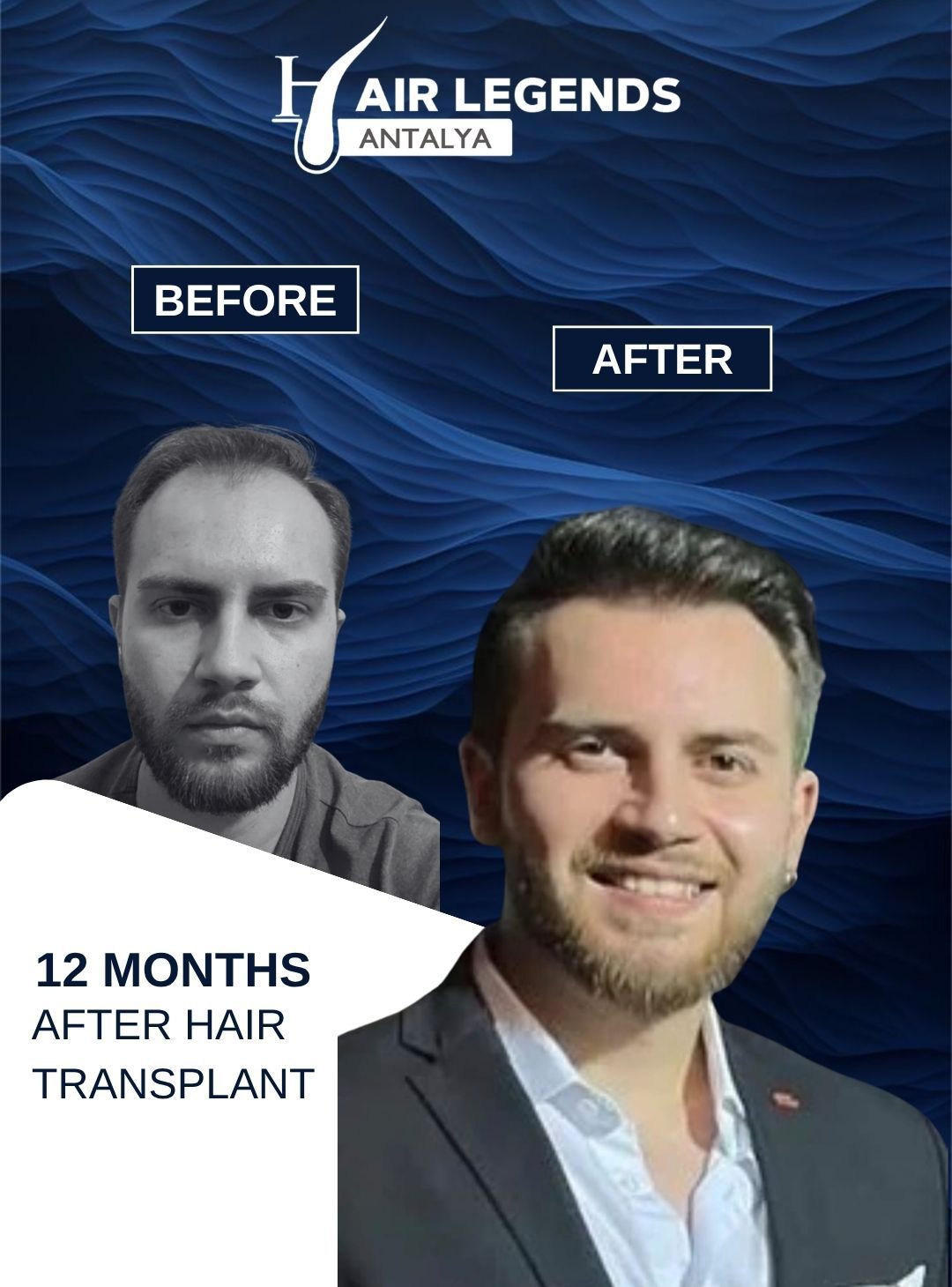
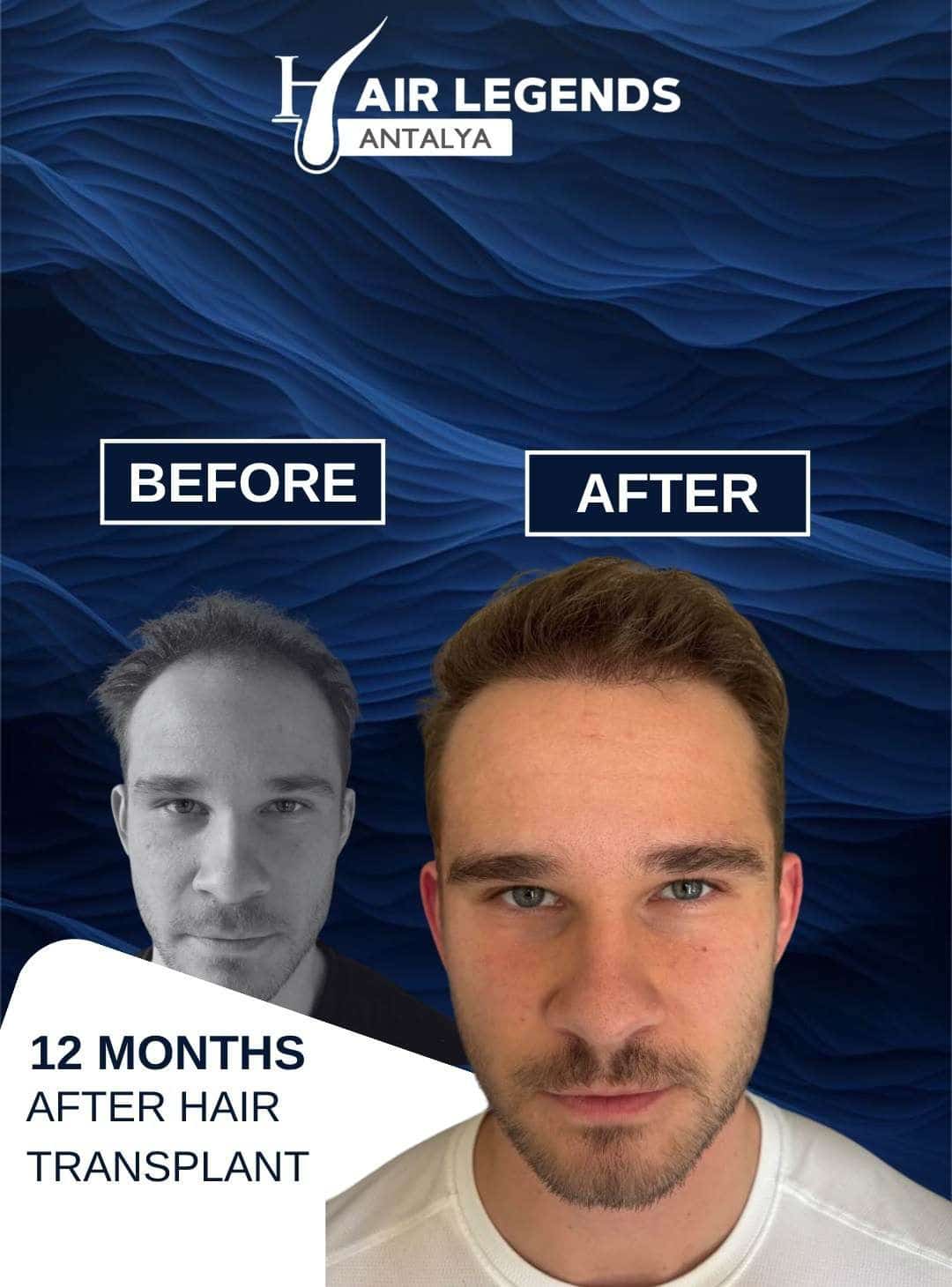
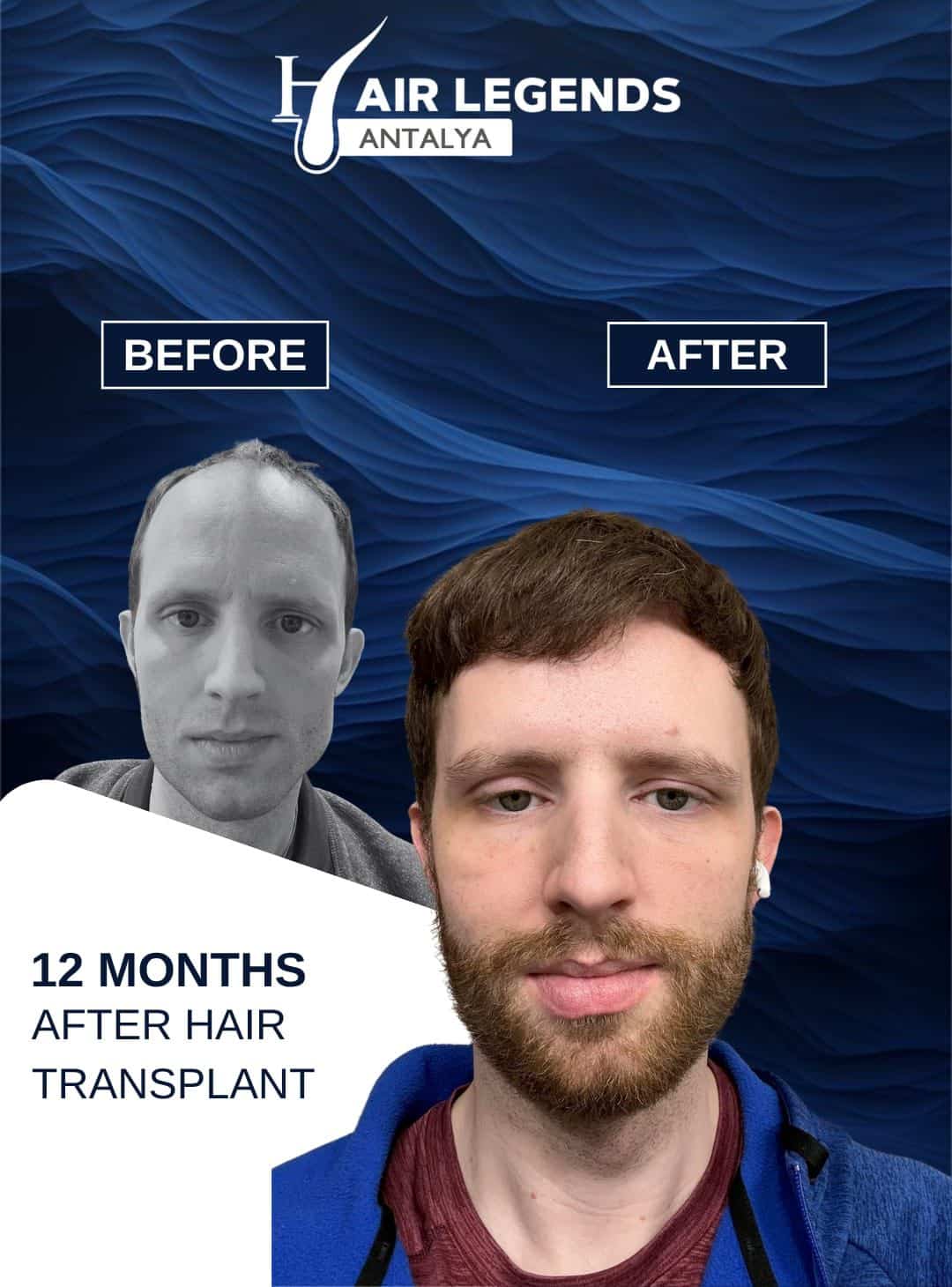
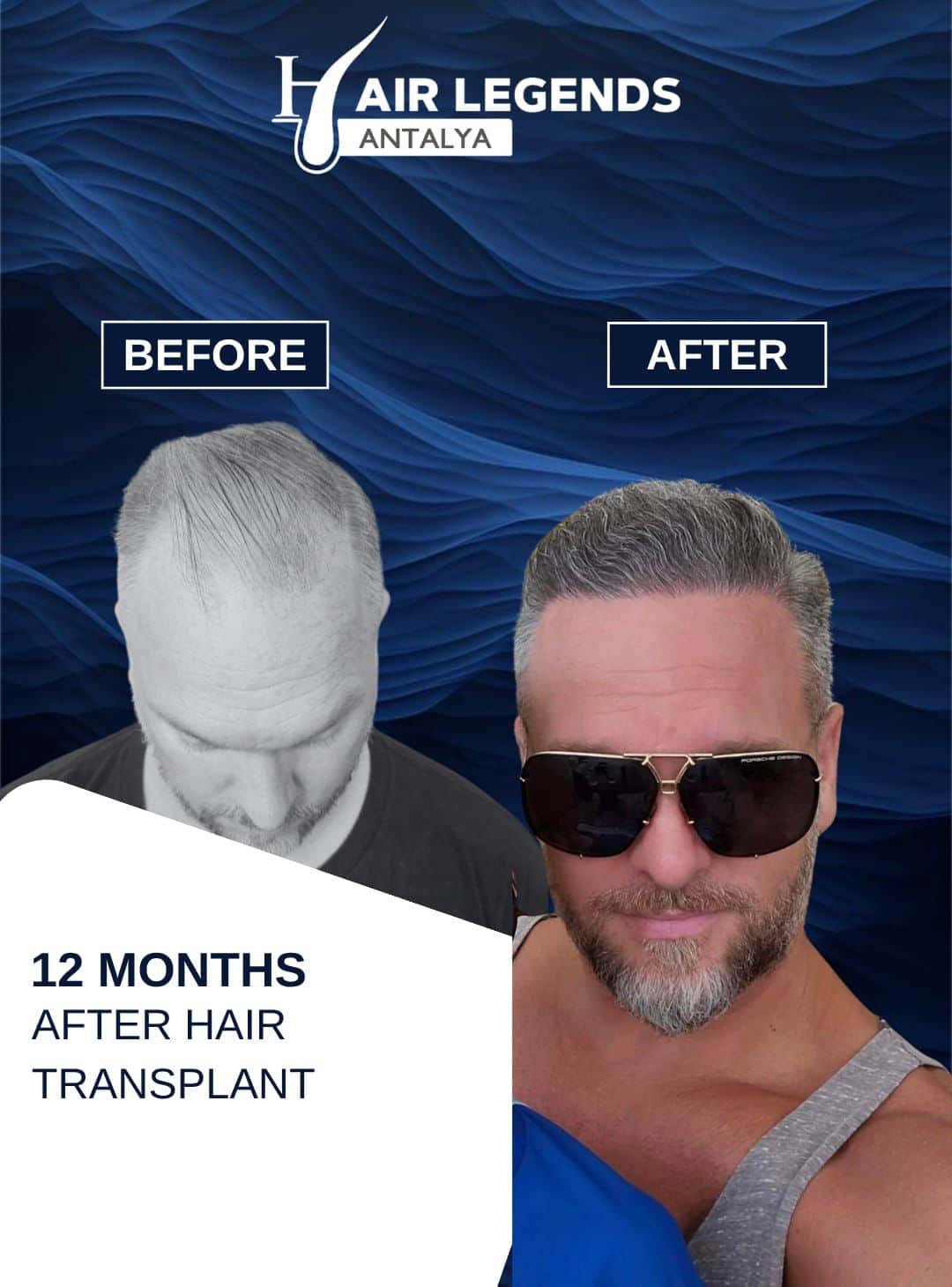
The total number of hairs transplanted can be considerably higher than the graft count. This is one reason why two patients receiving exactly 4,000 grafts can end up with noticeably different visual density.
For example, a patient whose donor area contains a high proportion of two and three hair follicular units may achieve more visible coverage from 4,000 grafts than someone whose donor area consists primarily of single-hair grafts.
The condition of the donor area also matters.
Before recommending a large session, the doctor needs to determine how many grafts can safely be harvested without making the back and sides of the scalp look excessively thin.
This is particularly important for patients with advanced hair loss.
A clinic promising “4,000 grafts” before properly assessing the donor area should therefore be approached carefully. The number should come from a medical assessment rather than being used as a standard package size.
Which Norwood Stages May Need 4000 Grafts?
A 4,000-graft procedure is often considered for moderate to advanced male pattern hair loss, but Norwood classification alone cannot determine the required number of grafts.
Patients around Norwood IV, V or VI may potentially be candidates for a 4,000-graft session, depending on the distribution of their hair loss and the strength of the donor area.
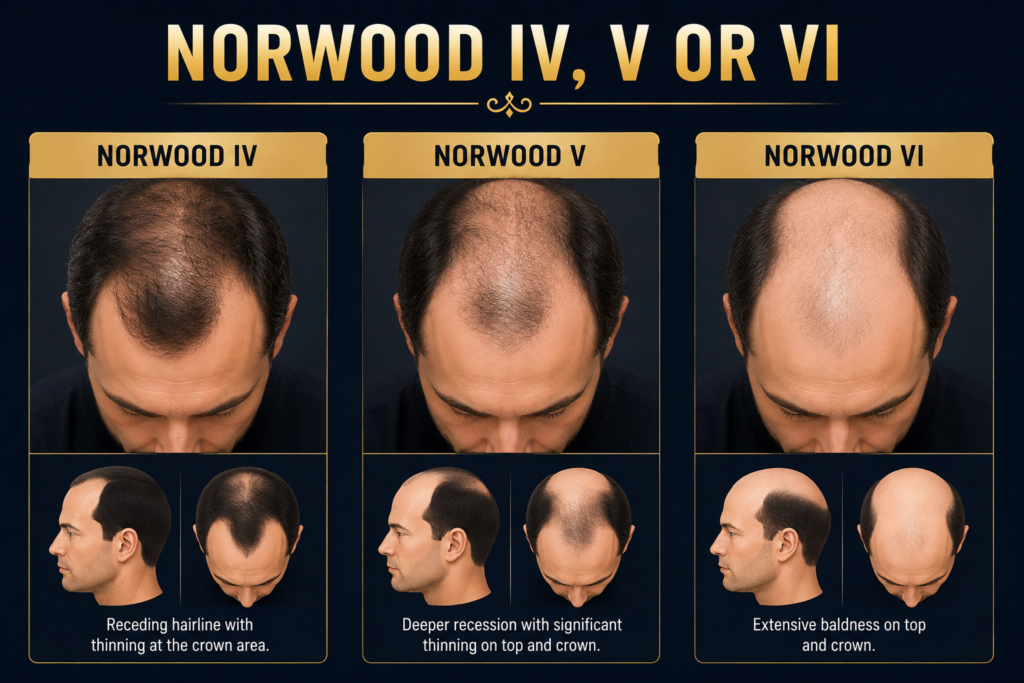
A Norwood IV patient might use 4,000 grafts to rebuild the frontal hairline and add density through the mid-scalp.
A Norwood V patient may need the same number distributed across a larger area.
A Norwood VI patient may have an even larger bald surface, meaning 4,000 grafts could create improvement without providing complete high-density coverage across the entire scalp.
This is why simply searching for “how many grafts for Norwood 5” doesn’t provide a complete answer.
The surface area matters.
So does the desired density.
And perhaps most importantly, so does the amount of donor hair available.
For someone with a relatively small frontal area but very high expectations for density, 4,000 grafts could potentially be more than necessary. For someone with extensive loss from the hairline to the crown, 4,000 grafts may need to be carefully prioritised.
The treatment plan should be built around the patient’s scalp, not around a predetermined number.
How Much Does a 4000 Grafts Hair Transplant Cost?
The cost of a 4,000 graft hair transplant varies considerably depending on the country, clinic, technique, doctor involvement and what is included in the package.
Current 2026 market guides place many Turkey hair transplant packages in the broad range of roughly €2,000–€4,500 for procedures around 4,000 grafts, although premium surgeon-led treatment can be higher and lower-priced packages are also advertised.
That range is deliberately broad because comparing prices without comparing the treatment itself can be misleading.
One clinic may quote €2,000 for a basic package.
Another may quote €3,000 but include accommodation, transfers, medication, postoperative care and a more extensive doctor-led service.
A third clinic may charge considerably more because the procedure is performed under a premium surgeon-led model.
The cheapest quote is therefore not necessarily the cheapest treatment in the long run.
For patients specifically searching hair transplant cost Antalya, it is worth asking for a written breakdown rather than comparing one headline price with another.
What Can Affect the Price?
Several factors can change the final quotation:
- Number of grafts required
- FUE or Sapphire FUE technique
- DHI or hybrid techniques where appropriate
- Doctor involvement
- Clinic facilities
- Number of nights included
- Hotel category
- Airport and hotel transfers
- Medication and aftercare products
- Additional treatments
- Follow-up arrangements
Current market information also shows that Turkish clinics commonly use package pricing rather than a strict per-graft calculation, particularly for international patients.
This means a patient should not assume that a clinic charging €1 per graft will necessarily be cheaper than one charging a package price.
The final question should always be:
What exactly am I receiving for the quoted price?
Estimated Cost of a 4,000 Graft Hair Transplant
For a general 2026 comparison, a 4,000-graft procedure in Turkey may fall broadly within the €2,000–€4,500 range, depending on the clinic and treatment specification. Some premium Antalya providers quote higher prices, particularly for surgeon-led procedures and upgraded accommodation or techniques.
These figures should be treated as market guidance rather than a fixed Hair Legends price.
Your actual quotation should only be confirmed after the donor area and treatment requirements have been assessed.
This is especially important because a patient may initially request 4,000 grafts and later be advised that 3,200 or 3,500 grafts would be more appropriate. Another patient may require more extensive treatment or a staged approach.
At Hair Legends, the graft number should serve the treatment plan rather than the treatment plan being created simply to justify the graft number.
Can 4000 Grafts Cover the Hairline and Crown?
Sometimes but this is where expectations need to be realistic.
The answer depends on the size of the areas involved and the amount of density being requested.
There is a major difference between creating visual coverage and recreating the density of a naturally full scalp.
A patient with a moderately receded hairline and a relatively small crown may potentially achieve useful coverage of both areas with 4,000 grafts.
A patient with a completely bald frontal region extending into the mid-scalp and a large crown may not.
Trying to cover every area equally can also produce a result where no individual area receives enough density to look particularly strong.
This is why doctors often have to prioritise.
The following scenarios illustrate how 4,000 grafts might be allocated.
Frontal Area Only
If the primary concern is the hairline and frontal scalp, 4,000 grafts can represent a substantial amount of donor hair.
For some patients, it may be possible to rebuild the hairline and add considerable density behind it.
The advantage of concentrating grafts in one region is straightforward: the available follicles are not being spread too thinly across the scalp.
This can be particularly useful for patients whose crown still has reasonable native density.
A well-designed frontal restoration can also make a surprisingly large difference to overall appearance.
The hairline frames the face, so even when the crown remains slightly thinner, restoring the front can create a much more balanced appearance.
The key is avoiding an excessively low or dense hairline that consumes donor grafts unnecessarily.
Frontal and Mid-Scalp Areas
This is one of the situations where 4,000 grafts can be particularly useful.
A patient with frontal recession combined with thinning through the mid-scalp may benefit from distributing grafts across both regions.
The hairline would generally receive finer, single-hair grafts to create a natural transition.
Behind the hairline, multi-hair grafts can be used strategically to create the appearance of greater density.
The goal isn’t necessarily to place thousands of grafts at identical spacing.
Good hair transplantation is more like designing a landscape: density and distribution change according to the area being treated.
Hairline and Crown
This approach requires more careful planning.
The hairline is visually important, while the crown can consume a surprisingly large number of grafts.
A circular thinning area in the crown may appear relatively small from the front but become much larger when measured across the scalp.
If 4,000 grafts are divided between the hairline and crown, each area may receive less density than it would if treated independently.
This isn’t necessarily a problem.
A carefully distributed moderate density can look better than trying to create maximum density in two areas with insufficient donor supply.
However, patients should understand before surgery that “covering” the crown does not necessarily mean restoring the same density they had before hair loss.
Frontal, Mid-Scalp and Crown
This is the most demanding scenario.
When the patient has extensive loss from the front all the way through the crown, 4,000 grafts may improve the overall appearance but may not provide complete dense coverage.
In these cases, the doctor may prioritise the frontal region and use the remaining grafts to create transitional coverage toward the mid-scalp.
The crown can potentially be treated at a lower density or considered for a later procedure, depending on donor availability.
This approach can be more sensible than attempting to spread 4,000 grafts equally over a very large bald surface.
The patient’s expectations are critical here.
A clinic promising complete, youthful density from 4,000 grafts across a large Norwood VI area may be setting an unrealistic expectation.
Which Technique Is Recommended for 4000 Grafts?
There is no single technique that is automatically best for every 4,000-graft procedure.
The choice depends on the patient’s hair loss, donor characteristics, recipient area and the doctor’s treatment strategy.
FUE remains one of the most established approaches to large hair transplant sessions. Individual follicular units are extracted from the donor area and then implanted into prepared recipient sites.
For larger procedures, FUE provides considerable flexibility because the surgeon can work across a broad recipient area.
DHI may be useful in selected situations where precise implantation between existing hairs or detailed work around the hairline is particularly important.
Sapphire FUE is another commonly requested option in Turkey. The technique uses sapphire blades for recipient-site preparation, although patients should remember that the blade material itself does not determine whether a transplant will succeed.
The experience of the medical team, graft handling, extraction strategy, hairline design and implantation technique remain fundamental.
Sapphire FUE
Sapphire FUE is frequently considered by international patients looking for a modern hair transplant technique in Turkey and Antalya.
The “Sapphire” part refers to the blade used to create recipient channels. Sapphire blades are designed to allow precise channel creation, and many clinics use the technique as part of their premium FUE packages.
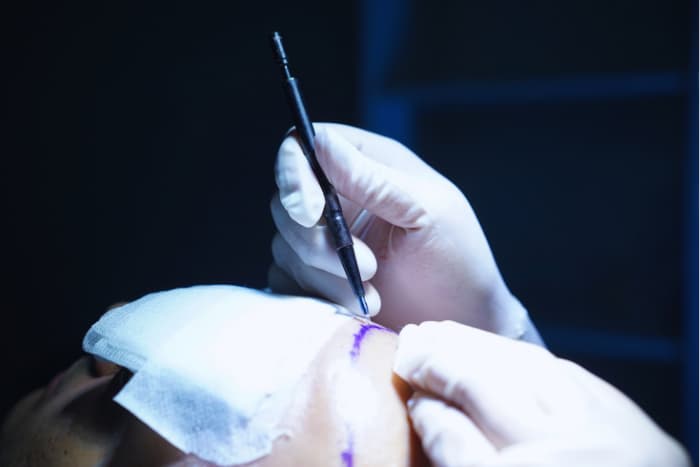
For a 4,000-graft procedure, Sapphire FUE can be a practical option when a relatively large recipient area needs to be treated.
However, it is important not to choose a technique simply because its name sounds more advanced.
A good surgeon can produce natural results using different techniques when the treatment is planned correctly.
The question should therefore be:
Why is this technique appropriate for my scalp?
rather than:
Which technique is the most expensive?
At Hair Legends, the technique should be selected according to the patient’s specific requirements.
Is It Safe to Extract 4000 Grafts in One Session?
A 4,000-graft procedure is a significant surgical session.
Whether it is appropriate to perform that number in one day depends on the patient’s donor density, scalp characteristics, graft quality and the extraction plan.
The biggest concern isn’t simply whether 4,000 grafts can physically be extracted.
It’s whether they can be extracted without unnecessarily damaging the donor area.
The donor area needs to remain natural-looking after extraction.
If grafts are removed too aggressively from a limited area, the back and sides can develop visible thinning or an uneven appearance.
This is why a donor assessment should happen before the surgery is scheduled.
The doctor should consider the patient’s available donor density and estimate how much can reasonably be harvested while preserving future options.
For someone with a strong donor area, 4,000 grafts may be achievable in one session.
For another patient, a staged approach may be more appropriate.
A large graft number should never be treated as a target that must be reached regardless of donor capacity.
What Results Can Be Expected?
The result of a 4,000-graft hair transplant depends on more than the graft count.
Hair calibre, graft composition, recipient-area size, skin-to-hair contrast and placement strategy all influence the final appearance.
A patient with thick, dark hair and a strong donor area may achieve a noticeably dense result.
Someone with fine hair and a large bald surface may achieve a more moderate level of coverage from the same number of grafts.
This is why before-and-after photographs should always be interpreted carefully.
Two people can receive 4,000 grafts and have completely different starting points.
The most realistic expectation is usually a significant improvement rather than a guarantee of complete restoration.
The frontal hairline should look natural.
The transition into the mid-scalp should be gradual.
The donor area should remain acceptable.
And the overall result should make sense for the patient’s age and future hair loss.
A successful transplant isn’t necessarily the one that produces the highest density immediately.
It is the one that still looks natural years later.
4000 Grafts Hair Transplant Recovery Timeline
The procedure may take place in a single day, but the result develops over many months.
First Few Days
The scalp can be sensitive, red and slightly swollen.
The recipient area needs to be protected, and patients should follow the clinic’s instructions regarding washing, sleeping position and medication.
The grafts are particularly important to protect during this early period.
First Two Weeks
Small scabs generally develop around the implanted follicles and gradually disappear.
Patients are usually advised not to scratch or pick them.
The donor area also begins settling down, although some redness can remain.
One to Three Months
This is often the psychologically difficult stage.
The transplanted hairs may shed, leaving the scalp looking similar to how it did before surgery.
This doesn’t necessarily mean the transplant has failed.
The follicles remain beneath the skin and begin a new growth cycle.
Three to Six Months
New growth gradually becomes visible.
At first, the hairs can be fine and uneven.
The appearance continues improving as the hairs mature.
Six to Nine Months
Density becomes much more noticeable.
The hair begins to blend with existing native hair, and the overall transformation becomes easier to see.
Nine to Twelve Months
Most patients can now assess the major result.
The hair continues to mature and thicken, and some patients may notice further changes beyond twelve months.
Hair growth isn’t identical for everyone, so the timeline should be treated as a guide rather than a guarantee.
What Is Included in a 4000-Graft Hair Transplant Package?
This is one of the most important questions to ask when comparing hair transplant cost Antalya.
An advertised price may look attractive until you discover that several essential services are excluded.
Depending on the clinic and package, an international hair transplant package may include:
- Initial medical consultation
- Hair transplant procedure
- Local anaesthesia
- Preoperative assessment or blood tests
- Postoperative medications
- Hair wash instructions
- Aftercare products
- Airport transfers
- Hotel accommodation
- Clinic transfers
- Interpreter or patient coordinator
- Postoperative follow-up
Not every clinic includes all of these.
Flights are also generally separate from the medical package.
Before paying a deposit, ask for the complete package in writing.
This makes it much easier to compare two Antalya clinics fairly.
Why Choose Antalya for a 4000 Grafts Hair Transplant?
Antalya has become one of Turkey’s major medical tourism destinations.
For international patients, the appeal isn’t only the treatment itself. The city has an international airport, a large hospitality industry and an established infrastructure for overseas visitors.
That can make the experience particularly convenient for patients travelling from the UK, Europe, the United States and other international markets.
But choosing Antalya should not mean choosing a clinic simply because it advertises the lowest package.
The medical team remains the most important part of the decision.
When comparing a Hair Transplant Antalya clinic, patients should investigate who performs the procedure, how the donor area is assessed, what technique is being recommended and what follow-up is provided after returning home.
Why Hair Legends for 4000 Grafts?
At Hair Legends, the purpose of a 4,000-graft procedure is not simply to reach a large graft number.
The treatment needs to make sense for the patient’s scalp.
During the assessment, the focus is on the pattern of hair loss, donor availability, hair characteristics and the areas that will create the greatest cosmetic improvement.
For some patients, the priority will be the hairline and frontal region.
For others, the procedure may need to extend into the mid-scalp.
In advanced cases, the donor supply may need to be distributed more carefully, particularly if the crown is also involved.
This approach is important because the donor area is not an unlimited resource.
A patient may be pleased with an aggressive first procedure but regret it several years later if too much donor hair was used and further hair loss leaves no useful options.
Long-term planning is therefore part of the treatment.
For international patients researching Hair Transplant Antalya, Hair Legends also provides a structured process around the medical procedure, from initial planning through travel arrangements and postoperative guidance.
Questions to Ask Before Booking a 4000-Graft Hair Transplant
Before choosing a clinic, ask a few straightforward questions.
Who will perform the extraction?
Don’t assume that the doctor pictured on the website performs every stage.
Who designs the hairline?
Hairline design is one of the most important aesthetic decisions in the entire procedure.
Is 4,000 grafts actually appropriate for my donor area?
A clinic should be able to explain why that number is recommended.
Which areas will receive the grafts?
Ask whether the plan focuses on the frontal area, mid-scalp, crown or a combination.
What happens if I continue losing native hair?
A good treatment plan should consider future hair loss.
What exactly does the quoted price include?
Ask about hotel, transfers, medications, aftercare and follow-up.
How long should I stay in Antalya?
The clinic should provide a clear itinerary rather than leaving you to organise everything yourself.
These questions can reveal more about a clinic than its social media photographs.
Frequently Asked Questions
Is 4000 grafts a lot for a hair transplant?
Yes. A 4,000-graft procedure is considered a large session and is generally used when a significant area needs restoration. Whether it is appropriate depends on the donor area and the extent of hair loss.
Can 4000 grafts cover the whole scalp?
Not necessarily. It depends on the size of the bald area and the density expected. For extensive Norwood V or VI loss, 4,000 grafts may provide meaningful coverage without recreating the density of a naturally full scalp.
Can 4000 grafts cover both the hairline and crown?
They can in selected patients, particularly when the areas are not excessively large. However, distributing the grafts between the front and crown means each area receives fewer grafts than if one region were treated alone.
How much does a 4000 graft hair transplant cost in Antalya?
Current Turkey market guides commonly place 4,000-graft procedures in the broad €2,500–€4,500 range, with significant variation depending on clinic level, technique and package inclusions. Antalya prices can also be higher for premium surgeon-led treatment.
The exact Hair Legends quotation depends on the patient’s assessment and selected package.
Is Sapphire FUE good for 4000 grafts?
Sapphire FUE can be suitable for large procedures, but the technique should be selected according to the patient’s individual needs. The quality of planning and graft handling remains more important than the name of the blade or technique.
Can 4000 grafts be extracted in one day?
In suitable patients, a 4,000-graft procedure may be performed in one session. However, the doctor must first determine whether the donor area can safely support that level of extraction.
How long does a 4000 graft hair transplant take to show results?
Initial growth generally takes several months. Many patients begin noticing meaningful changes between three and six months, while the result continues maturing through nine to twelve months and sometimes longer.
Will 4000 grafts give me full density?
Not necessarily. Density depends on the size of the recipient area, graft composition, hair characteristics and distribution. A realistic goal is natural-looking improvement rather than an automatic promise of the density you had before hair loss.
Is Antalya a good place for a 4000-graft hair transplant?
Antalya has a well-established medical tourism infrastructure and attracts international hair transplant patients. However, the clinic and medical team should be researched carefully. The destination alone does not determine the quality of a procedure.
Final Thoughts: Is 4000 Grafts Right for You?
A 4,000-graft hair transplant can be a powerful option for patients with moderate to advanced hair loss, but the number itself doesn’t guarantee a particular result.
The same 4,000 grafts can produce very different outcomes depending on the patient.
One person may use them almost entirely for the frontal region.
Another may distribute them between the hairline and mid-scalp.
A third may need to divide them between the front, mid-scalp and crown.
The right decision depends on the donor area, the extent of hair loss and the patient’s long-term goals.
This is particularly important when comparing hair transplant cost Antalya. Price should be considered alongside the technique, doctor involvement, package inclusions and long-term treatment plan.
If you’re researching a 4000 grafts hair transplant in Antalya, don’t start with the question, “Which clinic is cheapest?”
Start with:
“What can 4,000 grafts realistically achieve in my case?”
That answer should come from an assessment of your scalp—not from a standard package advertised online.
At Hair Legends, the aim is to use every graft with a reason. The hairline, frontal region, mid-scalp and crown all have different requirements, and the treatment plan should reflect those differences.
For the right candidate, 4,000 grafts can make a major difference.
The important part is making sure those 4,000 grafts are used wisely.